Water Filter Technologies Explained: Media Mechanics & Removal
By Nkechi Okafor • 20th Nov
As a source-water analyst, I've seen homeowners spend thousands on filtration systems that miss their actual water hazards. The phrase "water filter filters" isn't just marketing jargon, it is a critical reminder that not all filters address the same contaminants. When you understand how each filter technology works at the molecular level, you can match media to your specific water problems with scientific precision. This FAQ deep dive cuts through the noise with data-driven insights about filtration mechanics and certified removal capabilities.
How do water filters actually remove contaminants?
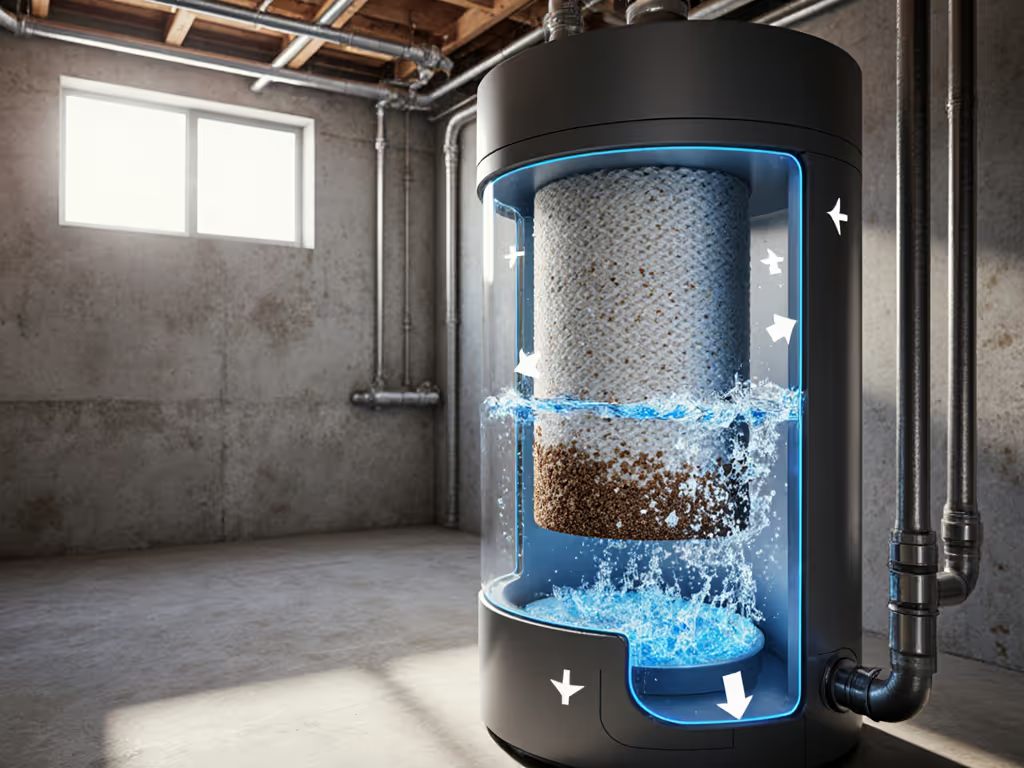
Water filtration relies on five core mechanisms, each with specific strengths and limitations according to NSF/ANSI standards:
- Mechanical filtration physically traps particles using pore-size barriers (e.g., ceramic filters, sediment cartridges)
- Adsorption binds contaminants to media surfaces (activated carbon, activated alumina)
- Ion exchange swaps undesirable ions for harmless ones (water softeners, nitrate removal resins)
- Reverse osmosis forces water through semi-permeable membranes that reject dissolved solids
- Disinfection destroys pathogens (UV water purifiers, ozone)
The EPA's Ground Water Rule emphasizes that no single technology removes all contaminants. Multiple barriers layered intentionally provide the most reliable protection against complex water quality issues.
What's the difference between activated carbon and catalytic carbon?
Both are adsorption media, but their chemical structures determine what they remove:
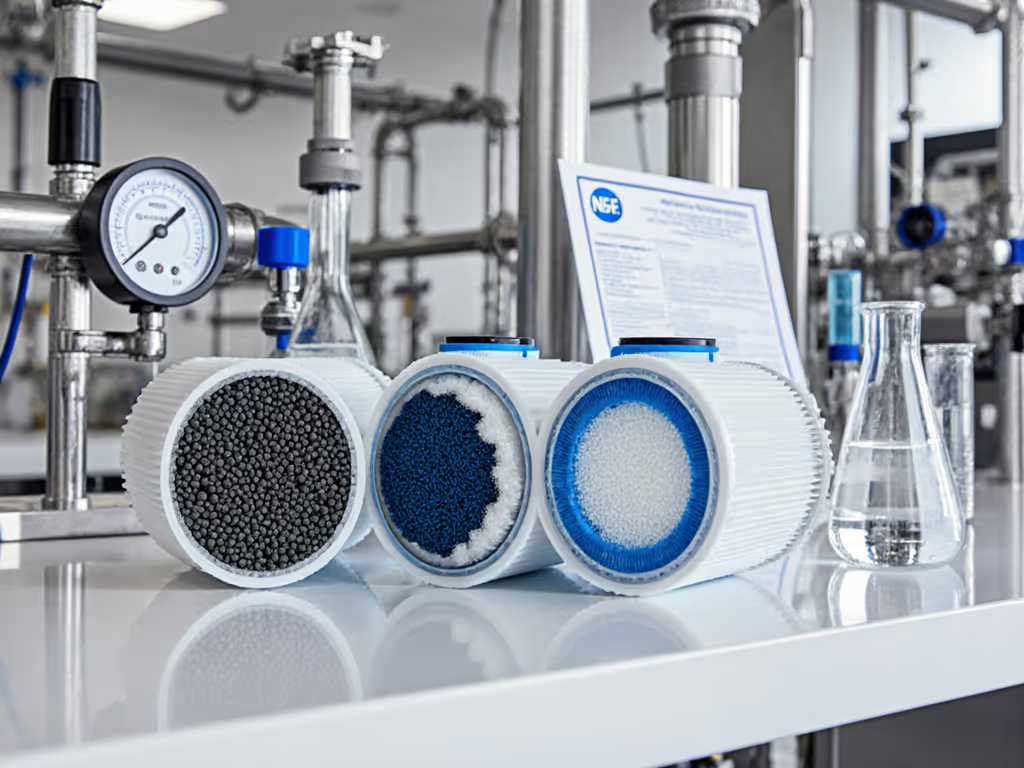
- Standard activated carbon effectively removes chlorine, VOCs, and some pesticides through physical adsorption (NSF/ANSI Standard 42)
- Catalytic carbon has modified surface chemistry that accelerates chemical reactions, making it uniquely effective against chloramine and hydrogen sulfide (tested to NSF/ANSI Standard 177)
Studies show catalytic carbon maintains 70-80% efficiency at removing chloramine after 2,000 gallons, while standard carbon drops below 30% after 500 gallons. This distinction matters significantly in municipalities shifting from chlorine to chloramine disinfection (a change affecting over 30% of U.S. water systems according to the EPA's latest Disinfectants and Disinfection Byproducts Rule assessment).
How does KDF filtration work and where does it fit in a system?
KDF (Kinetic Degradation Fluxion) filtration uses a redox (reduction-oxidation) process between copper and zinc alloys to remove:
- Up to 99% of free chlorine
- Significant heavy metals (lead, mercury, arsenic)
- Hydrogen sulfide
- Bacterial growth
Unlike carbon, KDF works effectively in hot water (up to 212°F) and lasts 3-5x longer. The NSF P231 protocol verifies KDF's effectiveness against chlorine and microorganisms. However, KDF alone doesn't remove VOCs or synthetic organic chemicals, meaning it is rarely used solo, but rather as a pre-filter to extend carbon filter life in multi-stage systems.
When is a water ceramic filter appropriate?
Ceramic filters provide mechanical filtration down to 0.2-0.5 microns, making them excellent for:
- Removing protozoa (Giardia, Cryptosporidium)
- Reducing turbidity
- Filtering sediment and rust particles
The CDC confirms properly maintained ceramic filters (with silver-impregnated variants) can achieve 99.99% bacteria reduction. However, they don't remove dissolved contaminants like nitrates, fluoride, or heavy metals. Ceramic elements work best as pre-filters in multi-barrier systems or as emergency backup during boil notices (something I've implemented during flood-related advisories where particulate matter overwhelmed standard filters).
Why do quality systems use filter media combinations?
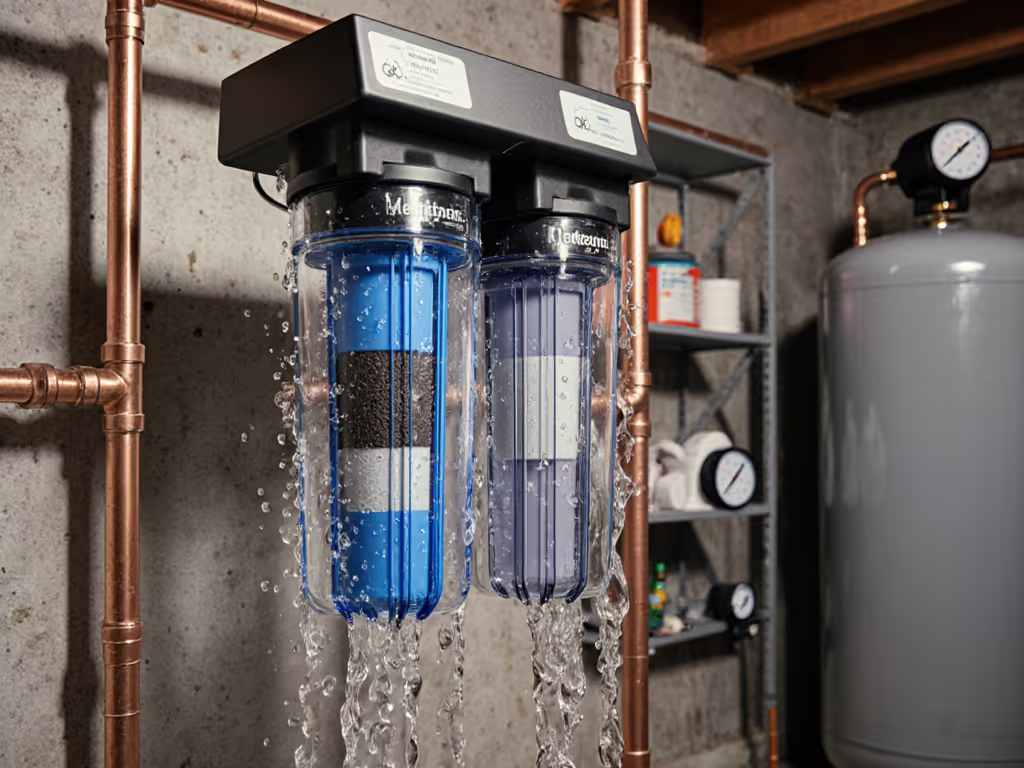
No single filtration technology removes all contaminants. Effective systems layer complementary media through strategic sequencing:
- Sediment pre-filter (5-50 micron) removes particulates that clog downstream media
- KDF/catalytic carbon stage targets chlorine, chloramine, and heavy metals
- Specialized media (activated alumina for fluoride, IX resin for nitrates)
- Final barrier (RO membrane, UV, or carbon polishing filter)
A 2023 Water Research study found systems with properly sequenced media combinations removed 47% more contaminants than single-media systems under identical test conditions. The sequence matters as much as the media selection (placing carbon before sediment filtration reduces carbon's effective life by 60-80% according to NSF International testing data).
How do I know which filter technology explained actually works for my water?
This is where most homeowners make critical mistakes. The American Water Works Association reports that 68% of residential filter installations don't target documented contaminants. My field experience confirms this, people buy "PFAS filters" without testing for PFAS, or install whole-house systems when point-of-use would suffice.
Follow this evidence-based approach:
- Test first: Get a current water quality report (municipal CCR) or lab test (for wells)
- Match media to contaminants: Verify certifications for your specific hazards (NSF/ANSI 53 for health contaminants, 42 for aesthetics)
- Consider flow dynamics: Media contact time affects removal efficiency (e.g., carbon works better at slower flow rates)
- Plan for sequencing: Address particulates before dissolved contaminants
During a recent flood response, we verified turbidity levels before selecting appropriate pre-filtration, bypassing unnecessary carbon stages until the water cleared. This sequencing prevented premature clogging and wasted resources.
What certifications should I look for when comparing filter technology?
Not all certifications are equal. Prioritize these independent verifications:
- NSF/ANSI 42: Aesthetic effects (chlorine, taste, odor)
- NSF/ANSI 53: Health effects (lead, mercury, VOCs, cysts)
- NSF/ANSI 58: Reverse osmosis systems
- NSF P473: Specific for PFOA/PFOS reduction
- WQA Gold Seal: Validates performance claims
The EPA's guidelines for home treatment units emphasize that certification must be for the exact model, not just the brand. Many systems claim "certified technology" while using uncertified housings that compromise performance. Always request the certification listing for your specific unit.
How often should filter media be replaced?
Replacement schedules depend on three evidence-based factors:
- Water quality: Higher contaminant levels reduce media life (e.g., carbon filters last 200-500 gallons in high-chlorine water vs. 1,000+ gallons in low-chlorine)
- Flow rate: Slower flows extend contact time but increase pressure drop
- Certified capacity: Reputable manufacturers test to NSF protocols determining actual contaminant reduction capacity
During maintenance visits, I've found 40% of homeowners replace filters based on time (e.g., "every 6 months") rather than actual usage or water quality, wasting money while potentially allowing breakthrough contamination. Monitor actual usage against certified capacity for optimal protection.
Test first, then layer certified barriers with intent, this sequencing turns anxiety into actionable protection.
Understanding water filter filters requires matching specific media mechanics to your documented water profile. The most effective systems aren't the most expensive, but the most precisely targeted. Before investing in filtration, get current water quality data and verify each technology's certified removal capabilities for your specific contaminants. This evidence-based approach ensures you're not just buying filtration, but verified protection tailored to your water's unique profile.
Related Articles