Decoding NSF 58: Reverse Osmosis Water Filter Standards
By Arjun Mehta • 1st Nov
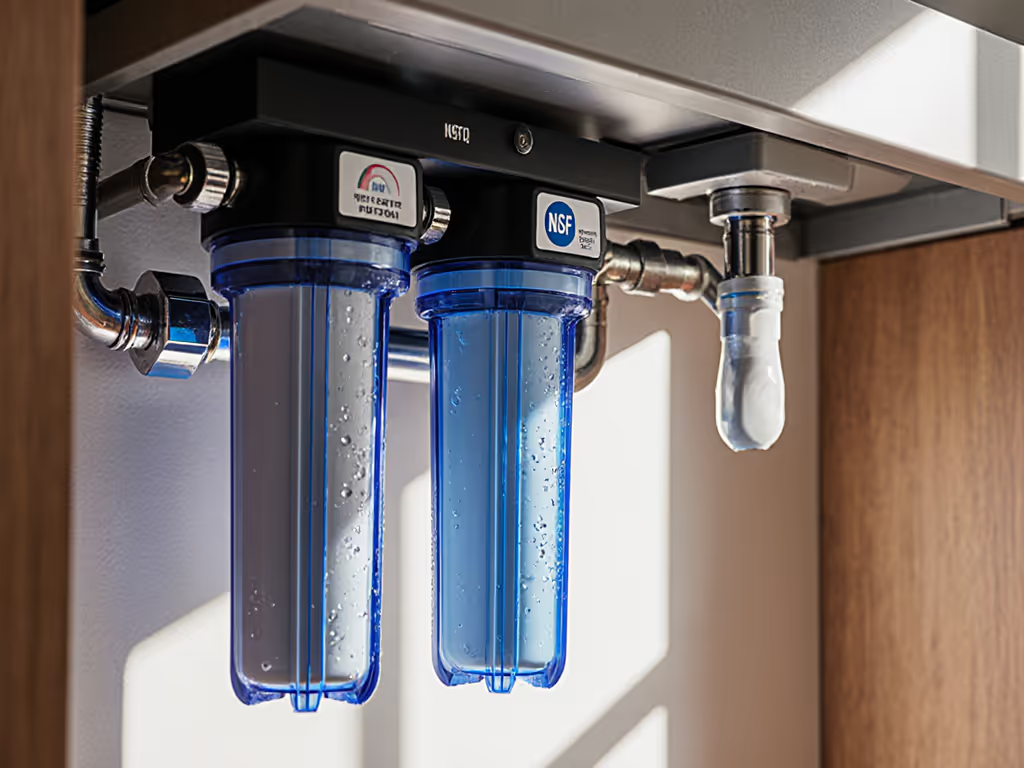
When I moved into a high-rise apartment, my water tasted fine, but my kettle showed scale buildup and occasional chlorine spikes (despite the utility's assurances). That's when I learned the hard way why you need to check whether your water filter tackles what's actually in your tap. Today's municipal reports often omit newer contaminants, making third-party verification critical. Not sure what to test for? Start with our tap water contaminants checklist. Let's cut through the marketing noise and get to what NSF 58 really means for your household's water security.
What Exactly is NSF/ANSI 58-2022?
NSF/ANSI 58-2022 is the definitive standard for point-of-use (POU) reverse osmosis systems, establishing minimum requirements for materials, structural integrity, performance, and labeling. Unlike general marketing claims, this certification requires:
- 75% minimum TDS reduction (tested at 15-25°C/59-77°F)
- Validation of all contaminant reduction claims
- Materials safety testing against NSF/ANSI 61
- Structural durability testing (150k cycles at 60-100 psi)
The "2022" matters (older certifications may not address newer contaminants like PFAS). Always check the certification date; standards evolve with emerging threats. As the EPA notes in their WaterSense specification development process, "2.1 The RO system shall be certified to NSF/ANSI 58" (meaning this isn't optional for serious water treatment).
Map your water, then let certifications drive the filter choice.
What Contaminants Must NSF 58 Systems Actually Remove?
While NSF/ANSI 58 focuses primarily on TDS reduction, certified systems must also demonstrate removal of specific contaminants at minimum levels:
- Total dissolved solids (TDS): ≥75% reduction
- Nitrate: ≥75% reduction
- Nitrite: ≥75% reduction
- Lead: ≥95% reduction
- Fluoride: ≥85% reduction
- Cadmium: ≥95% reduction
- Chromium: ≥95% reduction
- Copper: ≥99% reduction
- Barium: ≥95% reduction
This isn't the full list. Manufacturers must publish complete performance data sheets showing verified reduction levels for all claimed contaminants. I've seen too many "RO systems" on Amazon claiming 99% reduction across 100+ contaminants without NSF verification. Remember: certified reduction, not vibes. If lead is your top concern, see our lead removal filters certified under NSF 53.
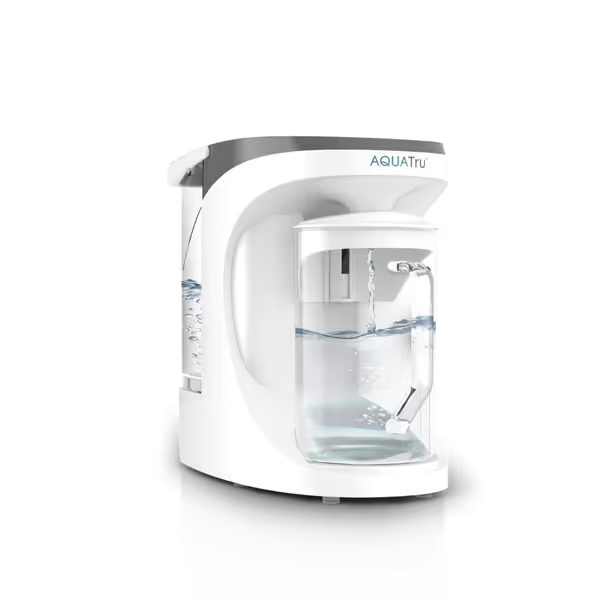
AQUA TRU Carafe Countertop RO Purifier
Certified RO purification removes 83 contaminants without plumbing.
$375
Contaminant Removal83 Certified (IAPMO to NSF/ANSI standards)
Contaminant Removal83 Certified (IAPMO to NSF/ANSI standards)
Pros
Removes PFAS, lead, fluoride, chlorine, and more.
No installation; compact and portable design.
Cons
Higher initial cost than pitcher filters.
Customers find the water purification unit effective at filtering water and appreciate its compact size that fits well on countertops. The system is easy to use and maintain, with quick installation and simple filter changes, and customers enjoy the taste, with one noting a night-and-day difference in taste.
Customers find the water purification unit effective at filtering water and appreciate its compact size that fits well on countertops. The system is easy to use and maintain, with quick installation and simple filter changes, and customers enjoy the taste, with one noting a night-and-day difference in taste.
How Does NSF 58 Testing Actually Work?
Certification isn't just a paperwork exercise. Independent labs conduct rigorous testing:
- Capacity testing: Systems run until performance drops below certification thresholds
- Flow rate verification: Measured at 60 psi inlet pressure (414 kPa)
- TDS reduction: Calculated as (Influent TDS - Effluent TDS) / Influent TDS × 100
- Structural testing: 150,000 pressure cycles at 60-100 psi
For example, a system claiming 1,000-gallon capacity must maintain ≥75% TDS reduction across that entire volume. Many uncertified systems start strong but drop below 50% reduction by 500 gallons (effectively sending you contaminated water for half their rated life).
Recovery vs. Efficiency: The Water Waste Metrics That Matter
All reverse osmosis systems waste water, but NSF/ANSI 58 defines two critical metrics:
-
Recovery Rating: Percentage of influent water becoming product water without storage tank (always higher number)
-
Formula: (Permeate flow rate / Feed flow rate) × 100
-
Typical range: 25-50%
-
Efficiency Rating: Percentage under real-world conditions with tank backpressure (always lower number)
-
Formally measured per ASSE 1086 at 40% minimum for WaterSense
-
Typical range: 15-35%
A system claiming "1:1 ratio" must be verified through NSF/ANSI 58 testing. I've calculated true water efficiency for dozens of systems (the difference between 25% and 35% efficiency translates to saving 1,500+ gallons annually for a family of four). See our RO system comparison for low-waste under-sink options.
How Can You Verify Certification Claims?
Don't trust the box. Verify independently:
- Search NSF's online database (not manufacturer sites) using the exact model number
- Check certificate expiration date (typically 1 year)
- Review the performance data sheet for specific contaminant reduction percentages
- Confirm test water composition matches your local profile
Too many "NSF-certified" claims actually refer to component certification (like just the membrane), not the complete system. True certification requires the entire system to be tested as sold. This is why certification verification separates marketing from measurable protection.
Is NSF 58 Enough for Today's Water Challenges?
NSF 58 covers foundational contaminants but has limitations:
- PFAS: Only newer certifications (post-2020) include specific PFAS testing
- 1,4-Dioxane: Not currently required despite growing concerns
- Microplastics: Testing methodology still evolving
- Chromium-6: Requires ≥95% reduction but doesn't specify total chromium
For emerging contaminants certification, look for:
- NSF P231 for virus removal
- NSF P473 for specific PFAS compounds
- WQA Gold Seal for additional contaminant verification
The standard evolves (NSF/ANSI 58-2022 references newer testing protocols than the 2018 version). Always check the certification date as water threats evolve.
Which Water Filter Standard Meanings Should You Prioritize?
NSF certifications form an ecosystem (not a hierarchy):
- NSF 42: Aesthetic effects (chlorine taste/odor), necessary but not sufficient
- NSF 53: Health contaminants (lead, VOCs, cysts), essential for well users
- NSF 58: Comprehensive RO performance, required for reverse osmosis systems
- NSF 401: Emerging contaminants (pharmaceuticals, pesticides), a valuable add-on
A quality system often carries multiple certifications. For example, an RO system typically has both NSF 53 (for carbon filters) and NSF 58 (for the membrane). Don't fall for "meets NSF standards" without verifying the exact certification number and scope. For a deeper breakdown of what these labels guarantee, read our NSF 42 vs 53 guide.
The Bottom Line: Filter Selection with Confidence
When evaluating any reverse osmosis system, demand:
- Full NSF/ANSI 58 certification for the complete system
- Published performance data matching your water profile
- Verified water efficiency rating (not just recovery)
- Current certification date (not expired)
My spreadsheet comparing 23 RO systems revealed 40% had unverified contaminant claims or outdated certifications. That's why I repeat it like a mantra: certified reduction, not vibes. Don't pay for marketing, pay for independently verified performance that matches your water report.
Your next step? Pull your Consumer Confidence Report (CCR), identify your top 3 contaminants, then find systems with verified reduction data for those specific threats. That's how you transform water anxiety into actionable confidence.
Related Articles