Water Contaminants: Your Tap Safety Checklist
By Samira Khan • 3rd Oct
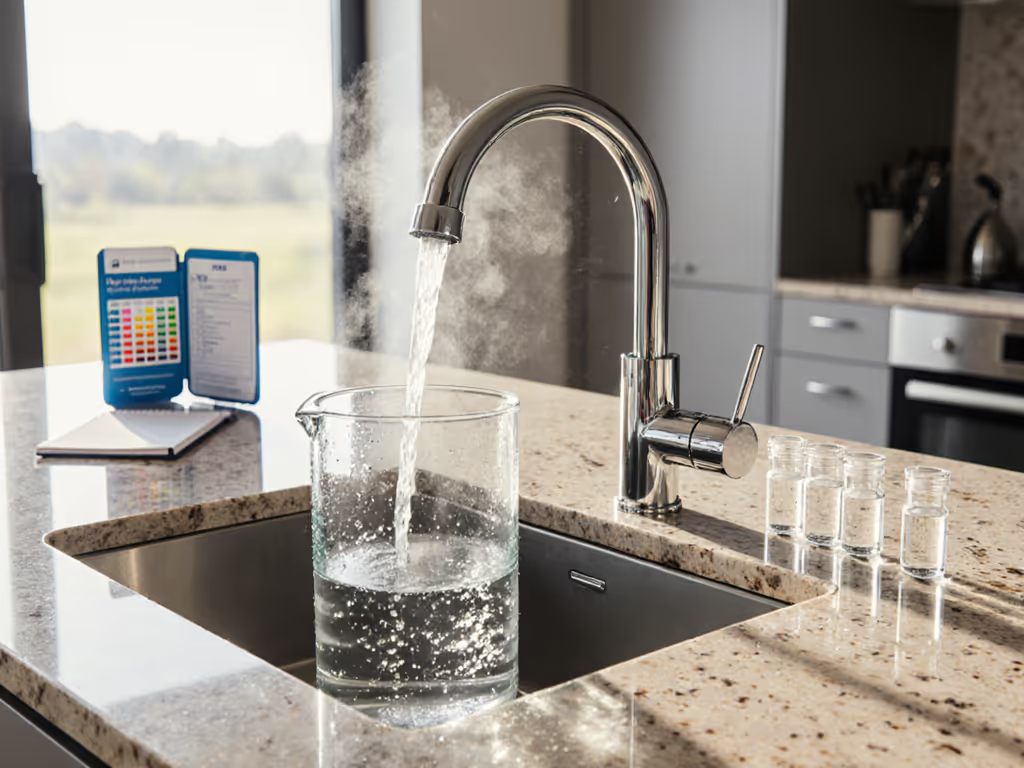
Understanding water contaminants is step one for true tap water safety. But knowing which threats matter for your home (and how to tackle them without breaking the bank) is where most families get stuck. I've helped hundreds translate complex water reports into actionable plans. Let's cut through the noise with simple math and realistic solutions. After all, the best filter is the one you can afford to maintain, sustainably.
Why Generic Advice Fails You
Most "water safety" guides ignore your actual water chemistry or budget reality. Pitcher filters won't touch lead. Boiling water doesn't remove chemicals (it concentrates them!). And that sleek $300 under-sink unit? If it requires $120 proprietary cartridges every 3 months, it's a $480/year trap. Let's run the numbers on what actually works:
1. Test First, Filter Second (No Exceptions)
Skip this step, and you're gambling with your family's health and budget.
Do this now:
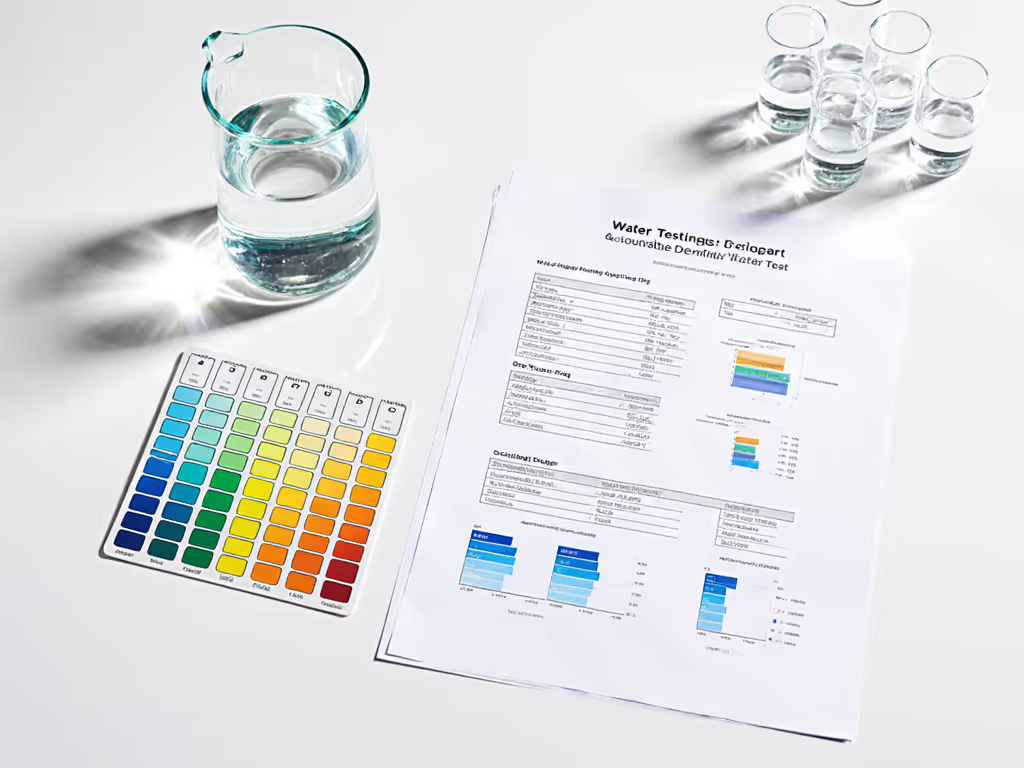
- Municipal water users: Request your annual Consumer Confidence Report (CCR). It's free and legally required. If you need help interpreting it, see our Consumer Confidence Report guide. Skim Section 3 for contaminants above 50% of EPA limits, those are your priority targets.
- Well owners: Test annually for at least nitrates, arsenic, lead, and coliform. Use state-certified labs (EPA-listed). Budget $15-$45 per test.
- Rapid checks: $15-$25 test strips (like those from SimpleLab) screen for chlorine, lead, hardness, and pH. Confirm positives with lab tests.
Why this matters: PFAS chemicals won't show on standard strips. Copper from pipes needs different treatment than well sourced arsenic. Testing costs less than one month of wasted bottled water.
2. Match Filters to Your Contaminants (Not Marketing Hype)
Certifications aren't confusing, they are your protection. Ignore claims like "99% reduction!" without context. Focus on these NSF/ANSI standards:
| Contaminant | Required Certification | What It Means | Filter Examples (Non-Proprietary) |
|---|---|---|---|
| Lead in water | NSF 53 (or 372 for lead-free) | Filters must remove lead at 15 ppb or below | Activated carbon blocks (not granular!), reverse osmosis |
| Chlorine effects | NSF 42 | Reduces chlorine taste/odor (but not disinfection byproducts) | Basic carbon filters |
| PFAS chemicals | NSF 53 or 58 | Must reduce PFAS to 70 ppt or lower | Specific high-grade carbon or RO |
| Arsenic/Nitrates | NSF 58 (RO systems) | Requires reverse osmosis | Under-sink RO with certified membranes |
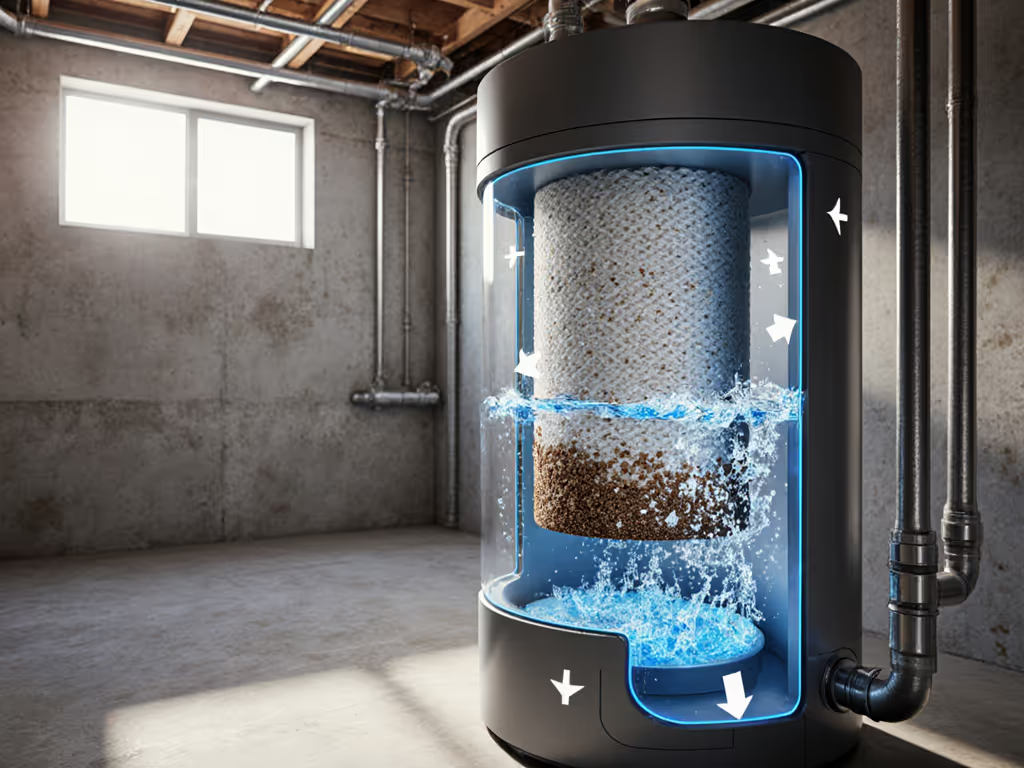
Key insight: Your fridge filter hits NSF 42 (good for chlorine) but not NSF 53. It won't stop lead or PFAS. Whole-house filters rarely target these, they are for sediment and chlorine. Point-of-use (sink/countertop) systems are non negotiable for health risks.
3. Calculate Your True Cost to Avoid Surprise Bills
Filter costs aren't about the initial unit, they are about long-term upkeep. Here's how to budget:
Example: A countertop RO system for PFAS/arsenic removal
- Initial cost: $250 (with NSF 53/58 certification)
- Cartridge life: 12 months (10,000 gallons)
- Replacement cost: $60 (modular, off-brand cartridges)
- RO waste ratio: 3:1 (3 gallons wasted per 1 filtered)
Simple math with assumptions (municipal water @ $0.005/gal):
- Filtered water cost: ($60 ÷ 10,000) + ($0.005 × 4) = $0.026/gal
- Bottled water comparison: $1.50/gal (15.6 oz bottle) → 98.3% savings
Compare this to subscription traps:
- Proprietary pitcher filter: $50 for 60 gallons → $0.83/gal (15x pricier than tap)
- Subscription RO: $120 cartridges + $30 shipping/year → 3x cost of modular systems
Spend on media that works, not on pretty housings. Plan for at least 2 years of cartridges when budgeting. Always confirm cartridge compatibility, no locked-in ecosystems.
4. Prioritize Maintenance to Keep Protection Active
Filters expire when saturated. Missing replacements risks releasing trapped contaminants. Build your schedule now:
- Cartridge changes: Track gallons used (most sinks flow 1.5-2.2 GPM). For NSF-certified filters:
- Carbon blocks: Every 6-12 months (or 500-1,000 gal)
- RO membranes: Every 2-3 years (or 20,000-75,000 gal)
- Pre-filters: Every 3-6 months (for sediment-heavy water)
- Well-specific: Test quarterly after heavy rains. Sanitize if coliform detected.
- Emergency prep: Store 1 gallon/person/day (replace every 6 months). Keep a $35 gravity filter (like Cleanwell) for outages, only use for microbiological threats (boil notices), not chemicals.
Pro tip: Set phone reminders for 15 days before replacement. Buy cartridges in bulk (ensure storage is dry/dark). Well owners: budget $100-$200 yearly for professional servicing.
5. Spot Red Flags That Mean "Stop Buying"
Walk away if a product:
- Claims "removes all contaminants" (impossible)
- Uses vague terms like "advanced filtration" without NSF proof
- Requires proprietary cartridges with no third-party alternatives
- Doesn't list tested capacity (e.g., "lasts 6 months" - at what flow rate?)
- Costs more than $0.03/gal to maintain (beyond basic carbon filters)
Real protection is transparent. Demand the certification listing number (e.g., "NSF 53: Lead Reduction"). If they refuse, they are hiding something.
Your Action Plan: Start Today, Stay Safe Tomorrow
- Grab your CCR or test your water this week, focus on lead, PFAS, and your local risks.
- Cross-reference findings with the certification table above. Ignore influencer "reviews."
- Calculate true cost-per-gallon using your household's water usage (EPA average: 82 gal/person/day).
- Install point-of-use filters for cooking/drinking only where needed (no need to filter showers for PFAS).
Tap water safety isn't about panic, it's about planning. My family's switch from bottled to certified tap water saved $1,200/year and protected my baby. Do the math for your home. Because sustainable protection isn't a luxury, it's your right. Let's run the numbers, then breathe easy.
Related Articles