Decoding Your Water Quality Report: CCR Interpretation Guide
By Nkechi Okafor • 3rd Oct
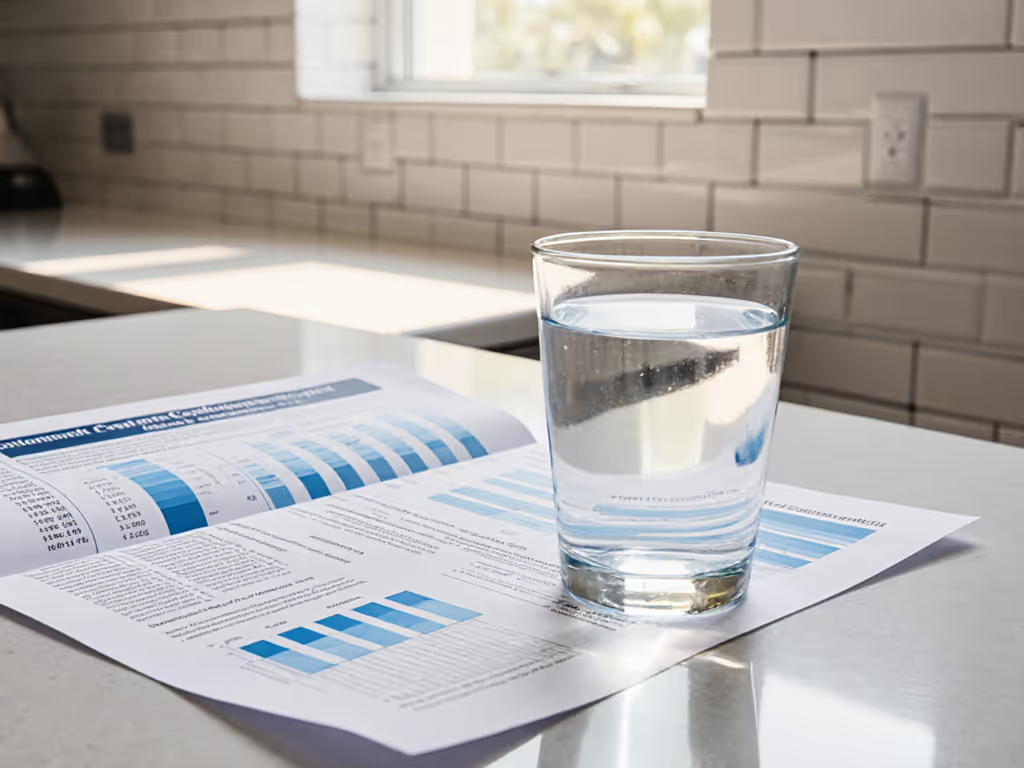
Understanding your water quality report is the critical first step toward evidence-based protection. As a source-water analyst specializing in contaminant-to-media mapping, I've seen how precise CCR interpretation transforms anxiety into actionable safety, especially during emergencies like boil notices or flood events. Today, we will walk through your annual Consumer Confidence Report (CCR) with the clarity it demands, focusing on what actually matters for your household's safety. Remember: not all detected contaminants pose equal risks, and regulatory compliance does not always align with your family's specific needs. Let's navigate this together with data-driven calm.
Why Your CCR Isn't Just a Compliance Document
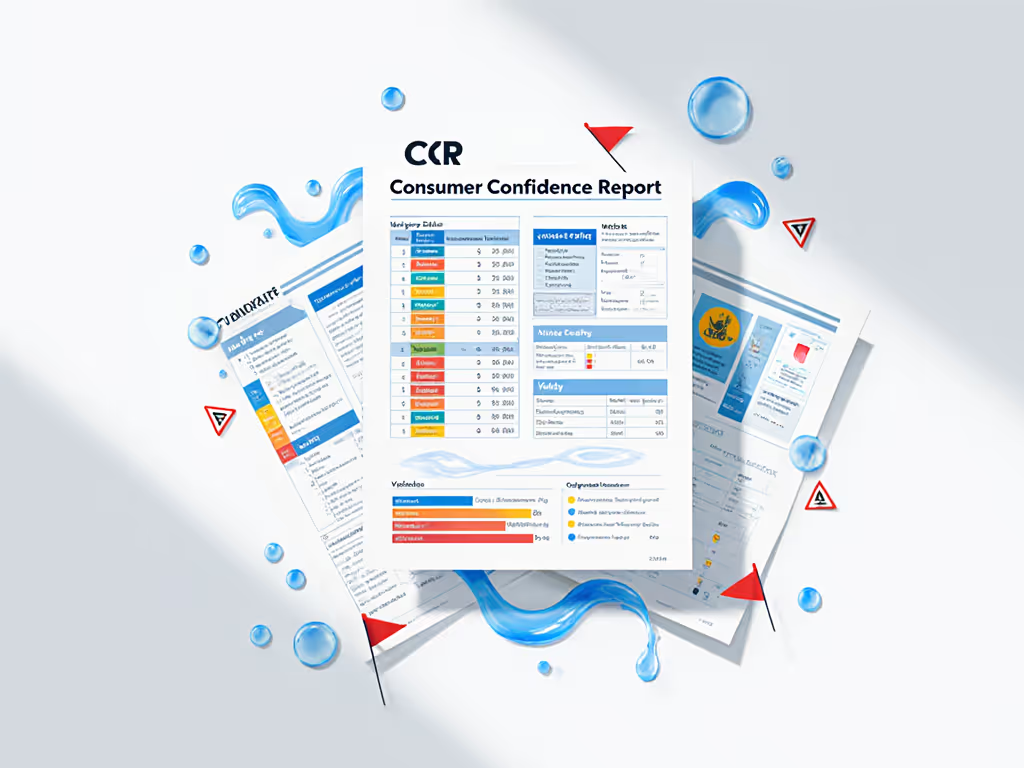
Community water systems issue CCRs annually under the Safe Drinking Water Act, but many residents toss them unread, missing vital context for their water's safety. These reports document actual detected levels of regulated contaminants, not hypothetical risks. Key distinctions:
- "Detected" vs. "Potential": The "What's in Your Water" section lists confirmed contaminants, while "Source Water" describes possible threats (e.g., "Groundwater may contain nitrates"). Focus only on columns showing Your Water results.
- MCLG vs. MCL: The Maximum Contaminant Level Goal (MCLG) is a health-based ideal (e.g., zero for lead). The enforceable Maximum Contaminant Level (MCL) reflects achievable treatment limits. If your water's lead level is 2 ppb but the MCLG is 0 ppb, it is legally compliant, but you might still seek layered protection if serving infants.
- Violations: A "Yes" here means contaminant levels exceeded the MCL at least once. Seasonal spikes (e.g., from wildfire runoff) often trigger temporary violations. Never ignore these, but verify if advisories were issued before reacting.
Test first, then layer certified barriers with intent. This principle anchors every decision I make in emergency response and daily planning.
Your CCR Deep-Dive: 5 Critical Questions Answered
1. "Which contaminants should I actually worry about?"
Don't panic over the entire list. For a primer on common tap water contaminants and their health impacts, see our tap water contaminants checklist. Prioritize based on water contaminant levels relative to benchmarks:
- Critical Tier: Contaminants with Your Water > MCL (Violation = Yes) or approaching 50% of MCL for vulnerable groups (e.g., pregnant individuals, immunocompromised). Example: Nitrate at 8 mg/L (MCL = 10 mg/L) warrants action for infants.
- Monitoring Tier: Detected below MCL but with known health effects at low doses (e.g., PFAS, arsenic). Cross-reference with utility testing frequency, and annual checks may miss seasonal spikes.
- Low Priority: Disinfection byproducts like chloroform consistently below MCLG. These are trade-offs for pathogen control; filtering them may increase microbial risk if not sequenced properly.
2. "What do 'ND' or 'Not Detected' really mean?"
"ND" indicates levels below the lab's detection limit, not zero presence. For PFAS, this might mean <4 ppt (parts per trillion), but health advisories now target 0.004 ppt for some compounds. Always note the detection limit in the report's methodology section. If unlisted, assume limitations per EPA Method 537 (typical PFAS detection: 4-10 ppt). This uncertainty explains why residents near industrial sites often pursue independent municipal water testing.
3. "How do I interpret turbidity or chlorine residual data?"
Physical parameters matter for emergent safety. During a boil-water notice I coordinated post-flooding, neighbors fixated on long-term contaminants while overlooking immediate threats:
- Turbidity > 0.3 NTU: Indicates suspended particles that shield pathogens from disinfection. Requires immediate pre-filtration (e.g., 5-micron sediment filter).
- Chlorine residual < 0.2 mg/L: Suggests compromised disinfection. Match this with Violation data for coliform bacteria. If present, boiling or UV is non-negotiable. Sequencing here was vital: verify advisories first, then test residuals, then deploy barriers. Evidence turned panic into practice.
4. "Does 'compliant with standards' mean my water is safe?"
Compliance confirms adherence to federally enforceable limits, not absolute safety. The EPA's MCLs balance health, cost, and technical feasibility. For example:
- Lead MCL = 15 ppb: But no safe level exists per CDC. Homes with lead service lines need point-of-use filters even if CCR shows 14 ppb.
- Emerging contaminants: PFAS aren't yet regulated nationally, so absence from your CCR does not guarantee safety. Cross-check with state-specific advisories (e.g., Michigan's PFAS Action Response Team reports). This is where water report analysis shifts from compliance to personalized protection.
5. "How do I use this to choose a filter?"
Never select filtration based on marketing claims alone. Your CCR dictates which certification standards matter:
- NSF/ANSI 42: Reduces aesthetic impurities (chlorine, taste/odor). Use if CCR shows high chlorine residual causing taste issues.
- NSF/ANSI 53: Targets health contaminants like lead, mercury, or VOCs. Required if Your Water exceeds 50% of MCL for these.
- NSF P473: Specific for PFAS reduction. Pursue only if your state tests for PFAS and levels concern you. Crucially, match the exact contaminant and concentration from your CCR to the filter's certified reduction data at that level. A carbon pitcher claiming "99% lead reduction" may only be certified for 150 ppb, not the 15 ppb in your water.
Beyond the Report: When to Test Independently
Your CCR covers regulated contaminants, but gaps exist:
- Unregulated threats: Microplastics, pharmaceuticals, or local industrial chemicals (e.g., TCE near military bases).
- Point-of-entry variation: Corrosion in your home's pipes may elevate lead/copper beyond system-wide CCR data.
- Well owners: CCRs don't apply; you're responsible for annual municipal water testing-equivalent panels (coliform, nitrates, local geology risks like arsenic).
During wildfire season in the West, I've seen CCRs miss temporary organic compounds causing taste/odor issues. A targeted $50 test for geosmin/MIB (common in algal blooms) clarified whether carbon filtration sufficed (or if UV was needed for microbial regrowth in stagnant pipes).
Your Action Sequence: From Data to Protection
- Verify: Cross-reference CCR violations with official advisories (EPA EnviroFlash alerts).
- Prioritize: Rank contaminants by risk (vulnerability × concentration × exposure frequency).
- Test: Fill CCR gaps with targeted third-party labs (e.g., Tap Score's CCR-Targeted Panel).
- Match: Align results with certified filter media (never assume pitcher filters handle health threats).
This sequencing proved essential when advising neighbors after flood advisories. Calm testing identified turbidity as the immediate issue, not pathogens, so we deployed gravity filters first, saving precious battery life for future UV needs. Evidence-based sequencing prevents wasted effort and builds true resilience.
Related Articles