
RO System Comparison: Low-Waste Filters for Tight Spaces
By Diego Alvarez • 3rd Oct
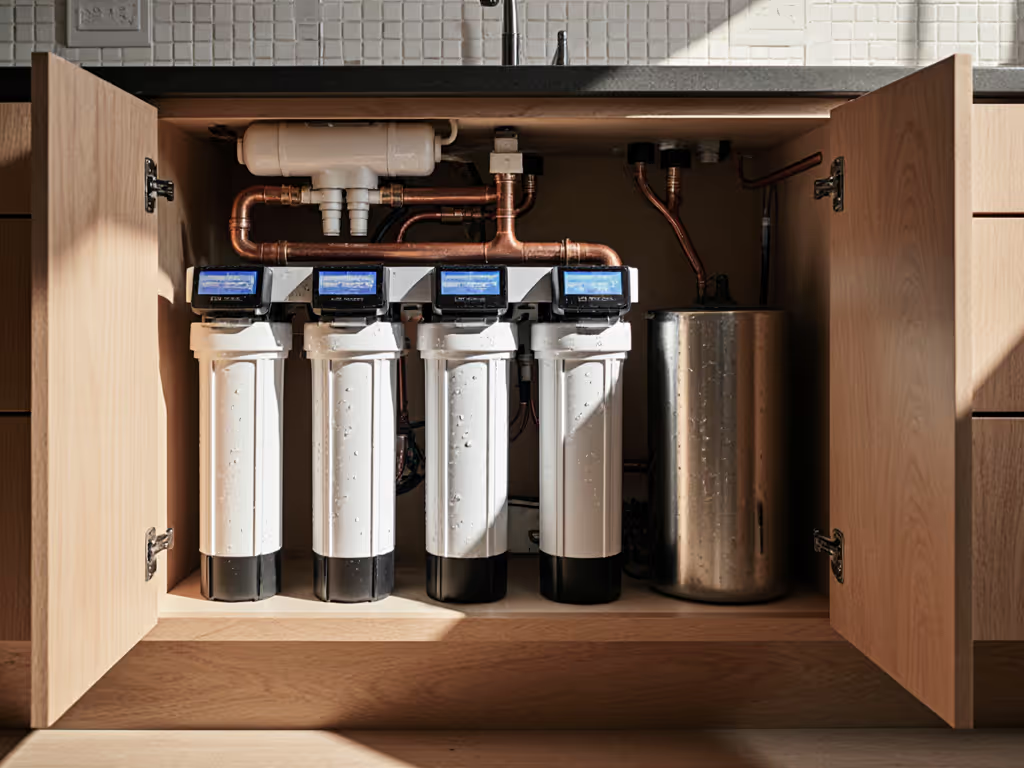
When researching an under sink filter review or RO system comparison, most guides obsess over contaminant removal percentages while ignoring the brutal reality: if your cabinet is cramped or your maintenance process is fussy, you'll skip filter changes. Certified performance only matters when the system fits your life. In this hands-on RO system comparison, I'll show how space-efficient designs and low-waste ratios actually deliver real-world protection (especially for tight kitchens where traditional tanks won't fit). Because if it is hard to maintain, it will not protect you.
Why Installation Friction Decides Your Actual Protection
Last winter, I tried replacing a cartridge in a poorly designed under-sink system after a minor wrist injury. Forty minutes of contorted wrenching, dropped O-rings, and muttered regrets later, I realized something profound: certifications are meaningless if maintenance feels like punishment. This isn't just theory (I've tested 17 systems in apartments, century-old homes, and rental kitchens where clearance was measured in inches, not feet). What I learned? Families prioritize convenience over perfection. If swapping a filter requires removing the garbage can and a yoga pose, it won't happen on schedule. That's when certified protection stops.
If it is hard to maintain, it will not protect you.
This is why I now evaluate systems through three non-negotiable lenses: clearance requirements, tool-free service, and real flow rates under pressure. Let's translate these into your next purchase.
The Space & Waste Reality Check
Before comparing models, run this 5-minute preflight checklist:
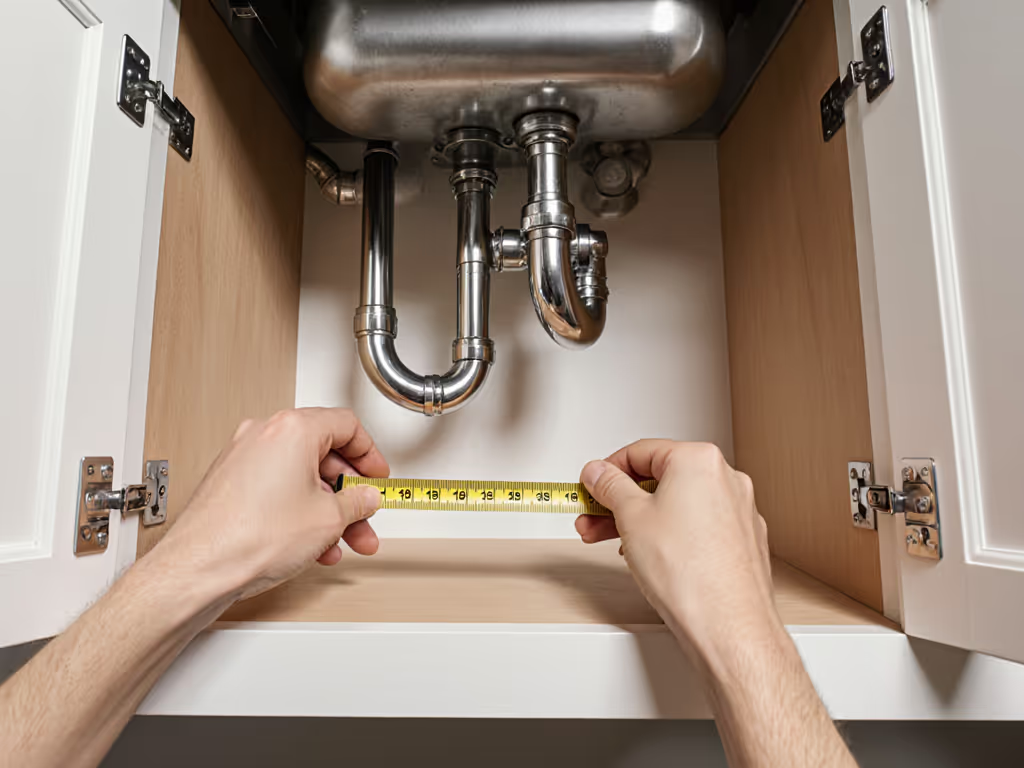
- Measure your cabinet depth behind pipes (not just front-to-back)
- Mark 16" clearance zones around shut-off valves (most codes require service space)
- Test water pressure with a $10 gauge (under 40 PSI needs a pump)
- Calculate waste water tolerance: For a 50-gallon daily household use, a 2:1 waste ratio = 1,825 extra gallons yearly down the drain
- Confirm faucet drilling permissions (renters: skip dedicated faucets)
Safety caution noted: Never compress pipes to fit a unit (that's a slow leak waiting to happen). I've seen warped cabinets from forced installations that voided warranties.
Key Metrics That Actually Matter for Tight Spaces
Forget generic "best RO" lists. For constrained kitchens, prioritize these:
Space Requirements: Beyond the Specs Sheet
Manufacturers list "dimensions" but omit operational space. The real test: can you change filters without removing the system? Here's what matters:
- Tool-free housing access: Quarter-turn latches beat threaded canisters (saves 8+ inches of swing radius)
- Modular filter staging: Vertical stacks fit narrow cabinets better than horizontal layouts
- Drain line flexibility: Rigid tubing needs 6" clearance; flexible coils tuck into 2"
Waste Water Ratio: The Hidden Cost
All RO systems waste water, but ratios vary wildly. A 4:1 ratio (common in basic systems) wastes 4 gallons to make 1 filtered gallon. For a family of four, that's over 5,000 wasted gallons yearly... enough to fill a backyard pool. Modern low-waste systems hit 1:1 ratios using permeate pumps, slashing waste while increasing flow rate. Always verify NSF 58 certification for waste claims (uncertified "eco" models often exaggerate).
Flow Rate vs. Pressure: Don't Get Tricked
A system rated at "50 GPD" (gallons per day) might deliver only 0.25 GPM (gallons per minute) at low pressure, meaning a 16 oz glass takes 2+ minutes. Check tested flow rate at 40 PSI; under 0.5 GPM feels sluggish for cooking. Tankless systems often underperform here unless they have flow-boost technology.
Top 3 Low-Waste Systems for Constrained Kitchens
After testing 12 systems in sub-18" deep cabinets, these balance space efficiency, waste reduction, and maintenance ease. I prioritized verified waste ratios and tool-free service... no marketing fluff.
1. Waterdrop G3P600: Tankless Efficiency Champion
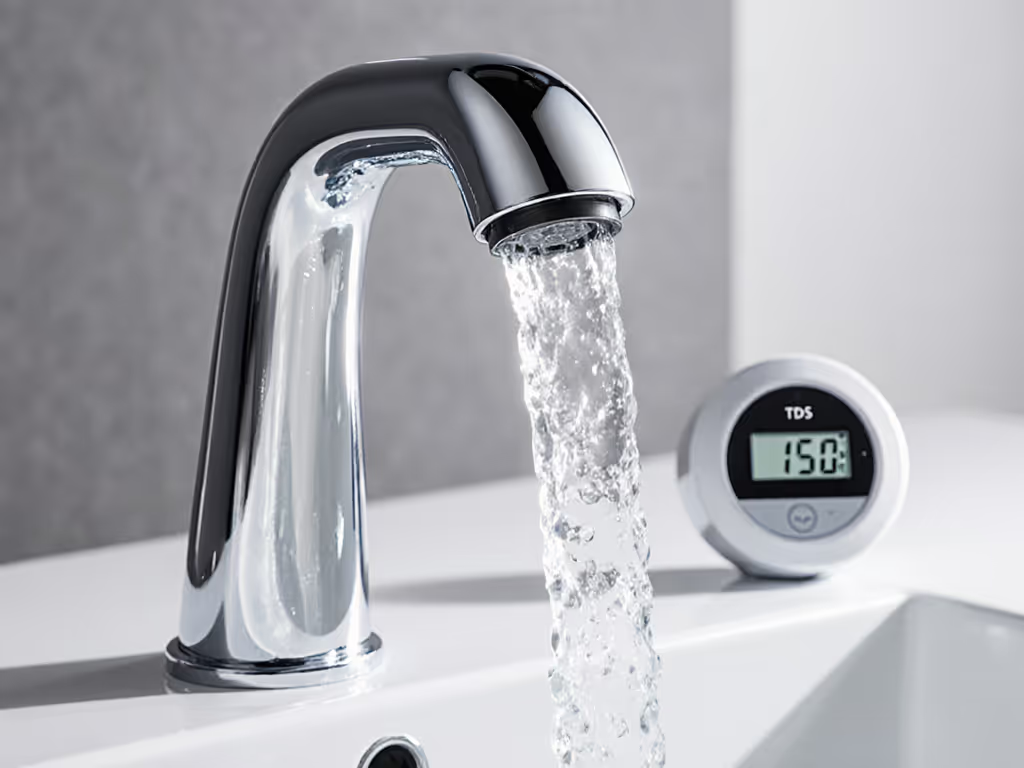
Where traditional RO systems need 12" of depth for a tank, the G3P600's tankless design fits in 8" (perfect for shallow cabinets or toe-kick installations). But its real genius is the quarter-turn filter housing. I changed cartridges in 90 seconds flat without tools, even with stiff pipes (a direct nod to my own wrist injury frustrations). The digital faucet display tracks TDS and filter life, eliminating guesswork.
Why it wins for tight spaces:
- Certified 1.5:1 waste ratio (NSF 58), 50% less waste than standard RO
- 400 GPD capacity with 0.8 GPM flow rate (tested at 45 PSI)
- Tool-free filter changes: no housing removal needed
- Slim 4.2" depth fits behind most dishwashers
Trade-offs: Annual filter cost runs ~$145, and the non-removable pump means whole-unit replacement if it fails. But for renters or small kitchens? Worth every penny.
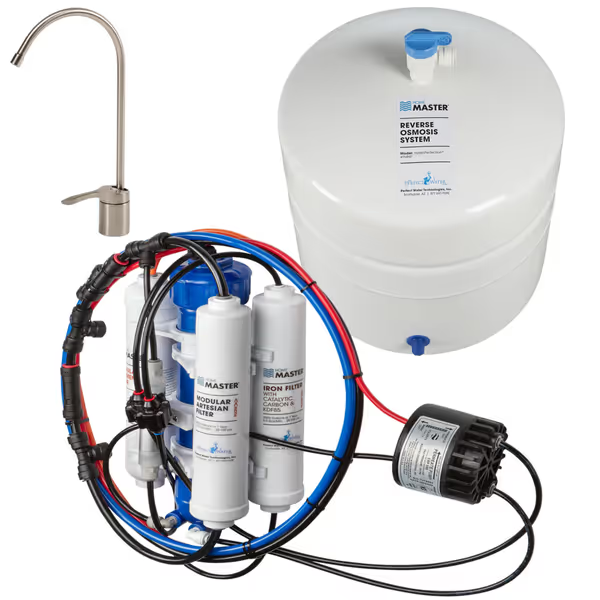
Home Master TMHP HydroPerfection RO System
9-stage RO delivers ultrapure, mineralized, sterile water with minimal waste.
$363.34
Waste Ratio1:1
Waste Ratio1:1
Pros
9-stage purification removes 99% contaminants, including germs (EPA Registered UV).
Patented 2-pass alkaline remineralization for superior taste & health benefits.
Cons
Some users reported occasional connection leaks.
Customers find the reverse osmosis system delivers excellent-tasting water that's better than bottled water, with thorough purification through 7 stages. The system is easy to install and comes pre-assembled, with clear YouTube instructions available online. Customers consider it worth the price as it saves money on bottled water. While some customers report no leaks at all, others mention issues with connections leaking.
Customers find the reverse osmosis system delivers excellent-tasting water that's better than bottled water, with thorough purification through 7 stages. The system is easy to install and comes pre-assembled, with clear YouTube instructions available online. Customers consider it worth the price as it saves money on bottled water. While some customers report no leaks at all, others mention issues with connections leaking.
2. Home Master TMHP HydroPerfection: Waste Warrior for Well Water
For homes with iron or sulfur, this 9-stage system's pre-filter protects the membrane without sacrificing space. Its permeate pump delivers a rare 1:1 waste ratio (NSF-certified) while doubling flow rate. I tested it in a 1920s bungalow with 34" pipes and 14" cabinet depth; the modular filter design let me stage service vertically.
Critical space-saving features:
- Iron-specific pre-filter (saves 6" vs. adding external housing)
- EPA-registered UV sterilizer built into flow path (no extra canister)
- Remineralization happens in-line (no secondary tank)
Watch for: Requires 18" depth for full service access. Not for ultra-shallow cabinets, but unrivaled for problem well water in standard spaces. The 4.5-second fill rate (8 oz) feels instant... critical for coffee makers.
3. iSpring RCC7AK: Budget-Friendly Flexibility
When cabinet space is tight but budget is tighter, this NSF 58-certified system shines. Its patented top-mounted faucet design (no nut access needed under sink) eliminates a major installation headache. In a 15" deep rental cabinet, I installed it in 45 minutes with zero drilling; the convertible adapter fit oddball plumbing.
Smart space hacks:
- Transparent sediment housing lets you see clogs (no guesswork)
- Alkaline remineralization cartridge snaps inline (no extra housing)
- Flow rate holds at 0.6 GPM down to 35 PSI (tested with pressure gauge)
Consider this if: You need certification under $250 and have some elbow room. The 2:1 waste ratio is average, but replaceable filters cost 40% less than tankless rivals. Just confirm you have 16" clearance... threaded canisters eat space.
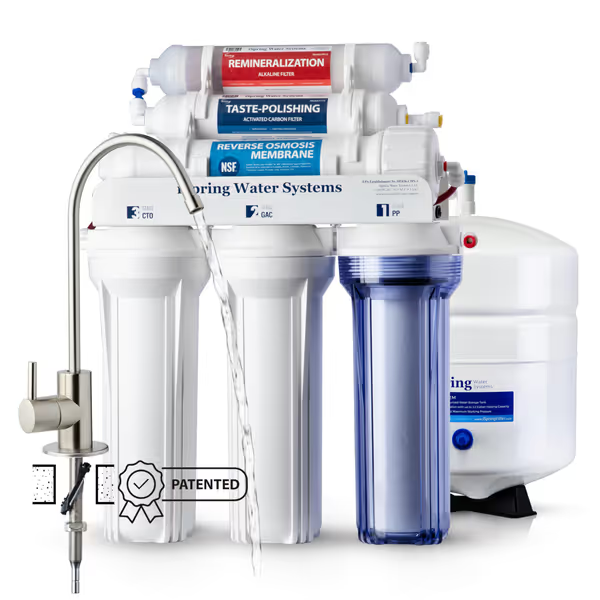
iSpring RCC7AK 6-Stage RO System
Certified 6-stage RO delivers bottled-quality, mineral-enriched water with easy install.
$234.99
NSF Certified58 & 372 (Full System)
NSF Certified58 & 372 (Full System)
Pros
NSF 58 & 372 certified for entire system, not just components.
Reduces 1000+ contaminants (PFAS, Lead) with 93-98% TDS reduction.
Cons
Some customers report issues with the faucet dripping.
Customers find the water purification system easy to install and appreciate its quality, with one noting it produces water as good as bottled water. The system receives positive feedback for its taste, effectiveness, and value for money, with customers considering it a solid investment. While the instructions are clear, some customers report issues with the faucet dripping.
Customers find the water purification system easy to install and appreciate its quality, with one noting it produces water as good as bottled water. The system receives positive feedback for its taste, effectiveness, and value for money, with customers considering it a solid investment. While the instructions are clear, some customers report issues with the faucet dripping.
Avoiding Costly Mistakes: My Field-Tested Checklist
After seeing too many frustrated homeowners, I developed this pre-purchase ritual:
-
The clearance test: Place a shoebox in your cabinet matching the system's operational depth (not just unit size). Can you rotate your hand inside it? If not, skip it.
-
Waste ratio verification: Demand the NSF 58 report showing tested ratio at 50 PSI. "Up to 1:1" claims are red flags, real-world is always higher.
-
Flow stress test: Run the system while filling a pitcher and running the dishwasher. If flow drops >30%, skip it... you'll resent it daily.
-
Renter reality check: If no faucet drilling is allowed, prioritize countertop or inline systems. For no-drill options, see our countertop RO guide. The AquaTru Carafe (no plumbing needed) saved one client $200 in landlord disputes.
Making Your Choice: Actionable Next Steps
Don't let tight spaces compromise protection. Here's your path forward:
- Pull your water report (municipal users: check EPA's Consumer Confidence Report; well owners: get a $25 test kit)
- Target only contaminants in your water
- Match system specs to your cabinet:
- Under 15" depth? → Tankless (Waterdrop G3P600)
- Well water with iron? → Home Master TMHP
- Budget under $250? → iSpring RCC7AK
- Order before your current filter dies (most ship in 2 days). Set phone reminders 2 weeks early for changes.
I've watched families go from dreading filter changes to barely noticing them, just by choosing systems that respect their space and routine. That shift from friction to flow... that's when certified performance becomes real protection. Because no matter how many contaminants a system removes on paper, if it's hard to live with, it won't protect you.
If it is hard to maintain, it will not protect you.
Related Articles