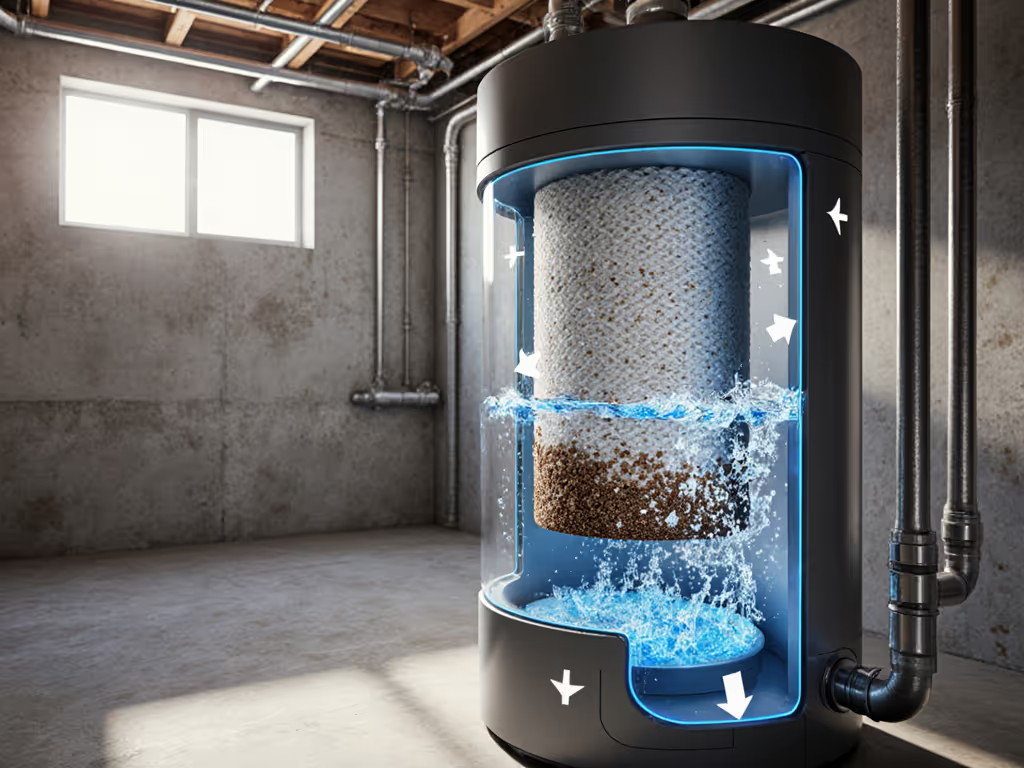
UV Water Purifier Science: Kill Bacteria & Viruses
By Diego Alvarez • 5th Nov
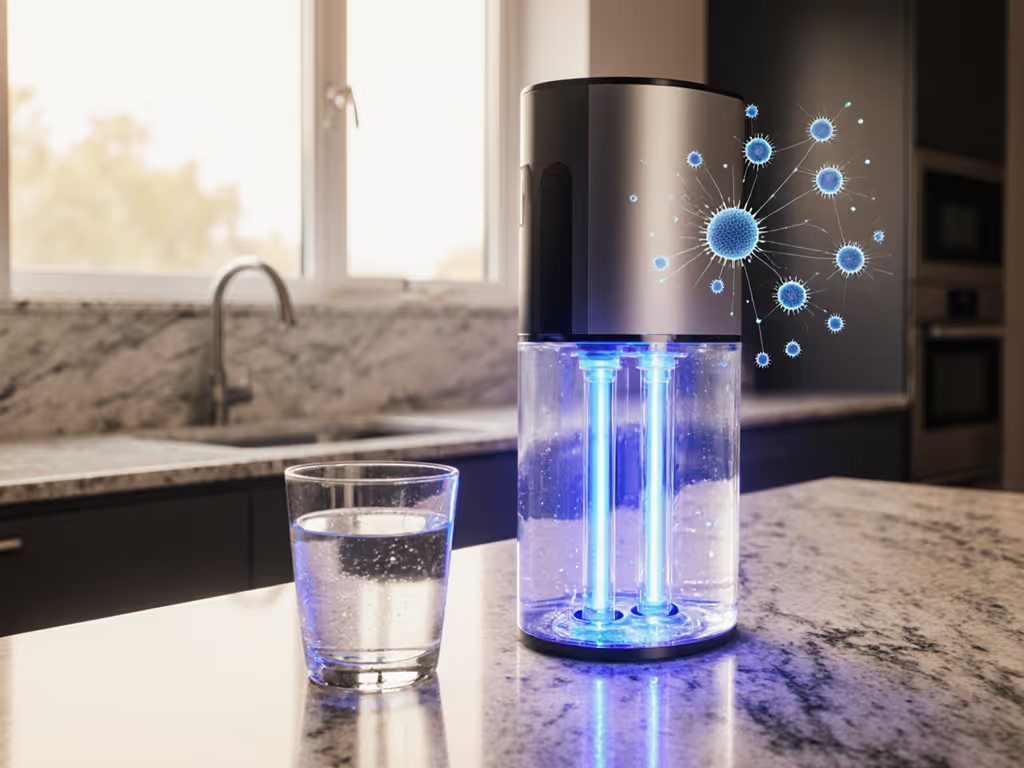
When your family turns on the tap, you expect safety, not invisible threats like E. coli or norovirus hiding in clear water. That's where an ultraviolet water purifier becomes your silent guardian. Unlike pitchers or fridge filters that only improve taste, a UV filter water purifier uses germicidal light to neutralize 99.99% of harmful microbes on contact. No chemicals. No altered taste. Just pure, microbiologically safe water flowing through your pipes. But here's the reality I've witnessed installing dozens of systems: certified performance only protects if the system is easy to live with. Too many families skip maintenance because cramped under-sink access turns a 5-minute lamp swap into a 40-minute wrestling match. Let's fix that.
How Does a UV Water Purifier Actually Work?
Forget complex chemistry. This is physics you can trust. Inside a stainless steel chamber, a specialized lamp emits UV-C light at 254 nanometers, the perfect wavelength to scramble microbial DNA. As water flows past, this light penetrates bacteria, viruses, and parasites like Giardia, damaging their genetic code so they can't reproduce. Think of it like disabling a virus's "copy machine." No reproduction = no illness. Crucially, water disinfection this way leaves minerals intact and zero chemical residue. It's why NASA uses UV for astronaut water recycling!
If it is hard to maintain, it will not protect you.
What Microbes Does UV Eliminate? (Spoiler: Almost All)
Your ultraviolet water purifier targets the invisible invaders municipal reports often miss:
- Bacteria removal: E. coli, Salmonella, Legionella
- Virus elimination: Hepatitis, Rotavirus, Norovirus
- Parasite destruction: Cryptosporidium (immune to chlorine!), Giardia
Independent studies confirm UV neutralizes 99.99% of these microbial contaminants when sized correctly. But here's what marketers won't tell you: UV doesn't remove lead, PFAS, or chlorine byproducts. If these show up in your tests, see our tap water contaminants checklist to understand risks and treatment options. Pair it with a certified carbon filter for comprehensive protection.
Why UV Beats Chemical Disinfection
Imagine never buying chlorine tablets or stressing over disinfection byproducts like trihalomethanes (linked to cancer). UV requires only electricity (about 60 watts, less than a lightbulb). It's:
- Chemical-free: Preserves water's natural taste while avoiding bleach-like odors
- Eco-friendly: No wastewater or plastic cartridges beyond the annual lamp
- Instant: Works in real-time as water flows; no holding tanks needed
For well owners or families in boil-notice zones, this is peace of mind without taste trade-offs. For outage scenarios where UV won't run, consider our no-electricity disaster filters for backup water safety.
The #1 Reason UV Systems Fail (And How to Avoid It)
I've seen pristine UV systems gather dust because homeowners couldn't access the lamp chamber. After my own wrist injury made under-sink repairs agony, I now prioritize ergonomic design above all. Here's my hands-on checklist before installation:
- Measure clearance: Allow 18+ inches above the chamber for tool-free lamp swaps
- Verify pre-filtration: Sediment >5 microns blocks UV light (always install a 5-micron sediment filter first)
- Check flow rate: Oversized systems waste energy; undersized ones fail at peak demand.
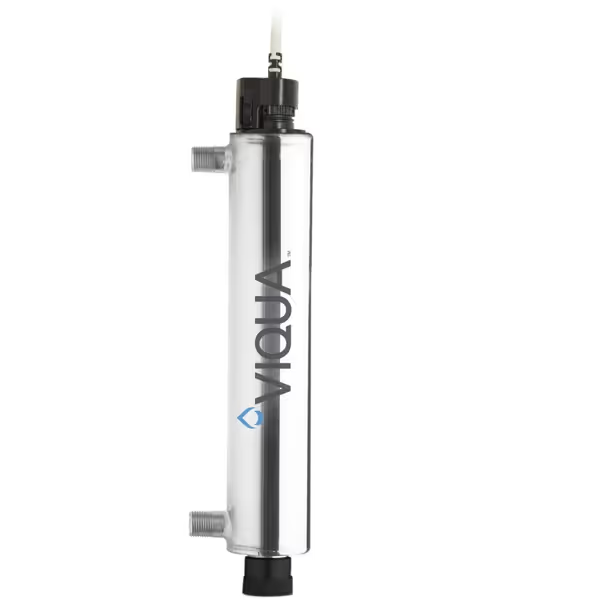
Viqua S2Q-PA Home UV Water System
Guaranteed purification from dangerous microorganisms, ensuring safe drinking water.
$329.55
Flow Rate5 GPM
Flow Rate5 GPM
Pros
Eliminates Cryptosporidium, Giardia, E.Coli, Fecal Coliform
Easy installation for residential use
Cons
Requires annual lamp replacement for effectiveness
Customers find the water purification system easy to install and report that it works perfectly. One customer specifically mentions that the UV light effectively eliminates microorganisms in the water.
Customers find the water purification system easy to install and report that it works perfectly. One customer specifically mentions that the UV light effectively eliminates microorganisms in the water.
Systems like the Viqua S2Q-PA (rated for 3 GPM) solve this with quarter-turn quartz sleeves and visual lamp-life indicators. During installation, I always confirm pressure gauges show 40-80 PSI, because too low risks incomplete disinfection. Safety cautions noted: UV lamps contain mercury; handle only when cool.
Maintenance: The Make-or-Break Step
UV lamps weaken after 9,000 hours (≈1 year). Skipping replacement is like driving with expired airbags. But here's the friction point: Clumsy designs require wrenches and contortions. My hands-on notes:
- Preflight steps: Shut off water, unplug lamp, wear gloves
- Clear sequence: 1) Twist quartz sleeve 90°, 2) Lift out, 3) Wipe clean, 4) Insert new lamp
- Test flow rate: Verify 3+ GPM post-install to ensure contact time
Systems with tool-less housings take 3 minutes (not 40). For help with upkeep, follow our water filter troubleshooting guide. Remember: If it is hard to maintain, it will not protect you. Set phone reminders for annual lamp changes; it's cheaper than a hospital bill.
What Your Water Report Really Tells You
Don't guess, test first. Municipal reports list total coliform; wells need annual E. coli checks. Not sure how to read yours? Use our CCR interpretation guide. If tests show microbial risks, a UV system becomes essential. But if you see high iron, hardness, or PFAS, tack on these stages:
- Pre-filter: 5-micron sediment filter (non-negotiable for UV efficacy)
- Carbon block: Removes chlorine, VOCs, and improves taste
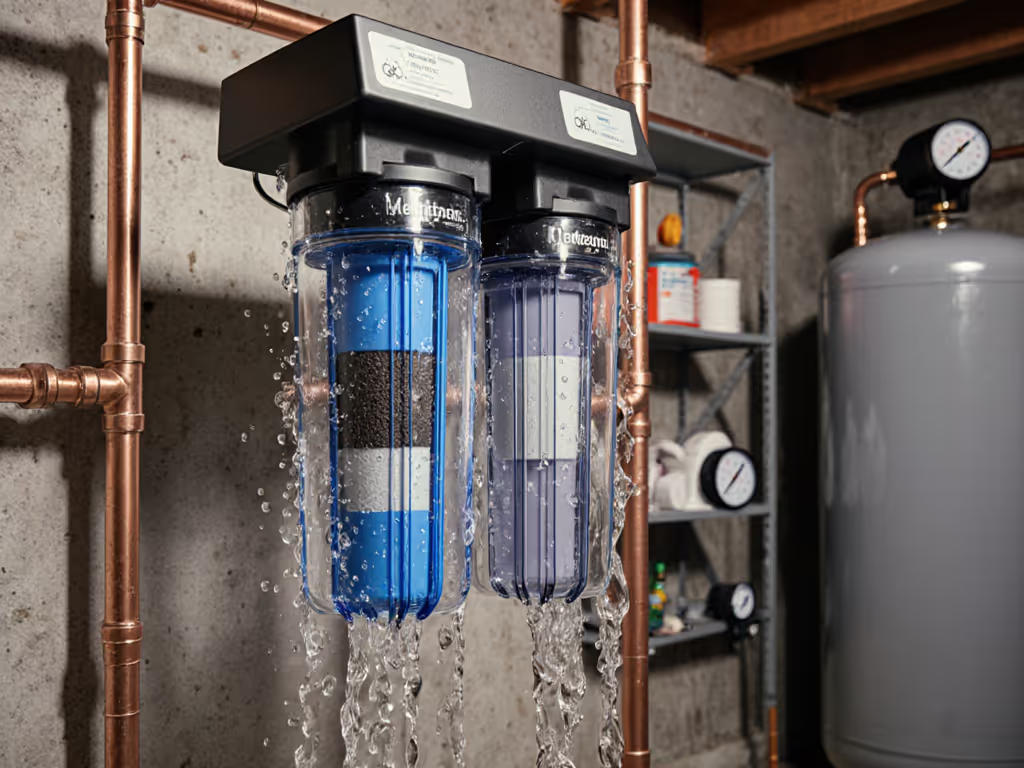
- UV chamber: Final barrier against live microbes
Renters or tight spaces? Countertop UV units mount anywhere with a faucet adapter. Always demand NSF/ANSI 55 Class A certification. To compare certifications across filter types (for chemicals and metals), see NSF 42 vs 53 explained. This verifies 40,000 microwatt-sec/cm² UV dose for 99.99% kill rates.
Your Actionable Next Step
Stop trusting clear water. Today:
- Grab your latest water report (municipal users) or schedule a well test ($20-$50 kits online)
- Circle any microbial contaminants like coliform or Giardia
- Measure under-sink clearance with a tape measure, write it down!
If microbes appear on your report, pair a certified UV filter water purifier with sediment pre-filtration. Choose systems with visible maintenance indicators and tool-free access, because when safety lives under your sink, easy beats perfect every time. Your family's health shouldn't depend on a plumbing degree.
Related Articles