Self-Cleaning Water Filter Systems: Automatic Backwash Explained
By Arjun Mehta • 6th Jun
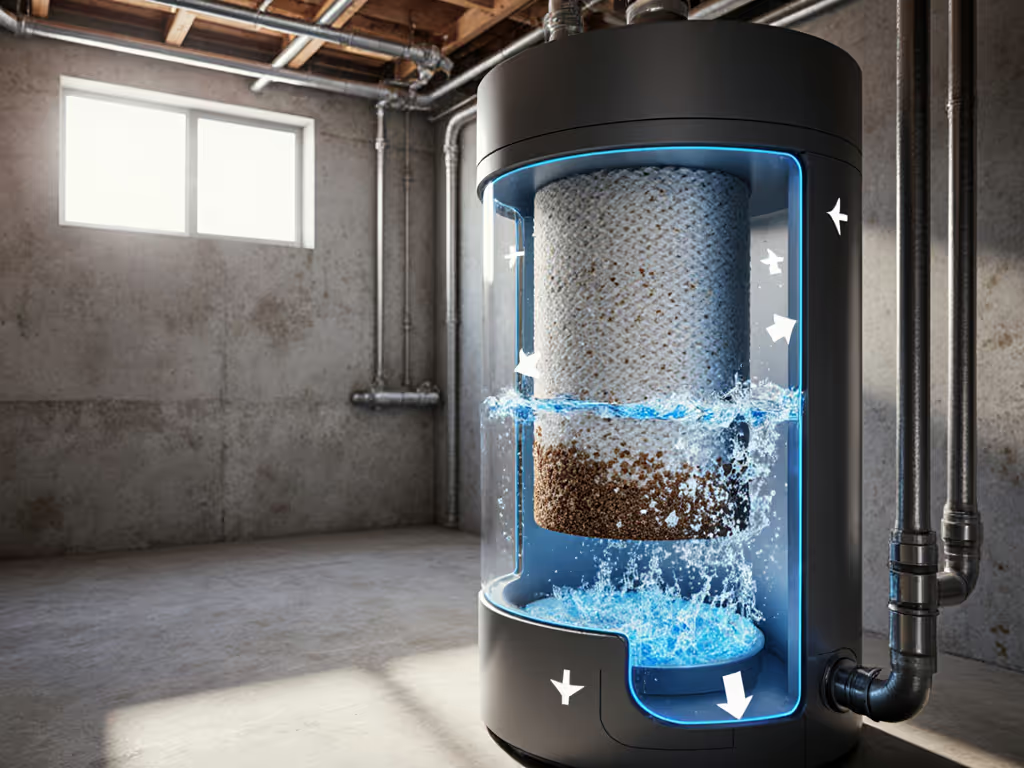
If you've ever wished your water filter system could quietly take care of itself, self-cleaning units with automatic backwash filters are the closest thing we have to "set-and-forget" hardware. When people search for water filter filters or low-maintenance water technology, this is usually what they're hoping exists.
This FAQ deep dive breaks down what automatic filter maintenance technology actually does, what problems it solves (and doesn't), and how to decide if a self-cleaning system fits into your home's treatment stack.
What is a self-cleaning water filter system, in plain English?
A self-cleaning water filter system is a filter that periodically cleans itself so you do not have to remove and replace or manually rinse a clogged element every time it loads with sediment. Instead of swapping cartridges, the unit uses plumbing and valves to flush trapped debris to a drain.
Most residential self-cleaning units fall into three broad categories:
- Screen filters - a fine mesh tube or cylinder that catches sand, grit, and rust.
- Disc filters - stacked plastic discs with grooves that trap particles.
- Media/backwash filters - a tank filled with granular media (like sand or specialty blends) that captures suspended solids.
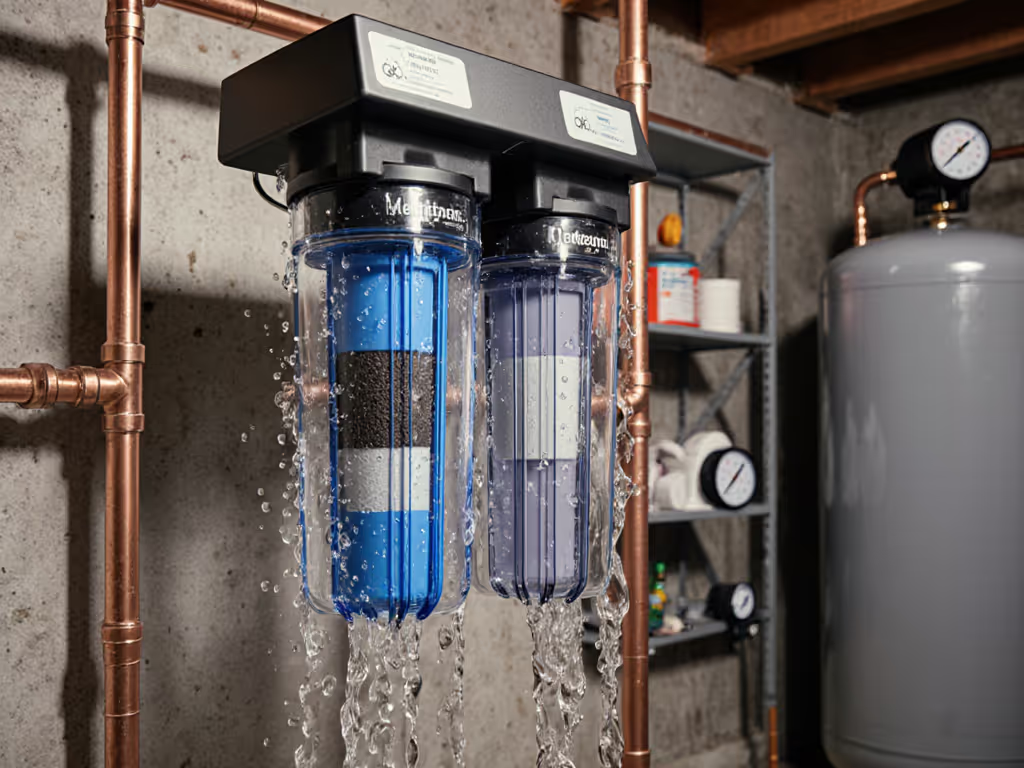
In all of these, the "self-cleaning" part is handled by a built-in backwash or flush cycle that dislodges particles and sends them out of the system. For a deeper dive into pre-filter options, see our whole house sediment filters guide.
Self-cleaning doesn't mean "magic"; it means the filter uses plumbing and flow direction to clean itself instead of your hands and a wrench.
How does automatic backwashing actually work?
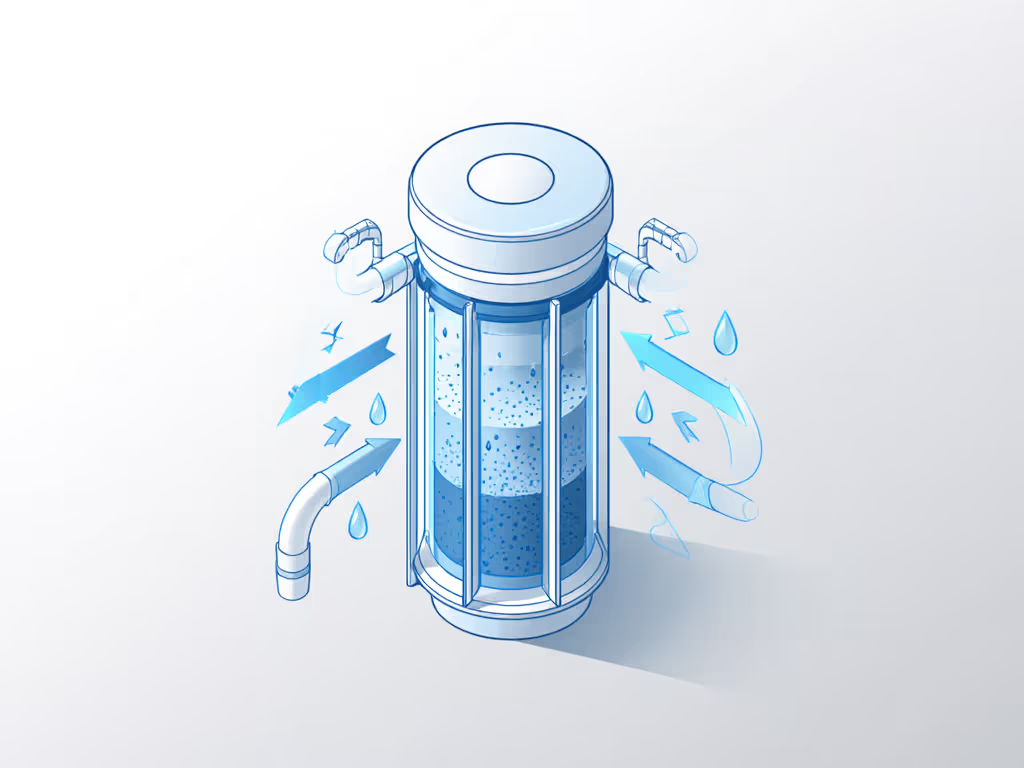
At a high level, automatic backwashing is just controlled reverse flow plus a drain.
According to industry guides on self-cleaning filters, these systems use an automated backwashing process that reverses the water flow at programmed intervals, which dislodges trapped contaminants and flushes them away. Screen-based units route water backward through the mesh, often with internal jets, and push the loosened particles to a drain port. A lab study on self-cleaning screen filters showed that backwash performance depends heavily on pressure, backwash duration, and particle size, but the core mechanism is the same: reverse flow to strip the screen clean. If you’re troubleshooting pressure loss, our water pressure and filters guide explains causes and fixes.
In more detail, a typical automatic backwash cycle looks like this:
- Normal filtration - Water flows through the screen or media, trapping sediment on the surface or in the bed.
- Trigger point reached - Either a timer, a pre-set schedule, or a pressure differential switch detects that the filter is clogged enough to need cleaning.
- Valves shift - An automatic valve or head diverts flow so that water now moves backwards through the filter, or through internal jets.
- Debris removal - The reverse flow and shear forces detach accumulated particles and carry them to a drain line.
- Return to service - After a programmed backwash duration, valves return to normal, and filtration resumes.
Many self-flushing filtration systems combine this backwash with a brief "rinse" step to settle media before sending water back to the home.
From the user's perspective, you hear a valve cycle and maybe see a quick bump in the water meter. The system is executing automatic filter maintenance technology instead of you standing in the basement with a bucket and a hose.
What problems do automatic backwash filters actually solve?
Self-cleaning systems are primarily about sediment management and reliability, not broad contaminant removal.
They're strongest where you have:
- High or variable sediment loads - Sand, silt, rust, and other particles that plug standard cartridge filters quickly.
- Well water with iron or manganese particulates - Where a pre-filter protects downstream iron/manganese treatment or softeners.
- A desire to protect finer filters and appliances - Keeping grit out of carbon blocks, RO membranes, and fixtures so those higher-value components last.
Because the system automatically flushes itself, you avoid the frequent manual cleaning that basic spin-down or cartridge sediment filters require when the water is dirty. That makes them attractive as low-maintenance water technology for whole-house use where access is awkward or where no one wants to babysit a filter after every storm.
What do self-cleaning systems not do?
This is where a lot of marketing muddies the water.
Most self-cleaning filters are designed for suspended particles, not dissolved contaminants like:
- PFAS, PFOA, PFOS
- Lead dissolved in water
- Nitrates, arsenic (dissolved), chromium
- VOCs, disinfection byproducts
- Microplastics below the screen/disc rating
To address those, you are still looking at treatment stages that carry specific NSF/ANSI performance certifications, such as:
- NSF/ANSI 42 - Aesthetic effects (chlorine, taste, odor, some particulates)
- NSF/ANSI 53 - Health effects (lead, some heavy metals, some PFAS claims)
- NSF/ANSI 58 - RO systems
- NSF/ANSI 401 - Emerging contaminants
- NSF/ANSI P231 - Microbiological purification
Backwashing units may have structural/material safety listings (like NSF/ANSI 61 or 372) but typically are not certified for health-related contaminant reduction; they're a pre-treatment, not a complete solution.
That's why I always tell clients: build your stack around certified reduction, not vibes. For a quick explainer on certifications, start with NSF 42 vs 53 and when each one matters. Use self-cleaning sediment filters to keep your high-performance cartridges and membranes from clogging, but still pick those downstream stages based on lab listings for your specific contaminants.
Does "self-cleaning" really mean no maintenance?
No. It means less frequent, different maintenance, not zero.
What you typically still need to do:
- Inspect the unit periodically for leaks, corrosion, or damage.
- Verify the backwash schedule is appropriate for your water - too frequent and you waste water; too rare and pressure drops.
- Check the drain line for kinks, freezing risk, or blockages.
- Occasionally clean or service the screen/media if fouling (like iron slime) outpaces the backwash ability.
Compared with disposable cartridges you might change monthly on dirty water, a self-cleaning filter can cut hands-on work dramatically, but you're trading recurring cartridge changes for system checkups and valve reliability.
How much water does backwashing waste, and is that acceptable?
Every flush sends some water down the drain. The question is whether the volume is reasonable compared to your usage and the cartridges you're avoiding.
Manufacturers of self-cleaning screen and sediment filters describe brief backwash cycles that purge accumulated solids through a drain line, often lasting seconds to a couple of minutes per cycle depending on model and plumbing. An academic evaluation of self-cleaning screen filters showed that achieving good cleaning efficiency requires a combination of sufficient pressure and backwash duration, which inevitably uses some water.
Let's run a simple, conservative example (not tied to any specific model):
- Assume a backwash uses 10 gallons.
- It runs once per day on a timer.
- Monthly waste: 10 × 30 = 300 gallons.
For a household using 3,000-6,000 gallons per month, that's roughly 5-10% of usage. In many real-world setups, backwash volumes and frequencies can be tuned lower, or triggered by pressure differential rather than time, trimming waste further.
Now compare that to a high-sediment well where you're replacing a 10-inch sediment cartridge every week:
- A typical 10-inch cartridge often holds ~1-2 gallons of embodied water in manufacturing plus plastic and shipping, and you're discarding 4-8 of them per month.
If a self-cleaning unit reduces you to one annual cartridge change downstream plus 300-500 gallons of backwash, the trade-off often looks reasonable from both a cost-per-gallon and waste footprint standpoint. But the math changes if your water is already low in sediment - then an automatic system might be overkill.
Where do self-flushing filtration systems make the most sense?
From the installations I see and the data behind them, self-cleaning filters are most compelling when:
- You're on a well with visible sediment in tubs, toilets, or aerators.
- Your lab report shows high turbidity or significant suspended iron/manganese. If iron is a confirmed issue, compare verified iron removal systems to pair with your sediment stage.
- Municipal mains in your area are old, and you regularly get brown water after hydrant flushes or line breaks.
- You're already burning through sediment cartridges at an uncomfortable rate.
They are less compelling when:
- You're on relatively clean municipal water with only minor rust episodes once or twice a year.
- Space is very tight and adding a drain line is impractical.
- You're in an area where water cost or drought restrictions make any additional use hard to justify.
In many homes, a self-cleaning sediment stage sits at the front door of the plumbing, protecting everything downstream: softeners, carbon tanks, under-sink systems, and appliances.
Are these systems certified, and what should I look for?
Unlike carbon or RO systems designed for chemical reduction, many self-cleaning units focus on mechanical performance (flow, particle cut-off, backwash efficiency) rather than health-effect certifications.
For this category, you mainly care about:
- Material and structural safety - Look for NSF/ANSI 61/372 or equivalent listings for wetted components when available.
- Particle rating - The nominal or absolute micron rating of the screen/disc/media.
- Pressure and flow specs - Minimum pressure to backwash effectively, and maximum flow you can push through without excessive drop.
- Drain requirements - Whether your plumbing layout can accommodate the required drain line and air gap.
Then pair that with certified downstream filters that carry NSF/ANSI 42/53/58/401/P231 listings specifically for your target contaminants. That way the self-cleaning pre-filter is making those certified stages last longer, not pretending to replace them.
Map your water, then let certifications drive the filter choice; the self-cleaning unit is the bodyguard, not the star of the show.
If I already have a softener or RO, where does a self-cleaning filter go?
The typical whole-house order, simplified, looks like this:
- Self-cleaning sediment filter - Catches sand, silt, rust.
- Iron/manganese treatment, if needed.
- Softener or conditioner, if hardness is an issue.
- Whole-house carbon (if installed) for chlorine/odor.
- Point-of-use systems - Under-sink carbon or RO for drinking and cooking.
That way, the self-cleaning unit is removing the bulk of the grit before it can foul softener resin, carbon beds, or RO membranes, which are more expensive to replace. Not sure whether you need softening or filtration (or both)? See water softener vs filter for clear guidance.
When I moved into a high-rise and noticed scale in the kettle despite the utility's cheery report, this is exactly how I approached it: I pulled the Consumer Confidence Report, cross-checked lab data, and then built a spreadsheet to see which combination of pre-filters and certified point-of-use stages gave the best cost-per-gallon and lifetime performance. Taste improved, but more importantly, the numbers made sense.
How do I decide if a self-cleaning system is worth it for me?
Use a short checklist:
-
Quantify your water
- Municipal: Pull your latest Consumer Confidence Report and note turbidity, any corrosion issues, and how often you see discolored water.
- Well: Get a lab test that includes turbidity and iron/manganese, plus a simple sediment observation (does a jar sample settle visibly?).
-
Measure your pain
- How often are you changing sediment cartridges now?
- Are you seeing pressure drops or clogged aerators after storms or flushes?
-
Check plumbing feasibility
- Do you have room for a tank or screen housing near the main?
- Can you run a drain line with an air gap to a suitable drain?
-
Run the math
- Estimate current cartridge spend over 3-5 years.
- Compare that to an installed self-cleaning unit plus reduced downstream cartridge usage and the water used for backwashing.
-
Design the full stack
- Decide what contaminants matter for your household (PFAS, lead, nitrates, etc.).
- Choose downstream filters with clear model-specific NSF/ANSI listings for those contaminants.
- Use the self-cleaning filter strictly as sediment insurance.
If your sediment load is modest and you're only changing a pre-filter a couple of times a year, a simple cartridge may be the more rational choice. But if your cartridges look like mud logs every few weeks, a self-cleaning system can turn constant tinkering into a quiet automatic process.
Where should I go from here?
If this topic is on your radar, the next productive steps are:
- Pull your CCR or well lab report and highlight anything about turbidity, sediment, or iron/manganese.
- Log how often you're changing pre-filters now and what that's costing you.
- Sketch a basic treatment diagram for your home and mark where a self-cleaning sediment stage could sit.
- Start comparing options by micron rating, required pressure, drain requirements, and any structural/material certifications, not just marketing claims.
From there, you can layer in the health-focused stages with the certifications that match your specific contaminants. The self-cleaning piece is one tool in the toolbox - best used to protect the certified workhorses that handle what really matters at the tap.
Related Articles