Activated Carbon vs RO: Water Filtration Tech Demystified
By Diego Alvarez • 3rd Oct
Let's cut through the marketing noise. If you're researching water filtration for your home, especially well water filtration, you've likely hit a wall of confusing claims. Reverse osmosis or carbon filters? Which actually removes what's in your water? And just as crucial: will you actually maintain it? Certified performance only protects if the system is easy to live with. I've seen too many under-sink RO units gathering dust because changing the membrane felt like open-heart surgery. Let's break this down with real-world usability in mind.
Your Filtration FAQ, Solved
How do activated carbon filters actually remove contaminants?
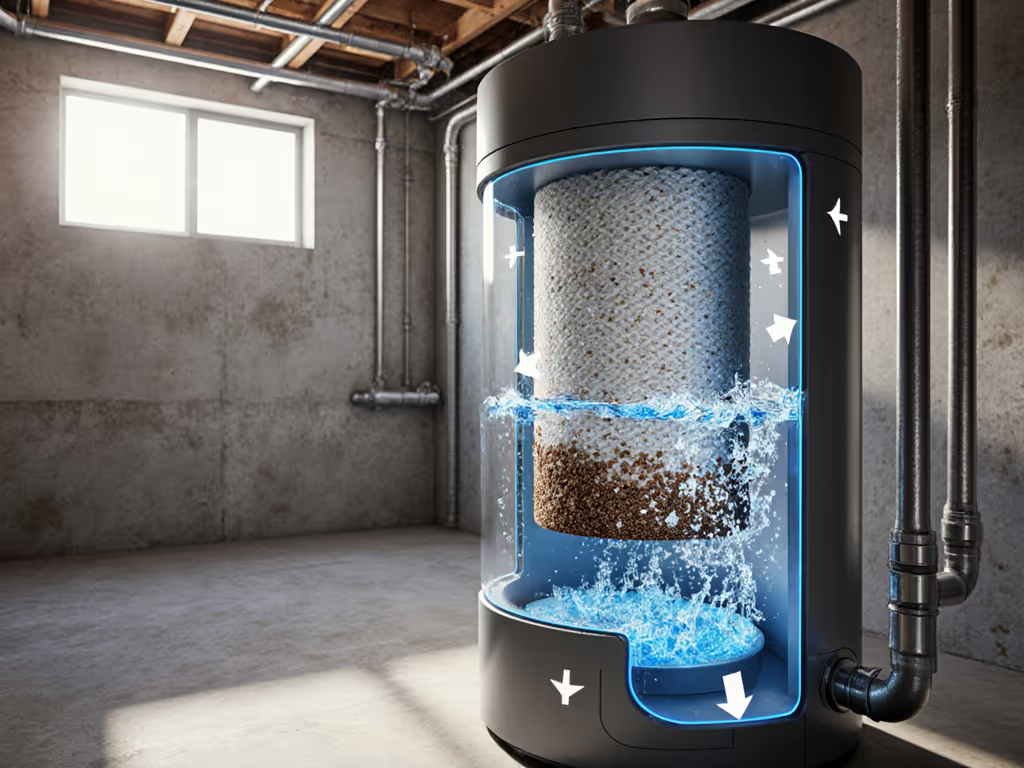
Activated carbon filtration isn't magic, it is physics and chemistry working in concert. Think of it like a microscopic sponge with a supercharged surface. As water flows through:
- Adsorption takes the lead: Contaminants (chlorine, VOCs, pesticides) stick to the carbon's vast network of pores via molecular attraction, like lint to a dryer sheet. This is why surface area matters. A single teaspoon of quality carbon can cover a football field.
- Chemical reactions neutralize: Carbon binds with chlorine, converting it to harmless chloride. No more "swimming pool" taste.
- Physical trapping catches larger particles: Sediment gets snagged in the carbon matrix.
Real talk: Carbon won't remove dissolved salts, nitrates, or fluoride. But for chlorine, lead, PFAS, and odor-causing compounds? It is exceptionally effective when certified to NSF/ANSI 53 or 42. Always check the lab report for your contaminant. For a quick overview of common tap water contaminants and their health impacts, see our tap water contaminants checklist.
What makes reverse osmosis different?
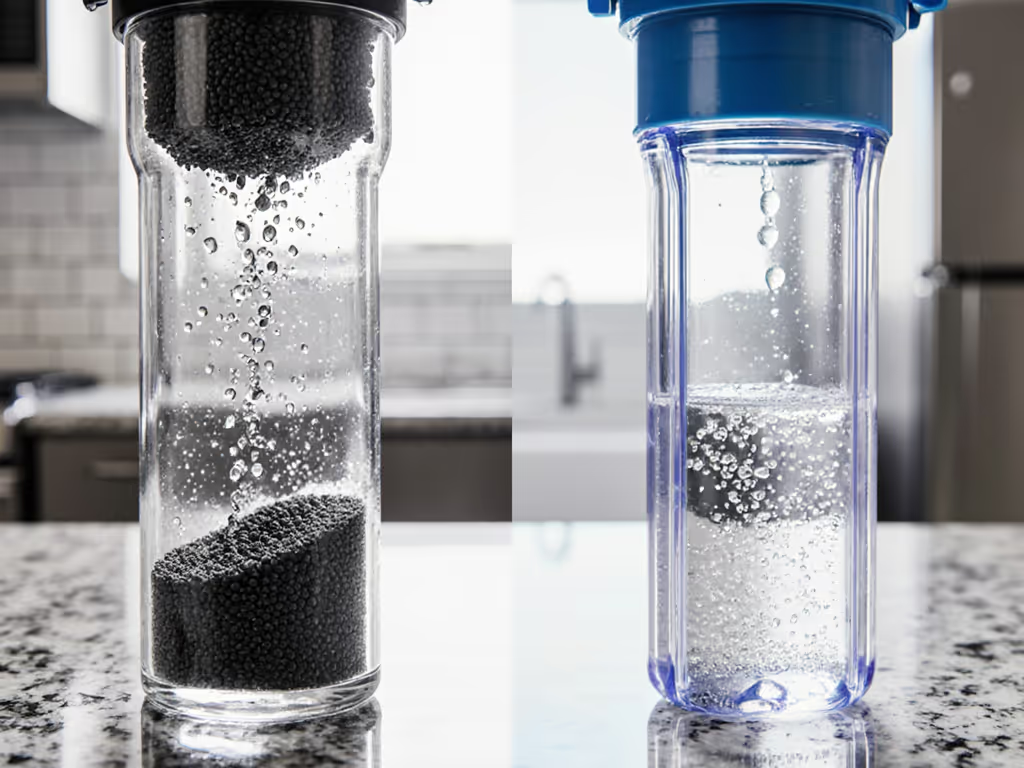
A reverse osmosis system uses brute-force physics. Water is pushed under pressure through a semi-permeable membrane with pores 5,000 times smaller than a human hair. Dissolved solids (salts, nitrates, arsenic, fluoride) get rejected, while purified water passes through.
Key reality check: RO requires 35-60 PSI water pressure. Low-pressure homes (common in rural wells) need a booster pump, adding cost and complexity. Also, RO systems waste 3-5 gallons of water for every 1 gallon purified. This isn't trivial if you're in drought-prone areas like Arizona or California.
Which contaminants does each tackle best?
| Contaminant | Activated Carbon | Reverse Osmosis |
|---|---|---|
| Chlorine/DBPs | ✅ (NSF 42) | ✅ |
| Lead/Copper | ✅ (NSF 53) | ✅ |
| VOCs/PFAS | ✅ (NSF 53) | ✅ |
| Heavy Metals (e.g., Arsenic) | ⚠️ Limited | ✅ (NSF 58) |
| Nitrates/Fluoride | ❌ | ✅ |
| Dissolved Minerals (Hardness) | ❌ | ✅ |
| Bacteria/Viruses | ❌ | ✅ (with post-filter) |
Critical note: Activated carbon preserves healthy minerals like calcium and magnesium. RO strips them out, requiring a remineralization stage for taste and health. If you see "alkaline RO" claims, verify NSF 58 with Stage 4 remineralization testing.
What about flow rate and pressure?
This is where water purification systems live or die in daily use. I've tested units that choked at 0.5 GPM, unusable for filling pots. Here's the hard truth:
-
Activated carbon filters: Maintain flow better (typically 0.8–2.0 GPM). No pressure drop if sized correctly for your home's demand. Check preflight steps: Ensure your faucet valve matches 3/8" or 1/2" standard fittings.
-
RO systems: Start at 0.5-1.0 GPM. Slow fill = waiting for coffee. Pressure below 40 PSI? Flow plummets. Safety cautions noted: Undersized lines cause strain. Measure your static pressure before buying.
Flow rate isn't a luxury, it is whether you'll tolerate the system long term. If it dribbles, you'll bypass it.
How do maintenance demands compare?
Here's the make-or-break factor. I swapped a cramped under-sink cartridge after a wrist injury, 40 minutes of cursing taught me: maintenance friction decides if filters get changed. Let's compare:
Activated carbon filtration:
- Standard 9 to 20 inch cartridges
- Tool-less housings = 2-minute change
- Visual indicators (e.g., color strip)
- Cost: $20-50/year
Reverse osmosis system:
- 4+ stages (prefilters, membrane, post-carbon)
- Membrane replacements require depressurizing lines
- T-fittings often require multiple tools
- Cost: $100-200+/year + wastewater
If it is hard to maintain, it will not get changed. Period. I favor systems with quarter-turn mounts and clear "change now" alerts. Check clearance before install, no one wants to contort under a sink.
Well water owners: special considerations
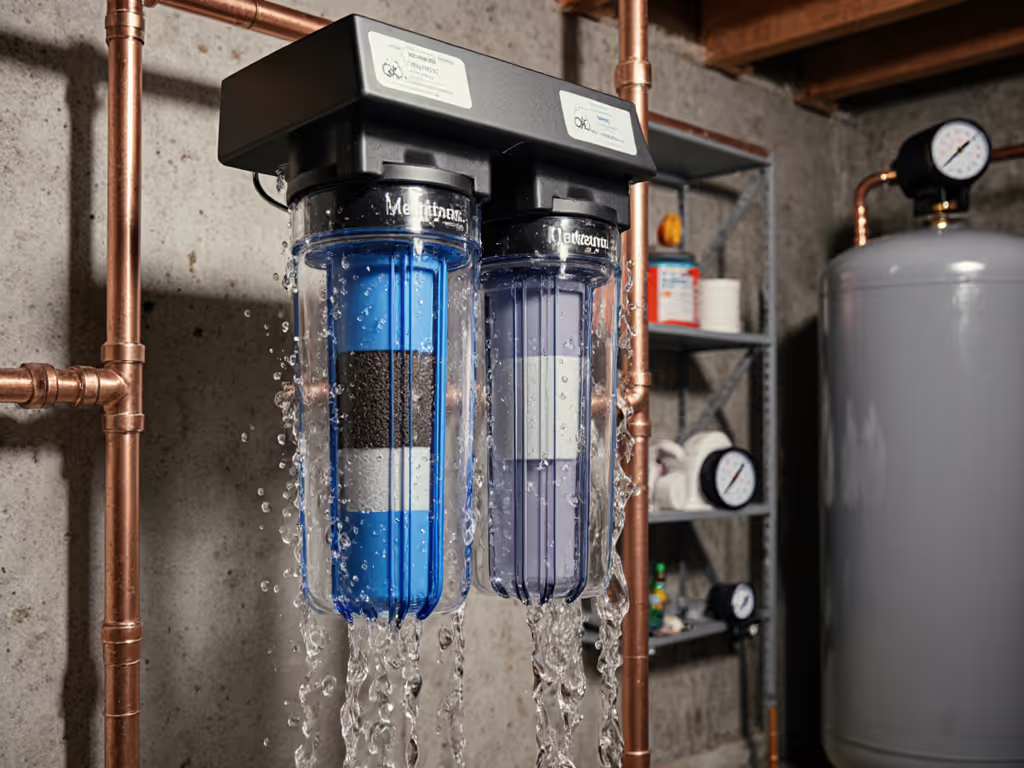
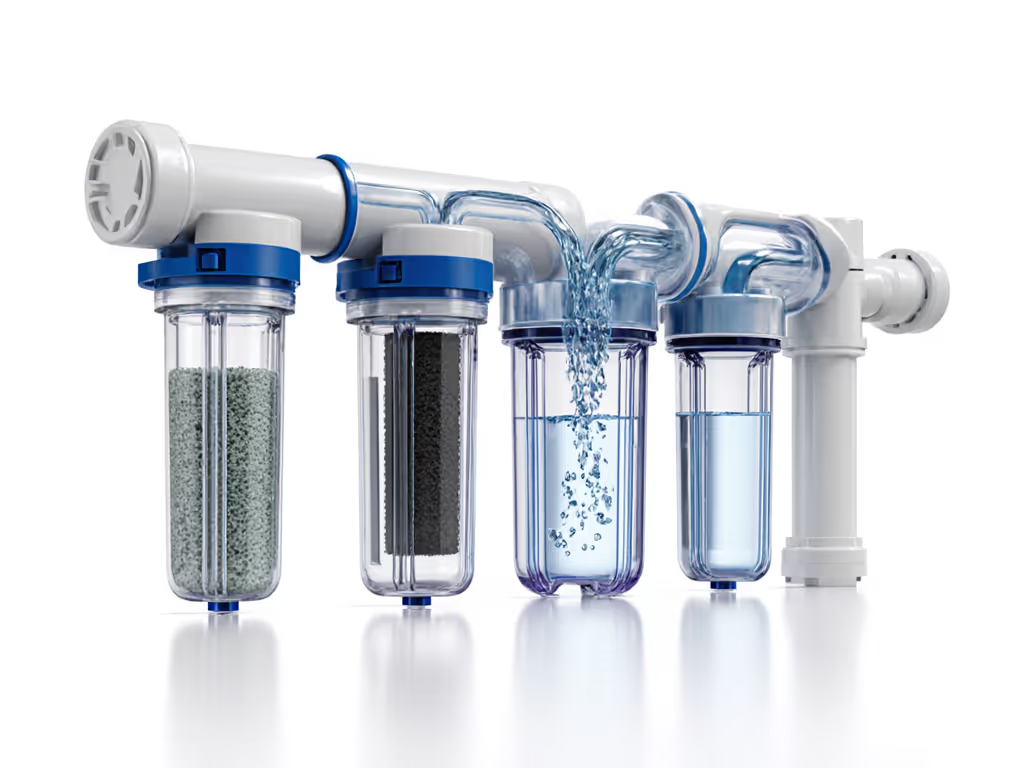
Well water filtration has unique headaches: iron, sulfur, sediment. RO alone won't cut it. You must stage filters:
- Sediment pre-filter (5-20 microns) to protect carbon/membrane
- Activated carbon for hydrogen sulfide (rotten egg smell) and VOCs
- RO only if needed for nitrates/heavy metals (after carbon does its job)
Flow rate and pressure metrics are critical here. Wells often run low-pressure. An RO without a booster pump becomes a $500 paperweight. Test your water first, don't guess. (Hint: $20 test kits from certified labs reveal what you actually need to remove.)
Which should you choose?
- Pick activated carbon if: You have municipal water (removing chlorine/lead/VOCs), need high flow, or hate maintenance fuss. Verify NSF 53 for health contaminants. Ideal for renters or tight cabinets.
- Pick RO if: You have well water with nitrates/arsenic/fluoride, or live where PFAS is confirmed. Only if you have space for 4+ stages, can handle 20% flow reduction, and commit to annual membrane changes.
The bottom line: Certified protection starts with usability
I get paid to test whether filters fit real life. A system that's scientifically perfect but lives under your sink untouched? It is worthless. Certified performance only matters if you'll maintain it. Flow rate, clearance, tool-less design, these aren't nice to haves. They're why families actually get protected water every day.
Your actionable next step:
- Get your water tested: municipal report or well test. (No test? Start with NSF 53 carbon for unknowns.)
- Measure your under-sink space: width, height, pipe access. Preflight check: Can you reach all fittings?
- Demand certification details: not just "removes lead." Ask for NSF listing numbers and reduction % at rated flow.
If it is hard to maintain, it will not protect you. Choose systems that respect your time, space, and water pressure, then stick with them. That's how certified performance becomes real-world safety.
Related Articles