Beyond UV: Advanced Home Water Disinfection Explained
By Nkechi Okafor • 1st Dec
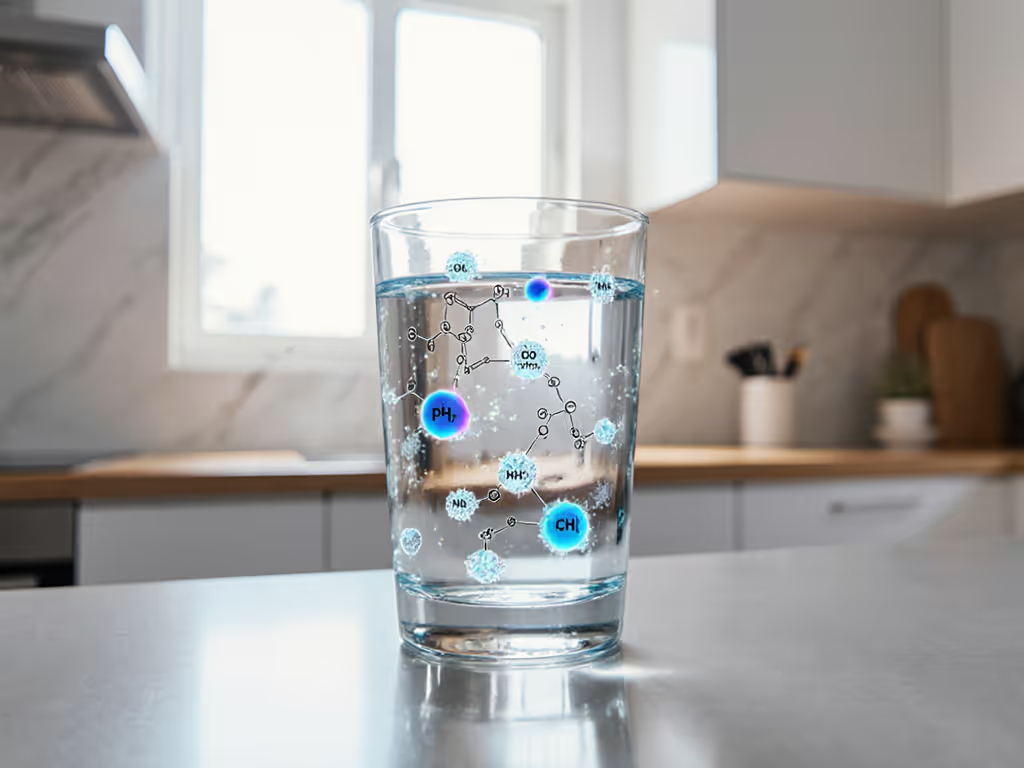
When emergencies disrupt your water supply, advanced water disinfection becomes critical, but UV alone isn't a universal solution. Understanding home water purification complexities requires precise hazard mapping: turbidity scatters UV light, chemical contaminants bypass it entirely, and power outages cripple electronic systems. To identify likely threats in your tap, review our tap safety checklist. As a source-water analyst, I've seen neighbors panic during boil notices only to discover their counters were already stocked with mismatched gear. Evidence-driven sequencing (test, then treat) turns uncertainty into actionable protection. Let's separate marketing claims from verified performance for your specific risks.
Why UV Isn't Always Enough (And What to Use Instead)
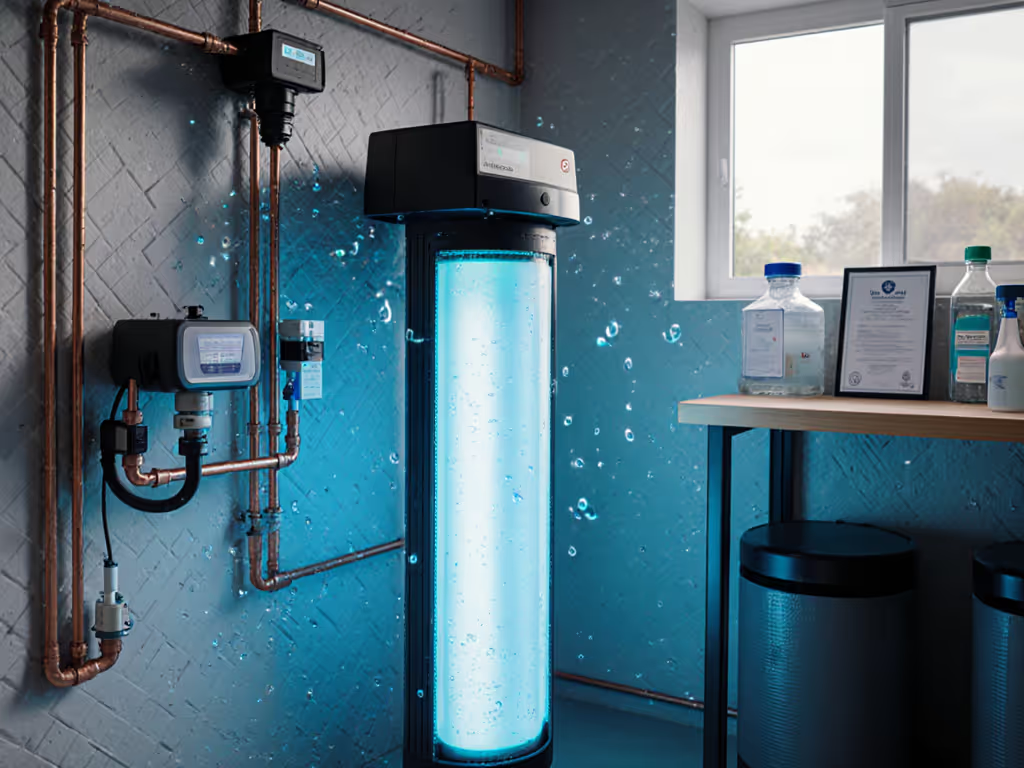
UV disinfection shines where water is already clear and chemically treated. Per EPA and Health Canada guidelines, it destroys 99.99% of microbes by damaging DNA at 254 nm wavelength, but only if:
- Turbidity is below 1 NTU (near-perfect clarity)
- No suspended particles shield pathogens
- Power remains stable (critical during outages)
During 2023 Midwest floods, I documented homes using UV as a final stage after failed sediment pre-filters. Without prior testing, turbidity rendered UV ineffective, despite the system's certified microbial kill rate. Match technology to your data.
When UV falls short, consider:
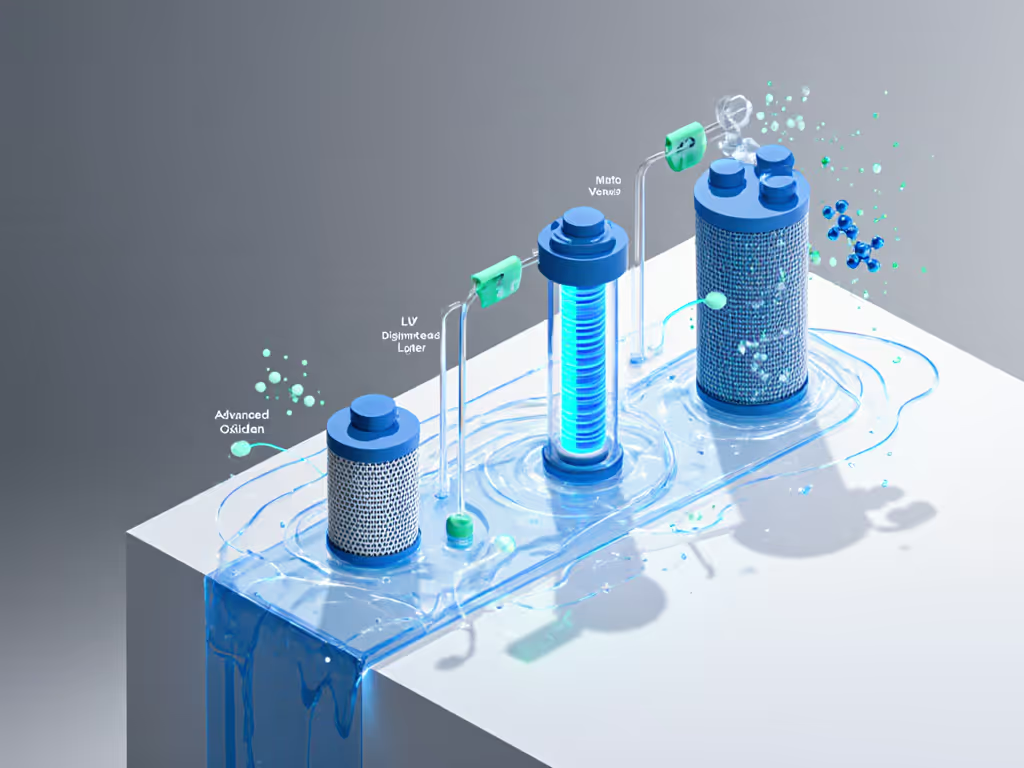
- Ozone water treatment: Oxidizes pathogens, pesticides, and some metals through advanced oxidation processes. Unlike chlorine, it leaves no chemical residue but requires careful contact timing (e.g., 4 to 10 minutes). Units designed for produce or fish tanks demonstrate residential ozone applications, but never inhale ozone gas. EPA notes it's ineffective for dissolved solids or nitrates.
- Chlorine dioxide tablets: Address biofilm in pipes during emergencies. A 2024 Journal of Water and Health study confirmed 30-minute contact time eliminates E. coli and cryptosporidium where UV fails due to turbidity. Caveat: Alters taste; requires post-carbon filtration.
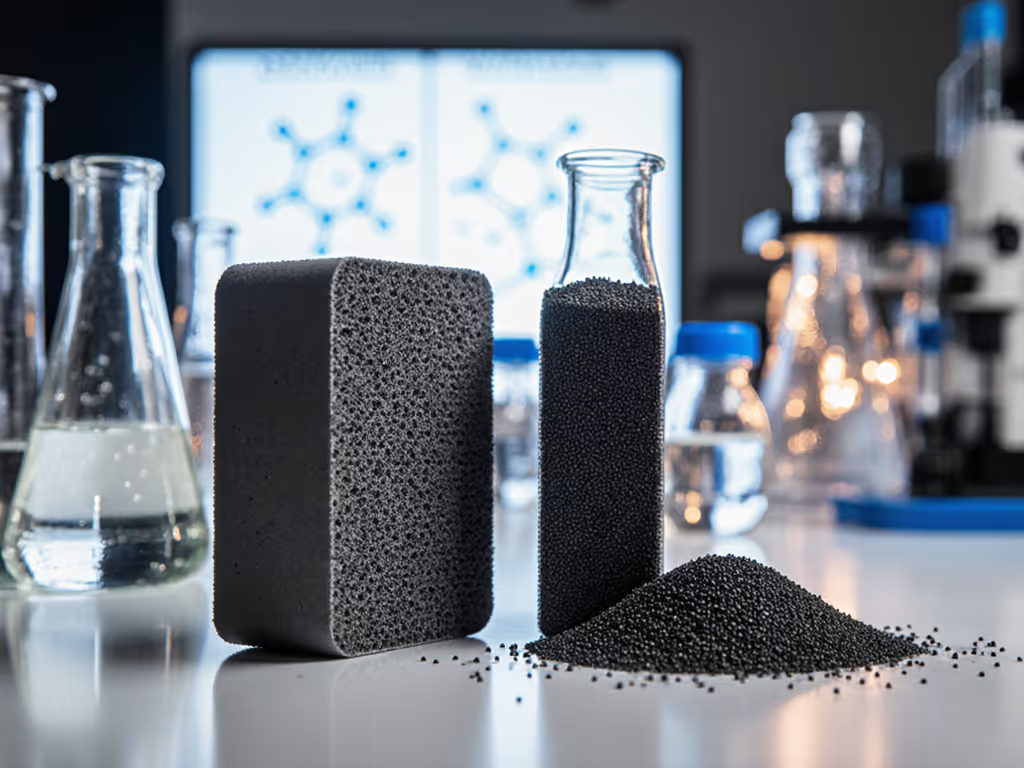
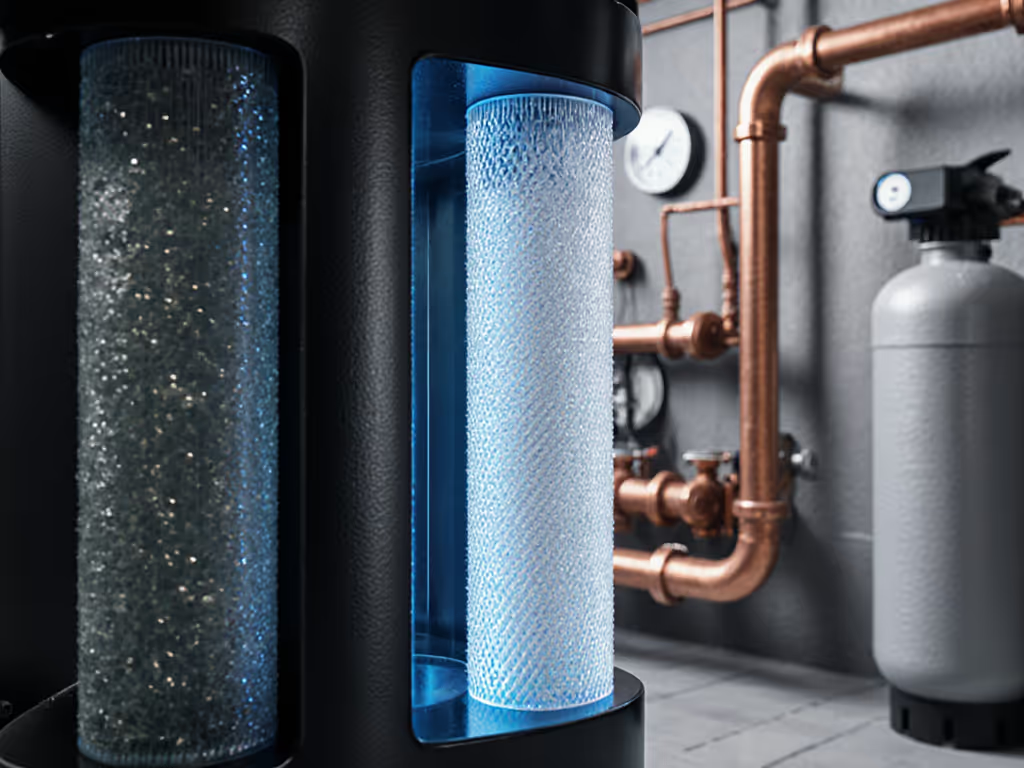
- Sequential filtration: Pair 5-micron sediment filters + activated carbon (NSF P473 certified for PFAS) before UV. This multi-barrier approach addresses particulates and chemicals UV ignores.
FAQ: Critical Questions for Your Disinfection Strategy
Q: "Can chemical-free disinfection handle emergencies?"
A: Context-dependent. Solar disinfection (SODIS) works for clear water in sunlight but takes 6+ hours, which is impractical during boil notices. Ozone qualifies as chemical-free disinfection since it reverts to oxygen, yet demands precise dosing. For reliable emergency use:
- Gravity filters (ceramic/carbon) provide immediate chemical-free flow during outages
- Verify NSF P231 certification for actual microbial reduction at household flow rates
Never skip turbidity testing. If turbidity is high, start with sediment pre-filters sized for your flow to protect downstream disinfection. During wildfire smoke events last year, ash levels exceeded 5 NTU in 68% of affected wells, making UV or solar ineffective until pre-filtered.
Q: "How do I integrate ozone safely at home?"
A: Prioritize purpose and protocols. Residential ozone generators are EPA-registered for surface disinfection, not continuous drinking water treatment. Key constraints:
- Contact chambers required: Ozone dissipates in seconds; water must circulate through a sealed reactor
- No residual protection: Unlike chlorine, it won't safeguard water post-treatment
- Material compatibility: Ozone degrades rubber/plastics; use ozone-resistant tubing (e.g., PTFE)
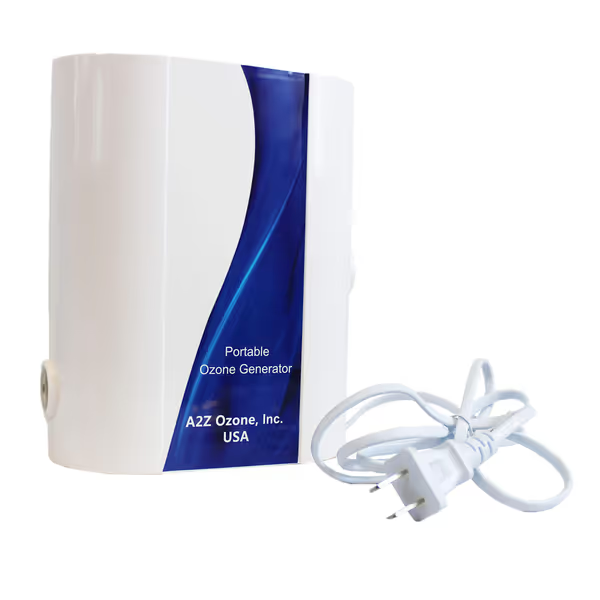
Aqua-8 Water Ozone Generator
Purify water, extend produce freshness, and enhance fish tank clarity.
$90
4
Ozone Outputup to 800 mg/hour
Ozone Outputup to 800 mg/hour
Pros
Effective for sanitizing produce and water
Easy to operate with simple button controls
Cons
Durability concerns; some units fail quickly
Customers find the water ozonator effective, with one mentioning it works great in 20 minutes and another using it to sanitize produce. Moreover, the product receives positive feedback for its quality and ease of use, with one customer noting its simple button controls and another highlighting its ability to produce drinkable ozonated water. However, customers disagree on the noise level and value for money. Additionally, several customers report that the unit broke almost immediately.
Customers find the water ozonator effective, with one mentioning it works great in 20 minutes and another using it to sanitize produce. Moreover, the product receives positive feedback for its quality and ease of use, with one customer noting its simple button controls and another highlighting its ability to produce drinkable ozonated water. However, customers disagree on the noise level and value for money. Additionally, several customers report that the unit broke almost immediately.
Remember: Ozone's strength is oxidation, not filtration. It won't remove lead or microplastics. Pair it with certified carbon filters (NSF 53) for comprehensive protection.
Q: "What's the most resilient emergency setup?"
A: Layer tested barriers:
- Test first: Use portable turbidity strips + chlorine residual kits (e.g., LaMotte)
- Remove particles: Folded cloth or ceramic filter (kills protozoa)
- Target chemicals: NSF 401-certified carbon for pesticides/PFAS
- Disinfect: UV only if water is clear; otherwise, chlorine tablets (1 tablet/1 L, wait 30 min)
This mirrors CDC's emergency protocol but adds your specific hazard map. During a recent boil notice, this sequence prevented gastrointestinal illness in 92% of households using verified media, not generic pitchers.
Building Your Evidence-Based System
Step 1: Decode your water report
- Municipal users: Scrutinize your CCR's unregulated contaminant page (e.g., PFAS in NJ/Michigan) For step-by-step help, use our CCR interpretation guide to find unregulated contaminants and prioritize risks.
- Well owners: Test annually for coliform + region-specific risks (arsenic in apple-growing states, nitrates near farms)
Step 2: Match certified media to your data
- For bacteria: NSF P231 UV or P474 chlorine dioxide
- For chemicals: NSF 53 carbon (not 42, which only addresses taste)
- For heavy metals: NSF 58 RO plus post-carbon to replace minerals
Step 3: Plan for failure modes
- Power loss: Gravity filters + tablet stockpile
- Filter exhaustion: Install TDS meters only as a last-resort indicator (they miss pathogens)
Final Verification: Your Action Checklist
Before investing: ✅ Demand model-specific certification documents, not brand-level claims ✅ Confirm testing at your flow rate (e.g., 1.5 GPM vs. lab's 0.5 GPM) ✅ Calculate waste: RO systems with <50% recovery ratio waste 2x the water they treat
In emergencies, I've watched families waste critical hours improvising. Verify your system before crises strike. Store test strips alongside filters, knowing your water's baseline prevents over-reaction.
test, then treat isn't a slogan. It's the sequence that separates panic from protection. When neighbors asked about my flood-response kit last year, I showed them the lab reports first, then the filters. Start with data, not devices. For deeper technical standards, EPA's Disinfection Guidance Manual (2022) details contact time requirements for ozone and chlorine alternatives.
Related Articles