Nanofiltration Explained: Mineral-Preserving Water Filter Tech
By Arjun Mehta • 29th Nov
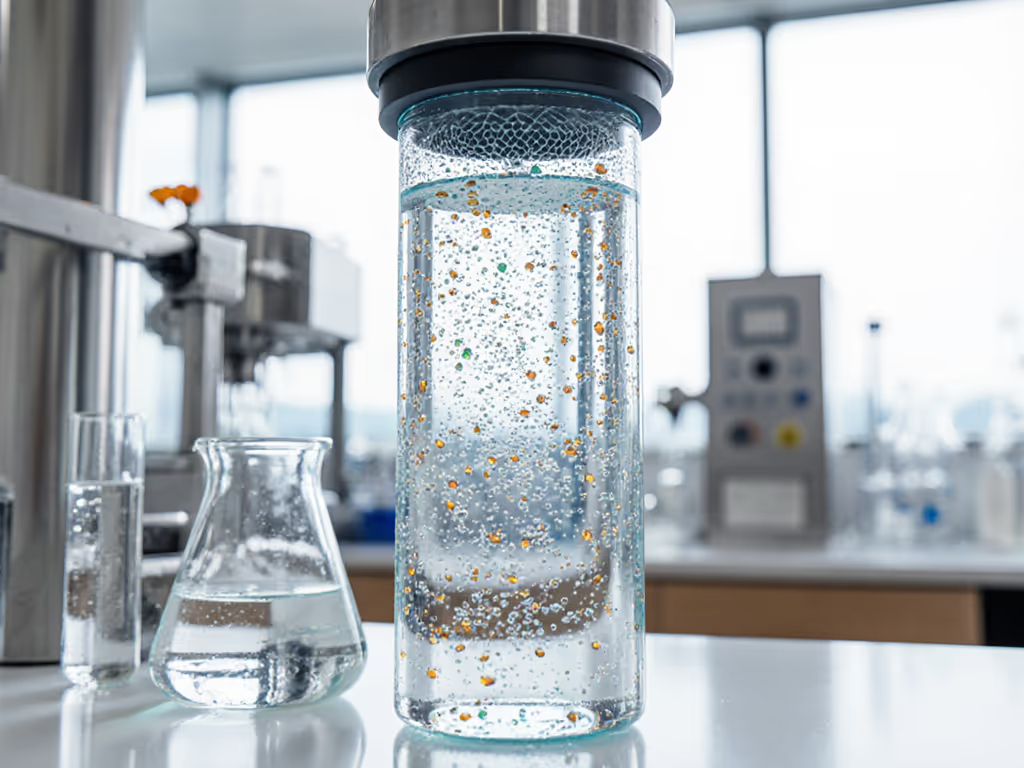
When my high-rise apartment's chlorine levels spiked, and the utility's Consumer Confidence Report didn't match the kettle scale, I knew I needed more than taste improvement. That's when nanofiltration explained became personal: a membrane process selectively filtering hardness ions while retaining beneficial minerals. Unlike reverse osmosis (RO), how nanofiltration works hinges on precise pore size (1-10 nanometers) and charge repulsion, allowing it to soften water without stripping all minerals. For households in hard-water belts or PFAS-affected areas, this selective membrane filtration offers a scientifically validated middle ground. Let's break down the data.
Map your water, then let certifications drive the filter choice.
How does nanofiltration actually work? The physics behind mineral retention
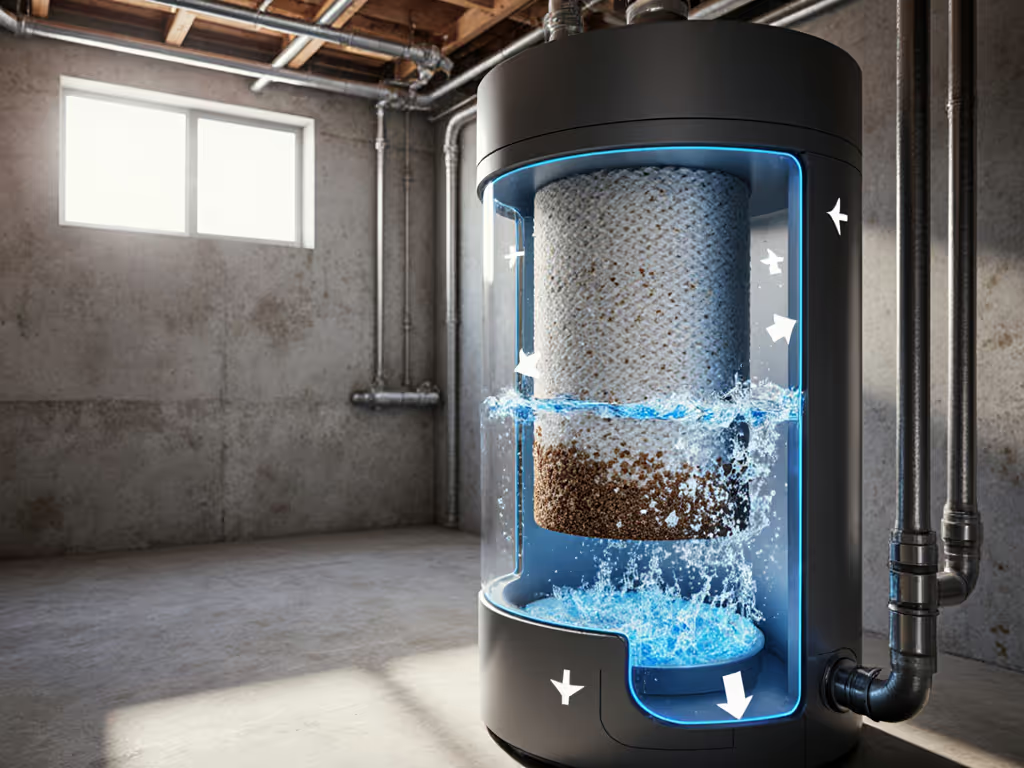
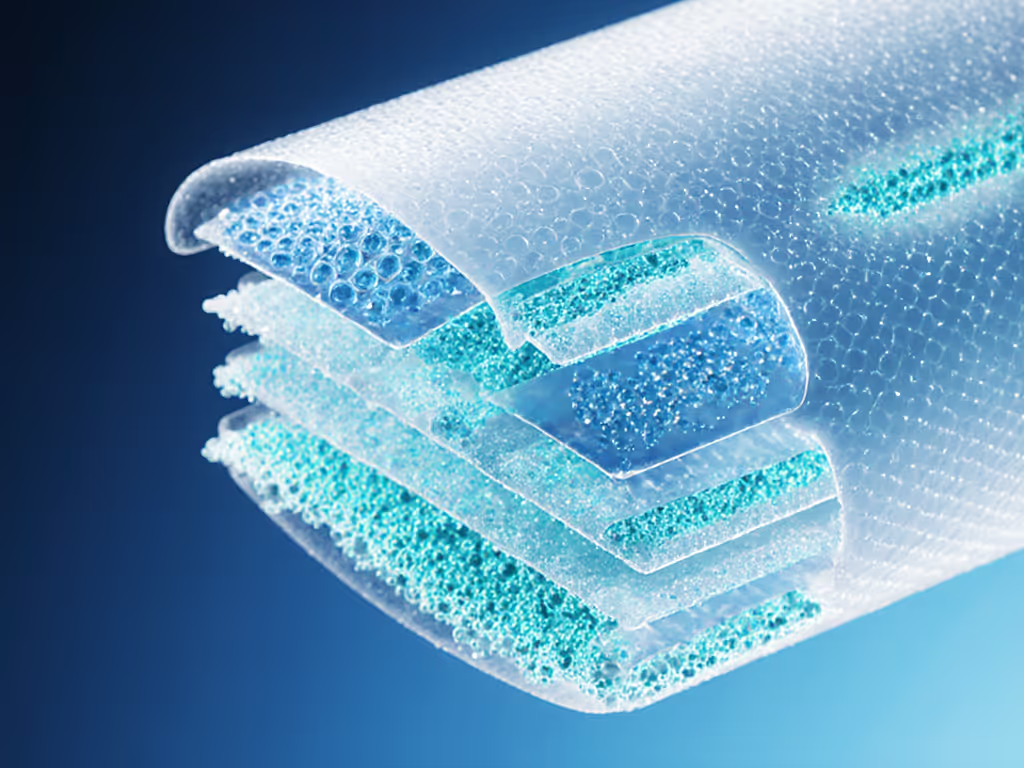
Nanofiltration operates via pressure-driven separation (typically 50-100 psi / 0.35-0.7 MPa), forcing water through a thin-film composite membrane. Its 1-10 nanometer pores (smaller than ultrafiltration but larger than RO) combine with electrostatic repulsion to reject contaminants based on size and charge:
- Divalent ions (Ca²⁺, Mg²⁺, SO₄²⁻) are rejected at 90-98% due to size exclusion and negative charge repulsion
- Monovalent ions (Na⁺, Cl⁻, K⁺) pass through at 40-80% rejection rates depending on pH and pressure
- Organic molecules >200 daltons (e.g., pesticides, humic acids) are rejected at >95%
This selectivity creates mineral retention filtration: it removes hardness-causing ions (calcium/magnesium) while preserving sodium, potassium, and bicarbonate. For context, a typical NF system reduces total dissolved solids (TDS) by 30-60% versus RO's 95-99% removal, a critical distinction for taste and nutritional balance. Mathematically:
Mineral Retention Ratio = (Permeate TDS / Feed TDS) × 100
For hard water (300 ppm TDS):
 NF permeate ≈ 120-210 ppm (40-70% retention)
 RO permeate ≈ 3-15 ppm (1-5% retention)
Nanofiltration vs RO: When should you choose which?
The choice isn't about superiority, it's about matching your water profile to certified performance. Key differentiators confirmed by NSF/ANSI 58 (RO) and 44 (softening) testing:
| Parameter | Nanofiltration | Reverse Osmosis |
|---|---|---|
| Hardness Removal | 95%+ (calcium/magnesium) | 98%+ |
| Mineral Retention | Preserves Na⁺/K⁺ | Removes nearly all |
| Operating Pressure | 50-100 psi | 150-250+ psi |
| Water Recovery | 75-85% | 25-75% (varies by tech) |
| Energy Use | 15-20% lower than RO | Higher |
If your water tests show high hardness (e.g., >120 ppm CaCO₃ in Arizona or Texas) but low sodium, NF avoids the need for a separate water softener, eliminating salt regeneration waste. To understand the alternative, here's how ion exchange water softeners work and how they differ from filtration. However, if you face nitrate or arsenic contamination (common in rural wells), RO's near-total rejection becomes essential. Always cross-reference with your local water report: a 2023 EPA analysis found 67% of hard-water households unnecessarily used RO, discarding minerals they could retain. If you need help reading yours, use our CCR interpretation guide.
What specific contaminants does nanofiltration remove? Certification matters
Marketing claims like "reduces 99% of impurities" are meaningless without context. Verified removal requires citing specific standards: Start with our plain-English explainer on NSF 42 vs 53 so you know what each label guarantees.
- NSF/ANSI 44: Certifies hardness reduction (calcium/magnesium) for softening claims
- NSF/ANSI 53: Validates removal of health contaminants (lead, cysts, VOCs)
- NSF P231: Optional protocol for PFAS reduction (critical for MI/OH/NC residents)
NF systems certified to NSF/ANSI 44 reliably remove scale-forming ions (tested at 15-20 gpg hardness). For organic contaminants, NSF/ANSI 53 certification proves >99% cyst reduction and 95%+ pesticide removal, but only if the specific model's listing includes those contaminants. I've seen uncertified "NF" pitchers claim heavy metal removal despite lacking NSF 53 validation. Always check the product-specific certification database, not just the brand's website.
Where does nanofiltration fall short? Critical limitations
NF isn't a universal solution. Its limitations are defined by physics and certification scopes:
- Fails for monovalent ions: Only reduces sodium/chloride by 40-80%, making it unsuitable for high-salinity water (e.g., coastal areas with >500 ppm TDS)
- No PFAS guarantee: Standard NF membranes don't reliably remove short-chain PFAS (C6) without NSF P231 certification. A 2024 Water Research study found rejection rates vary from 30-90% based on membrane chemistry.
- Microplastics uncertainty: Pore sizes should capture particles >10 nm, but independent testing (WQA Gold Seal) shows inconsistent results for fibers <100 nm.
If your well test shows nitrates >5 ppm or municipal reports note PFAS >4 ppt, prioritize NSF 58 (RO) or NSF P473 (activated carbon) systems. For RO specifics, see our breakdown of NSF 58 and 401 certifications. show your math: Calculate required rejection using your report's contaminant levels versus EPA MCLs.
Is nanofiltration right for your home? A data-driven checklist
Before investing, map your water profile against these certified NF use cases:
- ✅ Hard water scaling (kettle deposits, spotted dishes) with calcium/magnesium >100 ppm
- ✅ Chloramine taste (NF removes >95% with carbon pre-filters per NSF 42)
- ✅ Seasonal pesticide runoff (NSF 53-certified organic removal)
- ❌ Nitrate contamination (>10 ppm requires RO)
- ❌ Low-pressure systems (<40 psi mains pressure won't drive NF membranes)
For renters or HOA-restricted households, countertop NF units (tested to NSF 44) offer sodium-free softening without plumbing. But verify flow rates: many units drop below 0.5 GPM at end-of-life, failing NSF 42's aesthetic claim threshold. For long-term value comparisons, see our cost per gallon guide across filter types. True cost-per-gallon? For a 2,000-gal cartridge at $80: $0.04/gal, 15% lower than equivalent RO systems when accounting for mineral supplements some RO users add.
Final recommendation: Certifications over convenience
Nanofiltration shines where selective mineral retention filtration matters, softening water without creating "dead" low-TDS output. But its real value emerges only when paired with address-specific water data and independent certification. That chlorine spike in my apartment? An NSF 44-certified NF system reduced scale by 92% (verified via 3-month cartridge testing) while retaining 65% of potassium. No marketing claims, just lab reports and a spreadsheet. Your move: pull your CCR or well test, target contaminants with certified reduction claims, and ignore unverified specs. Because when it comes to what flows from your tap, show your math isn't just advice, it's the only way to act with confidence.
Related Articles