Lab-Grade Water Filters: Real Home Needs vs Hype
By Samira Khan • 2nd Jan
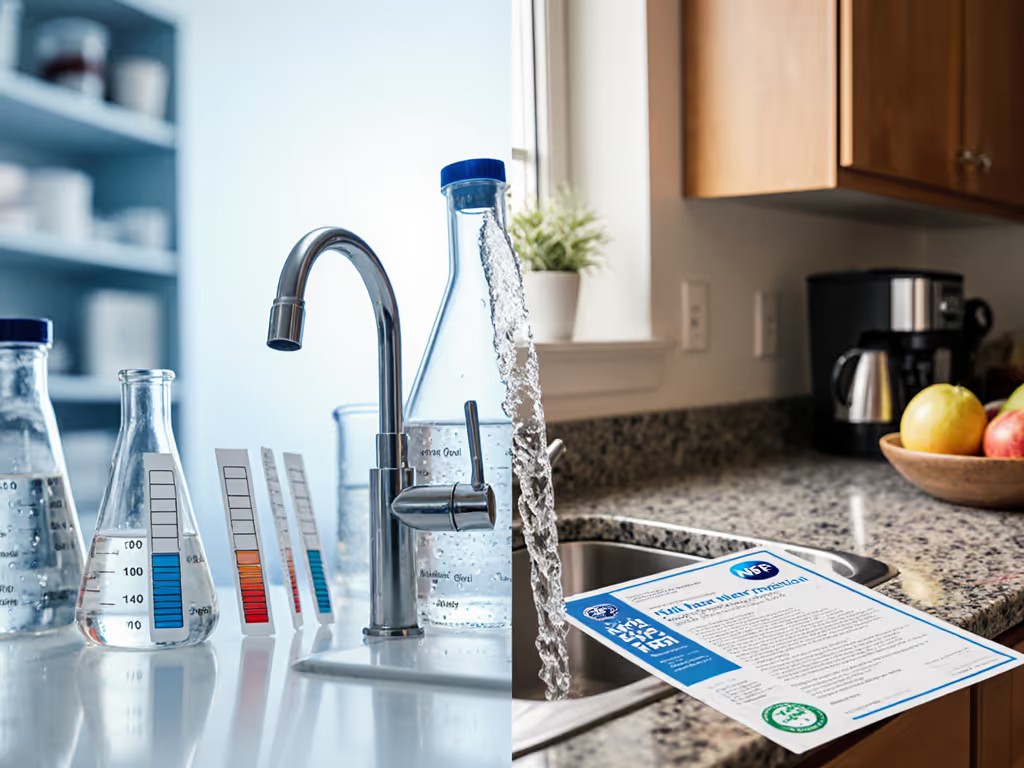
When you see "lab-grade water filter" splashed across home pitcher boxes, it triggers excitement and confusion. But a true lab grade water filter isn't just marketing fluff; it's a precise technical standard designed for research, not your kitchen sink. Meanwhile, your actual house water filtration needs boil down to removing your specific contaminants reliably, affordably, and sustainably. Let's cut through the noise with simple math and certified realities, not hype.
Why "Lab-Grade" Marketing Misleads Homeowners
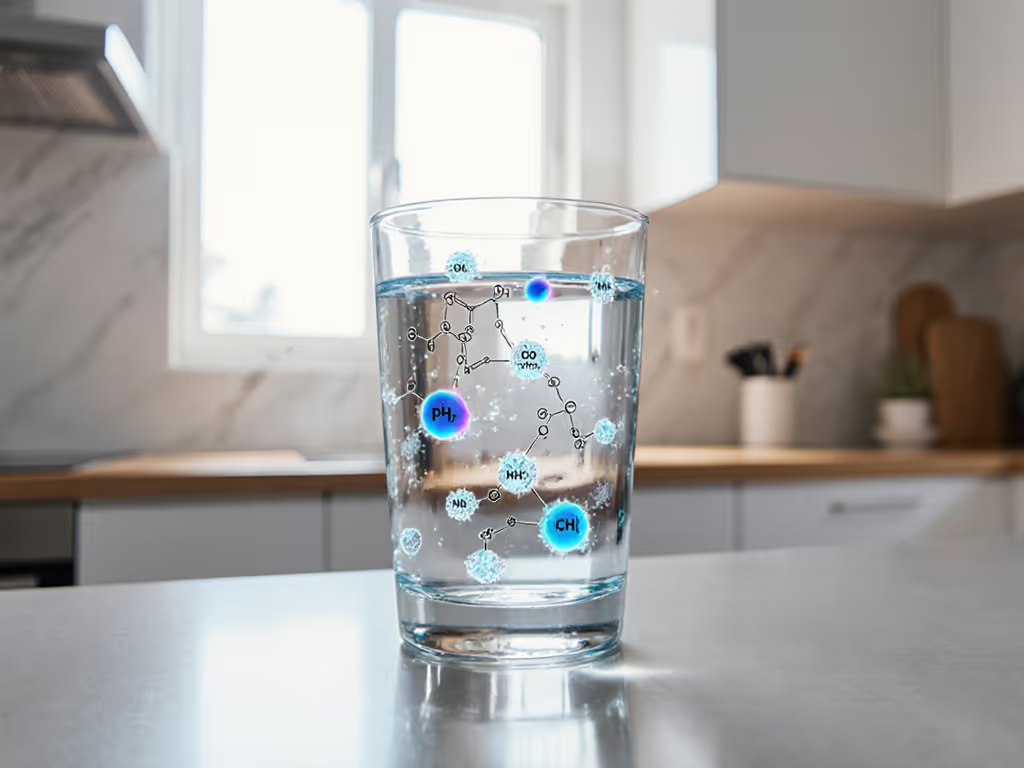
Lab water has zero tolerance for error. ASTM Type I ultrapure water (used in DNA sequencing or pharmaceuticals) demands 18.2 MegOhm-cm resistivity and 0.056 µS/cm conductivity, achieved by multi-stage systems costing $5,000+ with ongoing maintenance. Meanwhile, home water only needs to meet EPA safety thresholds for drinking, certified by NSF/ANSI standards like 42 (taste/odor), 53 (lead/PFAS), or P473 (microplastics). Not sure which certification applies to your water? Read our NSF 42 vs 53 guide.
Confusing these standards leads to wasted money on over-engineered systems. A "medical water quality" filter promising 18.2 MΩ water at home is physically impossible at pitcher scale, and irrelevant for drinking safety.
Take ultrapure water requirements: Labs need particle-free water to prevent instrument corrosion. At home? You care about lead in baby formula or PFAS after a local spill, not removing trace ions that won't harm humans. Chasing lab specs means ignoring your real risks:
- PFAS in Michigan or New Jersey water
- Lead leaching from old pipes in the Northeast
- Chloramine byproducts in Southern California
- Bacterial risks during boil notices (where NSF P231 certification matters) Not sure what to prioritize? Start with our tap water contaminants checklist.
The Cost Trap of Over-Engineering
Let's run the numbers. A true lab system (like a $9,000 Type I ultrapure unit) requires:
- Quarterly $300 cartridge changes
- Annual $1,200 calibration
- 30% water waste ratio (5 gallons wasted per gallon purified)
Simple math with assumptions: For a family of four using 3 gallons daily:
- Annual cost: ($300 × 4) + $1,200 = $2,400
- Water waste: 3 gal/day × 0.3 waste ratio × 365 = 329 wasted gallons/year
- Cost per purified gallon: $2,400 ÷ (3 gal × 365) = $2.19/gal
Now compare a certified home pitcher meeting NSF 53 for lead and PFAS:
- Filter cost: $25 for 40 gallons (2 months)
- Annual cost: ($25 × 6) = $150
- Water waste: Near-zero (no reject stream)
- Cost per purified gallon: $150 ÷ (3 gal × 365) = $0.14/gal
That's a 1,464% markup for specs you don't need. And lab systems often use proprietary cartridges with 200% markups, violating sustainable maintenance. As I learned during my first child's arrival, spend on media that works, not on pretty housings. We switched from panic-buying bottled water to a $30 pitcher with certified lead reduction after calculating cost-per-gallon. The anxiety vanished when the math did.
What Home Filtration Actually Needs to Meet
Forget "research-grade filtration" claims. Your home system only needs to target your water report's contaminants with matching certifications:
| Contaminant Risk | Required Certification | Why It Matters |
|---|---|---|
| Lead (pipes/fixtures) | NSF 53 | Reduces to <5 ppb (EPA action level) |
| PFAS/PFOS ("forever chems") | NSF P473 | Targets specific PFAS compounds |
| Bacteria (well/boil notices) | NSF P231 | Kills 99.999% of bacteria/parasites |
| Chlorine/odor | NSF 42 | Improves taste without removing minerals |
Most homeowners waste money chasing "medical water quality" when NSF 53 + 42 covers lead, chlorine, and PFAS in 90% of U.S. municipal systems. Well owners need P231 for bacteria plus sediment pre-filters, but not ultrapure specs. To protect downstream systems, compare whole house sediment filters that serve as the first defense. Water purity standards exist for a reason: pick the minimum certification required for your contaminants to avoid overpaying.
Your Sustainable Home Filtration Blueprint
Step 1: Match Filters to Your Water
- Get your report: Pull your municipal CCR (Consumer Confidence Report) or test well water ($20 kits for lead/PFAS). If you're on municipal water, use our CCR interpretation guide to decode it.
- Target only what's present: If lead is 2 ppb (below EPA limit), skip expensive lead filters. If PFAS is detected, prioritize NSF P473.
Step 2: Calculate True Lifetime Cost
Use this formula:
Annual Cost = (Filter Price ÷ Rated Gallons) × (Daily Use × 365)
Example: A $30 filter rated for 100 gallons = $0.30/gal. For 3 gal/day: $0.30 × 1,095 gal = $328.50/year For more cost-per-gallon examples and budgeting tips, see our smart savings guide.
Step 3: Prioritize Sustainable Maintenance
- Modular > Proprietary: Choose systems with standard 10-inch cartridges (e.g., NSF 53-certified carbon blocks) available at hardware stores. Avoid subscriptions.
- Clear intervals: Stick to filters with gallon-rated (not time-based) replacements. Flush every 2 weeks if unused.
- Waste audit: For RO systems, demand ≥50% recovery ratio (e.g., 1:1 waste ratio). Systems below 25% waste 3+ gallons per gallon purified.
Budget Meets Efficacy: The Sustainable Choice
Certified home filtration isn't about replicating a lab, it's about consistent, affordable protection against your risks. A $25 NSF 53-certified pitcher filter lasting 40 gallons costs less than bottled water while removing lead and PFAS. Pair it with a $50 sediment pre-filter for well water (replaced quarterly), and you've built a modular stack that budget meets efficacy without lab-grade theater.
True sustainability means filters you'll maintain for years, not systems bankrupting you by Year 2. When water purity standards are applied realistically, you keep contaminants out of your water and unnecessary costs out of your budget.
Actionable Next Step
Before buying any filter:
- Pull your latest water quality report (municipal systems must publish it online; wells need $20 test kits for target contaminants).
- Identify 1-2 critical contaminants from the report (e.g., lead, PFAS, or bacteria).
- Verify certifications on the product's NSF listing page, not the brand's marketing claims.
Spend on media that works for your water. Then run the simple math: If the cost-per-gallon exceeds $0.50 or requires proprietary cartridges, it's not sustainable. Choose transparency over hype, and breathe easier knowing your family's water is safe, affordable, and genuinely clean.
Related Articles