
Water Filter Environmental Impact: Eco-Friendly Comparison
By Arjun Mehta • 12th Jan
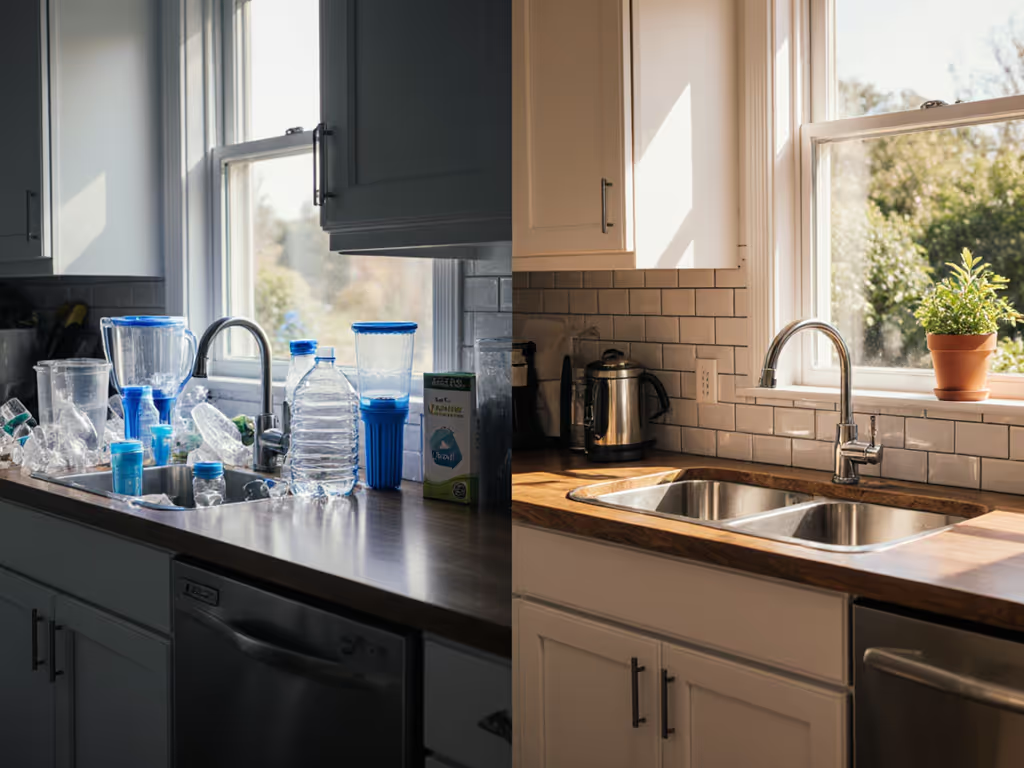
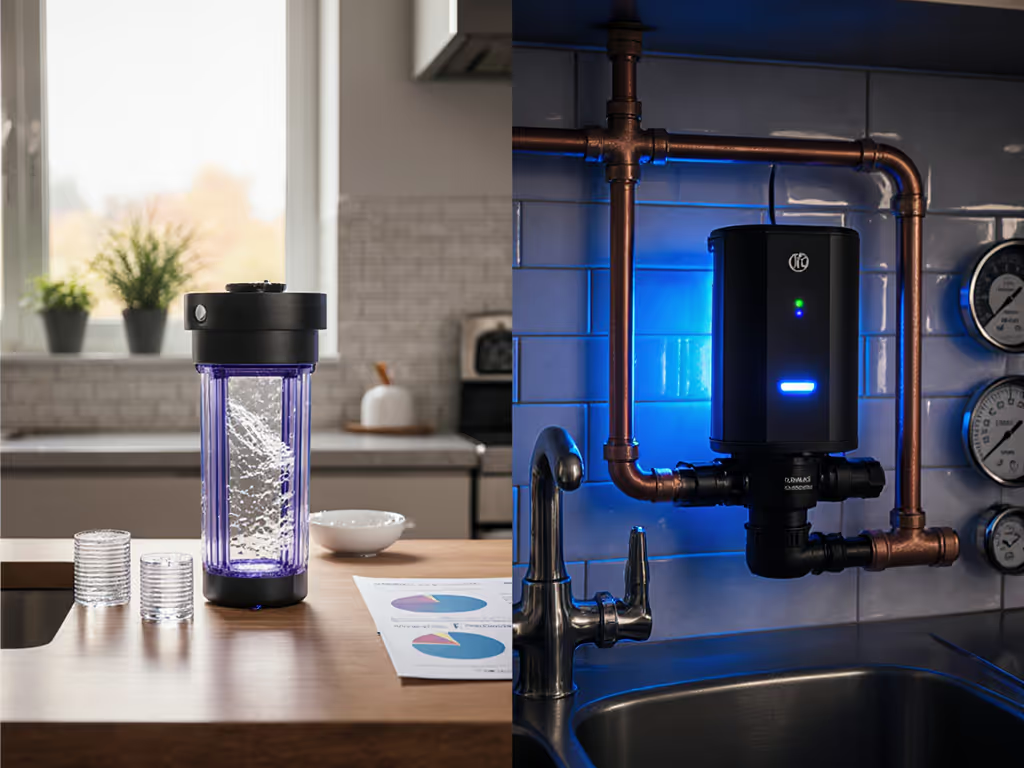
When evaluating water filter environmental impact, most households fixate on plastic waste from bottles without realizing their filtration system might be compounding the problem. An eco-friendly filtration comparison reveals stark differences in sustainability metrics (plastic waste from filters, carbon footprint from filtration processes, and water usage) across technologies. For a broader perspective on plastic and carbon tradeoffs, see our comparative analysis of bottled water vs filtered tap water. After moving into a high-rise apartment, I learned this firsthand when my kettle scale contradicted the utility's confidence. I cross-checked lab data, built a spreadsheet tracking certified reductions, and discovered that some filtration systems create hidden environmental liabilities despite their marketing. Today, I'll quantify these impacts using verified standards so you can minimize waste without compromising protection. Let's map your priorities beyond the marketing.
Why Water Filtration Systems Aren't All Equal for the Planet
Many consumers assume "any filter is eco-friendly" versus bottled water, a simplification that ignores critical nuances. While bottled water generates ~50 billion plastic bottles annually in the U.S. alone (a fact confirmed by EPA production data), poorly chosen filters can shift, not eliminate, environmental burdens. The truth lies in lifecycle metrics often buried in spec sheets:
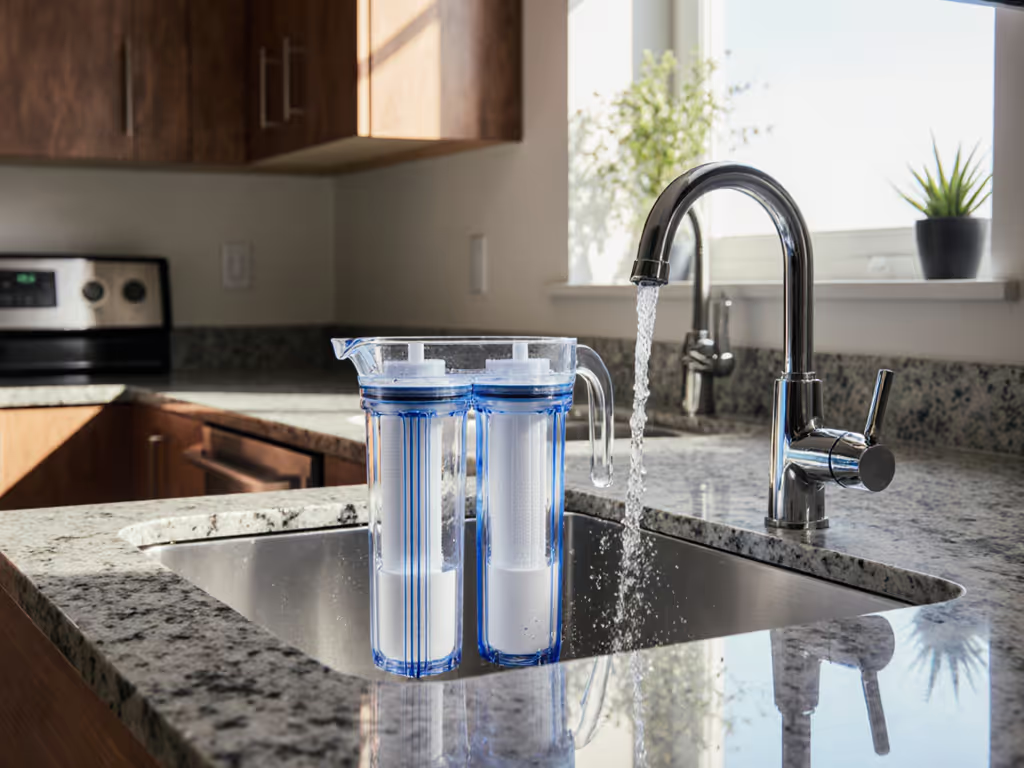
- Plastic waste from filters: Pitcher cartridges contribute 3-4x more annual plastic waste than under-sink systems due to frequent replacements
- Water usage comparison: Standard reverse osmosis (RO) wastes 3-4 gallons (11.4-15.1 L) per 1 gallon purified; high-efficiency variants waste only 0.5-1 gal (1.9-3.8 L)
- Carbon footprint filtration: Energy-intensive systems (e.g., UV purifiers) add ~50 lbs (22.7 kg) CO2/year versus gravity-fed's near-zero emissions
This isn't about virtue signaling; it is about avoiding waste you pay for twice (upfront and via environmental costs). Below, we dissect the data behind sustainable choices.
Your Top 5 Eco-Filtration Questions Answered
1. How do plastic waste footprints compare across filter types?
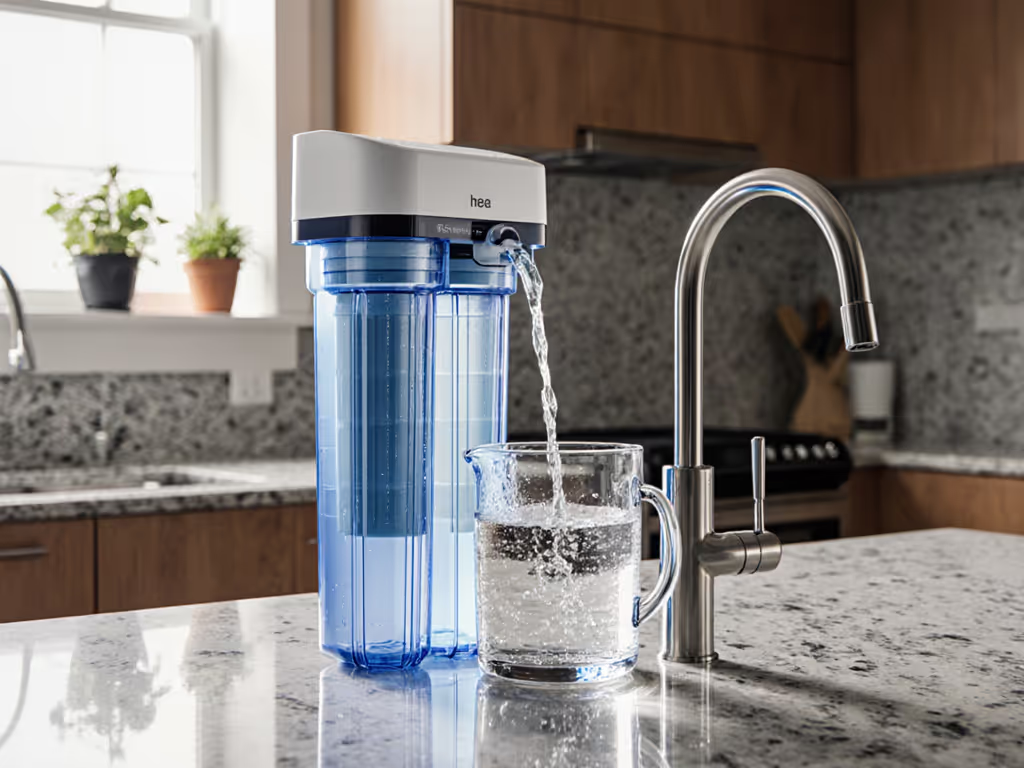
Pitcher filters dominate plastic waste discussions for good reason: each cartridge contains ~6.3 oz (178 g) of plastic and requires replacement every 40 gallons. A household filtering 300 gallons/month generates 4.7 lbs (2.1 kg) of plastic waste yearly, enough to fill two standard kitchen trash bags. Compare this to:
| Filter Type | Annual Plastic Waste | Replacements/Year | Equivalent Bottles Diverted* |
|---|---|---|---|
| Pitcher | 4.7 lbs (2.1 kg) | 9 | 300 |
| Faucet-Mount | 2.1 lbs (0.95 kg) | 4 | 550 |
| Under-Sink Carbon | 1.3 lbs (0.59 kg) | 2 | 1,100 |
| RO System (Standard) | 1.8 lbs (0.82 kg) | 3 | 2,800 |
*Based on 16.9 oz (500 ml) bottle weights; assumes 1 cartridge = 300-2,800 bottles depending on type (per FDA bottled water production data)
Ceramic filters (e.g., gravity-fed systems) score best with only 0.2 lbs (90 g) annual plastic waste due to reusable elements. But here's the critical nuance: if your water contains nitrates, PFAS, or arsenic, ceramic alone won't cut it, so prioritize certified reduction for your contaminants first, then minimize waste within that constraint. Remember: no filtration is eco-friendly if it fails its core function.
2. What's the real carbon footprint of filtration vs. bottled water?
Bottled water's carbon footprint is staggering: 1.5 kg CO2 per liter (3.3 lbs/gal) from extraction, production, and global shipping (per Unified Water Study, 2025). A family using 500 bottles yearly generates 1,650 lbs (748 kg) CO2, equivalent to driving 1,900 miles (3,058 km) in a gas car (EPA GHG calculator).
But filtration isn't zero-impact. Energy use varies dramatically:
- Gravity-fed filters: 0.02 kWh/year (effectively zero CO2 when using renewable grid power)
- Standard RO: 35 kWh/year (≈50 lbs/22.7 kg CO2 from coal-heavy grids)
- Countertop UV purifiers: 80 kWh/year (≈115 lbs/52.2 kg CO2)
Here's the math for a household filtering 300 gal (1,135 L) monthly:
Bottled water CO2 = 300 gal × 12 mo × 3.3 lbs CO2/gal = 11,880 lbs (5,389 kg)
RO system CO2 = (35 kWh × 0.92 lbs CO2/kWh) = 32.2 lbs (14.6 kg)
Net savings = 11,847 lbs (5,374 kg) CO2/year
The takeaway? Even the least efficient home filter reduces carbon emissions by 99.7% versus bottled water, but optimizing your system further matters. Choose NSF/ANSI 401-certified RO with ≥75% recovery ratios to minimize energy waste (see our guide to low-waste under-sink RO systems).
3. How does water waste factor into sustainable filter lifecycle?
RO systems face valid criticism for water waste, but certified models vary wildly. Standard units waste 3-4 gallons per gallon produced (75-80% reject water), while NSF P231-certified high-efficiency units waste only 0.5-1 gal/gal (33-50% reject water). Consider a household using 100 gal (378 L) weekly:
- Standard RO: Wastes 300-400 gal (1,135-1,514 L) weekly → 15,600-20,800 gal (59,000-78,700 L) annually
- High-Efficiency RO: Wastes 50-100 gal (189-378 L) weekly → 2,600-5,200 gal (9,840-19,700 L) annually
This is where mapping your water profile prevents over-engineering. If your water tests show only chlorine/chloramine (addressed by NSF/ANSI 42 carbon filters), RO is environmentally unjustifiable, since it introduces 100% unnecessary water waste. In hard-water regions (e.g., Arizona, Texas), use a water softener before RO to prevent membrane scaling and extend cartridge life by 30%, reducing waste per gallon filtered.
4. Which certifications actually verify eco-claims?
Greenwashing is rampant in filtration marketing. To understand which labels actually matter, start with our guide to NSF 42 vs 53 certifications. Look for these independent certifications with test protocols you can verify:
- NSF/ANSI 42: Validates chlorine/taste/odor reduction (critical for replacing bottled water)
- NSF P231: Mandatory for RO water waste claims (<1.5 gal waste/gal purified)
- NSF P473: Verifies PFAS reduction at 10 ppt detection limits
- WQA Sustainability Standard: Assesses full lifecycle (packaging, energy, recyclability)
"Certified reduction, not vibes" must be your mantra. A brand claiming "eco-friendly" without NSF P231 for water waste or WQA Sustainability certification is making unverified assertions. I've seen products advertise "50% less waste" versus their old model, not versus industry standards. Always demand the certification listing number and cross-check it on NSF's public database.
5. How do I build a truly low-impact system for my water?
Ditch one-size-fits-all solutions. Follow this sequence:
- Map your water: Pull your CCR (Consumer Confidence Report) or get a well test. Identify contaminants needing removal (e.g., lead, PFAS, nitrates).
- Match certifications to threats:
- Chlorine/chloramine → NSF/ANSI 42
- Heavy metals → NSF/ANSI 53
- PFAS → NSF P473
- Arsenic → NSF P234
- Optimize for waste reduction:
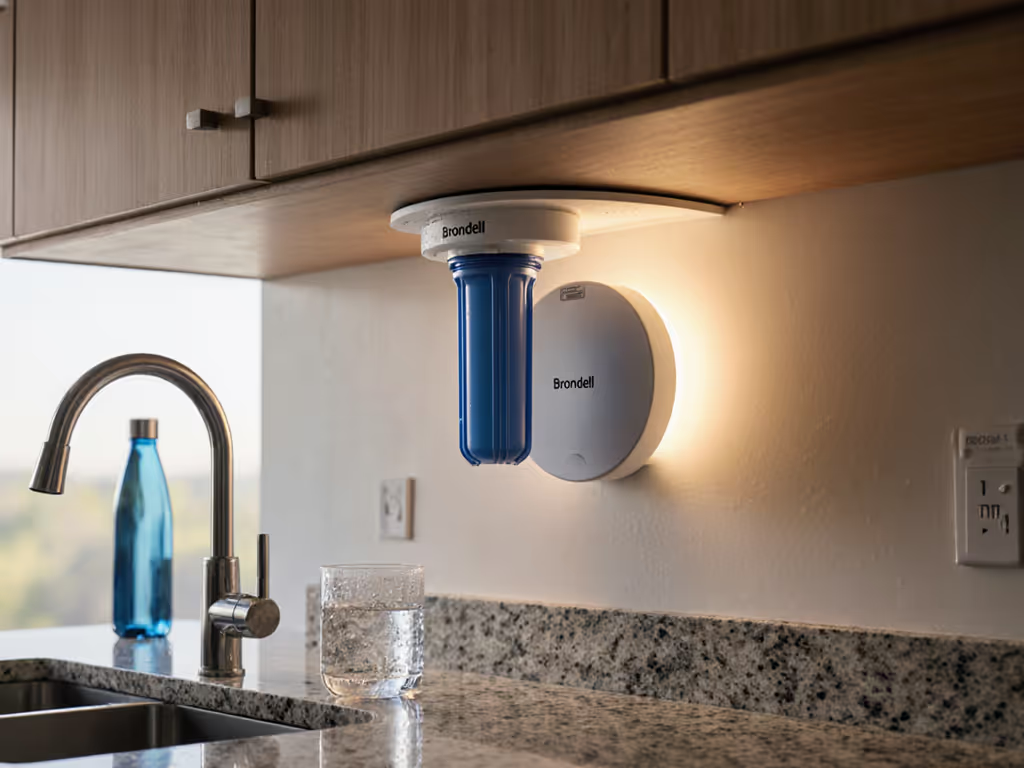
- If no dissolved solids, skip RO, use carbon block (NSF/ANSI 53)
- For RO needs, choose NSF P231-certified with ≥75% recovery
- Select recyclable cartridges (look for #5 PP plastic housings)
- Consider reusable ceramic pre-filters to extend main cartridge life
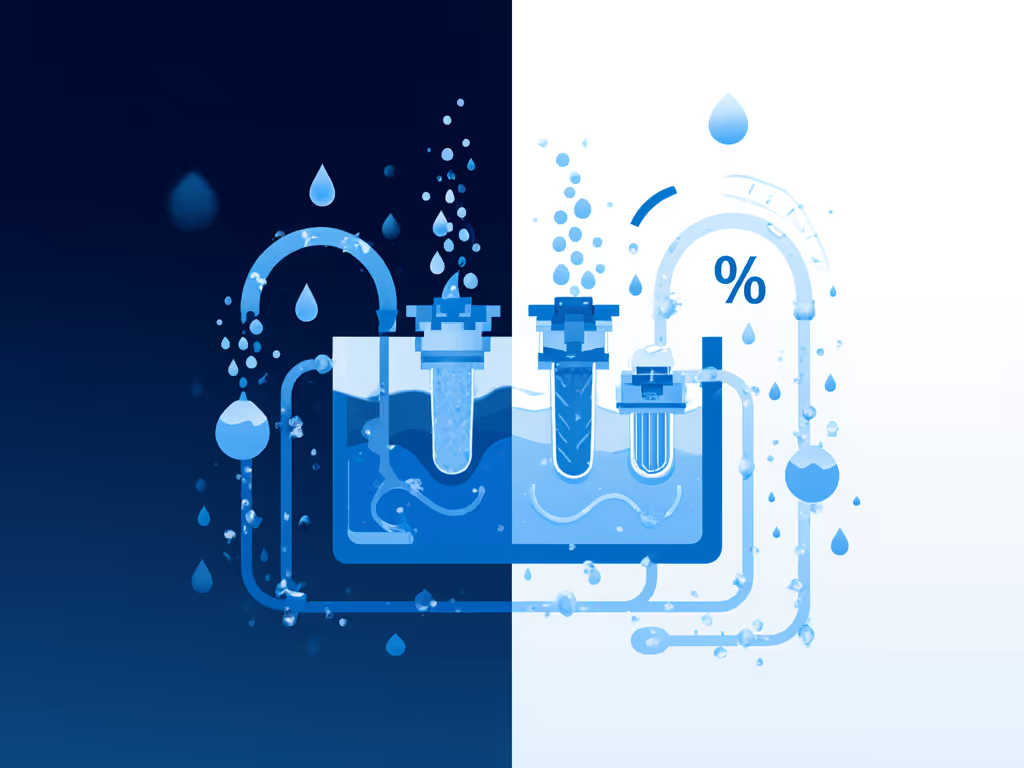
Example: A Michigan household with PFAS in their water (12 ppt) used a standard RO wasting 3.5 gal/gal. By switching to an NSF P231-certified unit (wasting 0.8 gal/gal), they cut water waste by 77%, saving 9,800 gal (37,100 L) annually, without sacrificing PFAS reduction (verified at 99.2% via third-party lab).
The Bottom Line: Certifications Over Conscience
Filtration's environmental impact isn't binary, it is a spectrum where informed choices yield outsized benefits. That standard pitcher filter stacking up in your cabinet? It generates 3.4x more plastic waste than a modular under-sink system with NSF/ANSI 53 certification. But if your local water has PFAS, skipping certified PFAS reduction for the sake of "less plastic" is reckless eco-optimism. Map your water profile first. Then let certifications, not marketing, drive the filter choice.
The goal isn't zero impact (impossible for any water treatment) but minimized impact with verified performance. I still run that spreadsheet I built after moving into my high-rise (now with 12 municipal datasets tracking how certified reduction translates to real-world environmental savings). Because when you're protecting your family's water, you shouldn't have to guess what you're protecting the planet from.
certified reduction, not vibes
Related Articles