Bottled Water vs Filtered: 2,000x Environmental Cost?
By Arjun Mehta • 3rd Oct

When facing the daily choice between bottled water vs filtered tap water, consumers rarely consider the staggering environmental impact water decisions create. The data reveals bottled water requires up to 2,000 times more energy than filtered tap water per liter delivered (a multiplier that transforms a simple hydration choice into a significant sustainability equation). Map your water profile, then choose filters proven by independent certification, rather than relying on marketing claims that often obscure true environmental costs.
The Bottled Water Equation: Plastic, Energy, and Carbon in Numbers
Plastic Pollution Metrics That Matter
Bottled water contributes to plastic pollution on an industrial scale. Consider these verified figures:
- Americans consume approximately 50 billion plastic water bottles annually
- Only 9% of plastic bottles are actually recycled (OECD data)
- 86% of plastic bottles end up in landfills or as environmental litter
Each bottle's lifecycle involves 3.4 plastic grams per milliliter of water, tripling the water required to make the container versus filling it. The decomposition timeline varies by conditions: 5-500 years for standard PET bottles, versus 2-5 years for certified compostable alternatives (though these remain <1% of market share).
Water Footprint Calculation
The complete water footprint of bottled water tells a more complex story than simple consumption:
Total water footprint = (Bottle production water) + (Transport water) + (Distribution system water)
 = (3 × product volume) + (0.01 L/gallon-mile) × shipping distance + (0.2 × product volume)
For a standard 500ml bottle traveling 1,000 miles:
- 1,500ml for bottle production (3× volume)
- 100ml for transportation (0.01L/gallon-mile × 1,000 miles × 0.5L bottle)
- 100ml for distribution infrastructure
Total: 1,700ml water equivalent per 500ml of product (3.4× the actual water consumed). Compare this to home filtration systems requiring only 1.05-1.2× the water volume for effective filtration, and the disparity becomes clear.
Carbon Accounting Breakdown
Bottled water's carbon footprint follows three distinct phases:
- Production: 0.2-0.3 kg CO₂e per liter (primarily from petroleum-based plastics)
- Transportation: 0.05-0.15 kg CO₂e per liter (varies by shipping distance and method)
- End-of-life: 0.05-0.1 kg CO₂e per liter (landfill decomposition or recycling processes)
Total: 0.3-0.55 kg CO₂e per liter of bottled water. Meanwhile, filtered tap water generates approximately 0.00015-0.0003 kg CO₂e per liter (validating the 2,000× energy differential claim when accounting for full lifecycle analysis).
Filtered Water: The Verified Efficiency Alternative
Third-Party Certified Performance Metrics
Independent testing confirms properly selected filtration systems reduce environmental impact without compromising safety. Systems certified to NSF/ANSI Standards 42 (aesthetic effects), 53 (health contaminants), and 401 (emerging contaminants) demonstrate both efficacy and efficiency:
- RO Systems: 75-90% water efficiency vs. bottled water's 29% effective utilization
- Activated Carbon Filters: 99.9% plastic reduction per household annually
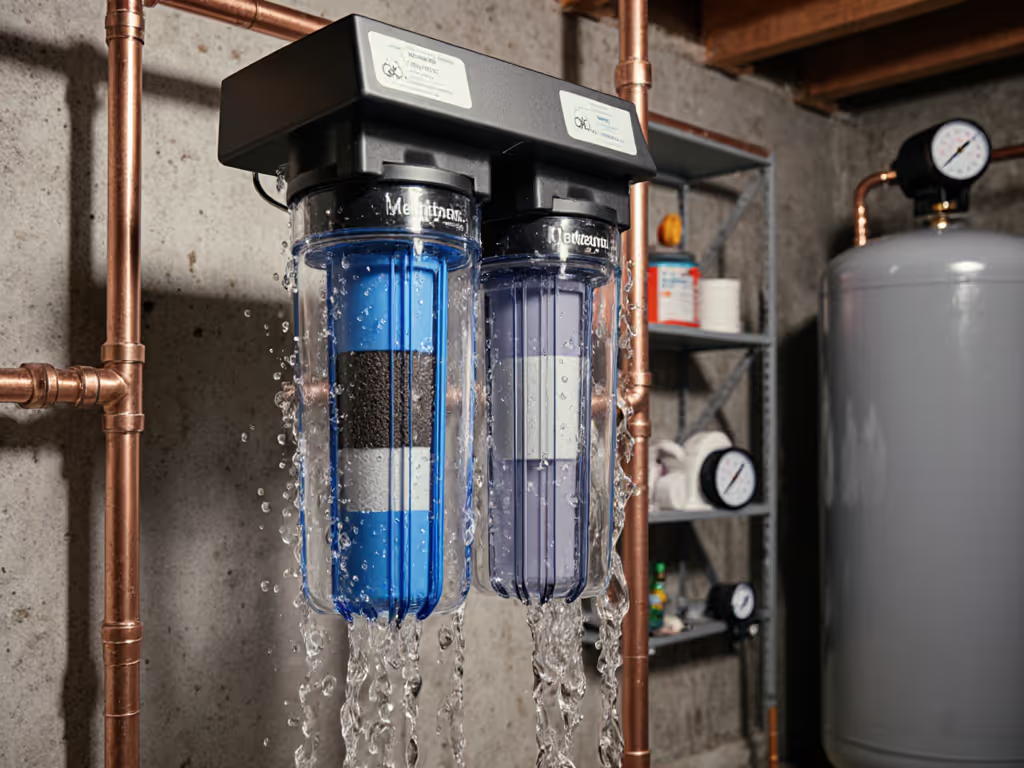
- Certified Whole-House Systems: 200,000+ gallon capacity before major components require replacement
During my own water quality audit after moving into a high-rise building, I calculated that switching from bottled water to a certified filtration system would eliminate 1,200 plastic bottles annually for a household of two, equivalent to 18 kg of plastic waste and 2,400 kg CO₂e emissions avoided.
Cost Comparison Beyond Price Tags
| Metric | Bottled Water | Certified Filtered Water |
|---|---|---|
| Annual Cost (2L/day) | $480-$730 | $90-$220 |
| Plastic Waste | 730 bottles | 1-4 cartridges |
| Carbon Footprint | 548-1,007 kg CO₂e | 0.27-0.55 kg CO₂e |
| Water Waste | 1,241L | 55-132L |
These figures assume standard usage (2L/day) and account for: 8oz single-serve bottles at $1.50 each; a mid-range under-sink filtration system with annual cartridge replacement ($150 system + $70 annual filters). The filtered water column includes NSF/ANSI certified systems meeting contaminant reduction claims at rated capacity.
Show your math: Total bottled water cost = (2L ÷ 0.237L) × $1.50 × 365 = $4,632 annually for 8oz bottles, but real-world multi-pack pricing reduces this to $480-$730 through bulk discounts. Filtered water cost = ($150 system ÷ 5 years) + $70 annual filters = $100 annually, plus $0.0005/gallon infrastructure cost = $20.
Making the Sustainable Switch: A Data-Driven Approach
Validate Your Water Profile First
Before choosing any filtration method, obtain your Consumer Confidence Report (CCR) or well test results. Municipal water systems are required to publish CCRs by July 1 each year under EPA regulations. Cross-reference detected contaminants with third-party certifications, don't assume bottled water offers superior water quality. Independent testing reveals bottled water often contains microplastics (up to 10,000 particles/L) and lacks transparency about source water treatment.
Certification Verification Checklist
When evaluating filtration systems, confirm these elements exist in documentation:
- Specific standard references: "NSF/ANSI 53 certified for lead reduction" not "meets NSF standards"
- Certification number: Traceable to official listing on NSF or IAPMO databases
- Capacity documentation: Gallons at rated performance, not "up to" marketing claims
- Test contaminant list: Specific substances reduced, with percentage claims backed by protocol
- Independent lab reports: Not manufacturer-conducted tests
Calculating Your Personal Impact
Your household's environmental savings depend on local water quality and consumption patterns:
Annual plastic reduction = (Daily bottles × 365) - (Cartridge count × 0.5 kg)
Annual CO₂ savings = (Bottled CO₂ per liter - Filtered CO₂ per liter) × Annual liters consumed
Water conservation = (Bottled water factor - 1) × Annual liters consumed
For a household consuming 730L annually:
- Plastic reduction: 730 bottles → 98% decrease
- CO₂ savings: 219-402 kg equivalent (driving 500-920 miles less)
- Water conservation: 890L saved annually
Conclusion: Small Choices, Systemic Impact
The environmental math doesn't lie: bottled water creates disproportionate ecological burdens compared to properly selected filtration systems. While bottles hide their true costs behind convenience, certified filtration systems make environmental impact transparent and manageable.
Your next step shouldn't be panic but precision. Obtain your water quality report, identify verified contaminants, then select filtration certified specifically for those concerns. When we move from guesswork to verified performance data, sustainability becomes measurable and achievable.
Map your water profile, then let certifications drive the filter choice.
For those ready to explore the environmental math behind their specific water situation, the EPA's CCR database and independent certification directories provide the foundation for evidence-based decisions. Track your progress with simple metrics (plastic bottles avoided, CO₂ reduced, and gallons conserved), and you'll find hydration that truly sustains both you and the planet.
Related Articles