
British Berkefeld Review: Data-Driven Gravity Filter Comparison
By Nkechi Okafor • 21st Nov
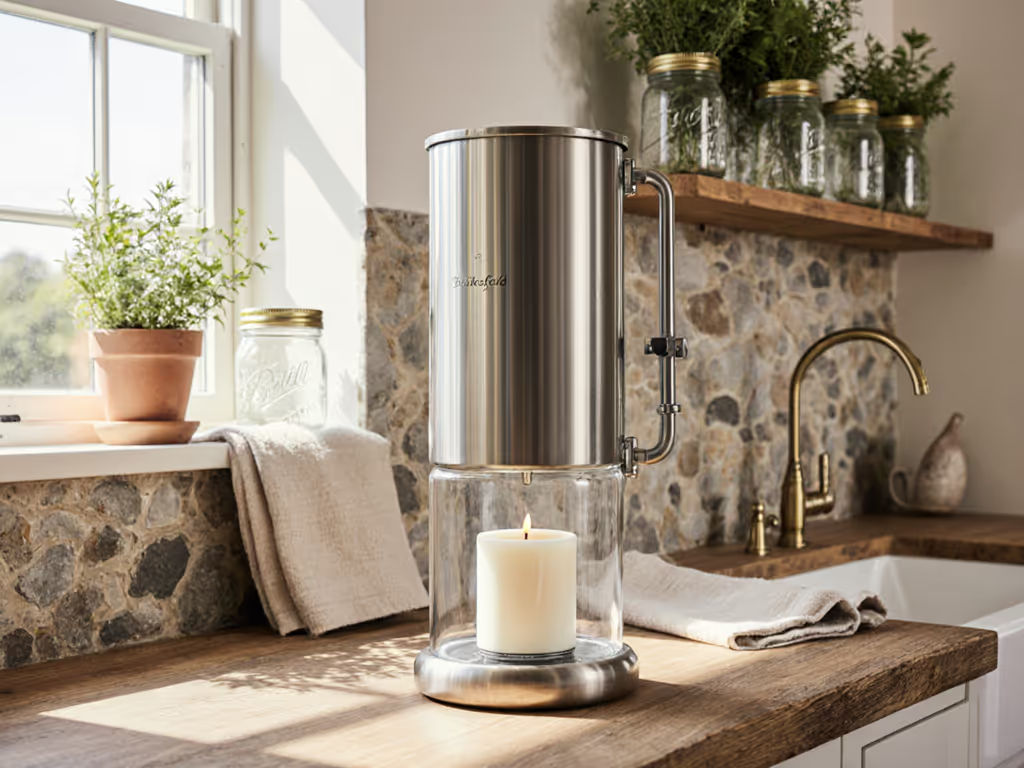
When evaluating gravity filtration systems for household water safety, a British Berkefeld review becomes essential for making evidence-based decisions. This gravity filter comparison focuses on verified performance metrics rather than marketing claims, examining how Doulton's British Berkefeld systems stack up against industry standards for removing contaminants while maintaining water's natural mineral profile. As a water quality specialist who routinely interprets contaminant reports and matches them to certified filtration media, I've found these systems frequently appear in well water filtration discussions where multi-barrier protection is needed most.
test, then treat
Understanding Gravity Filtration Principles
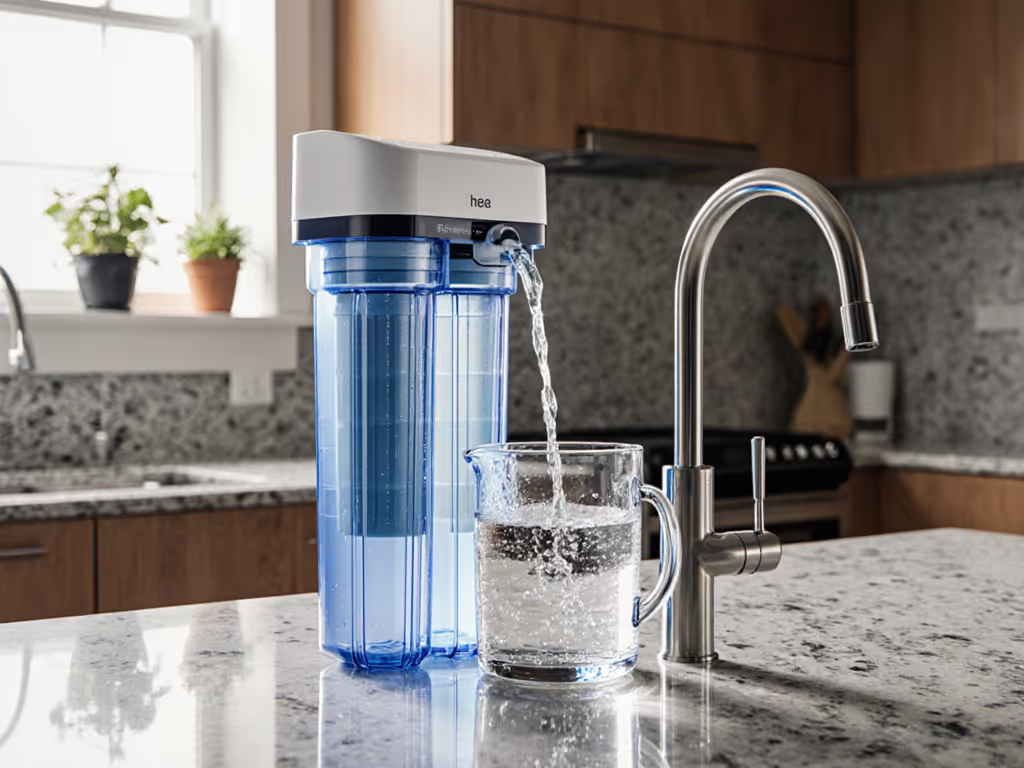
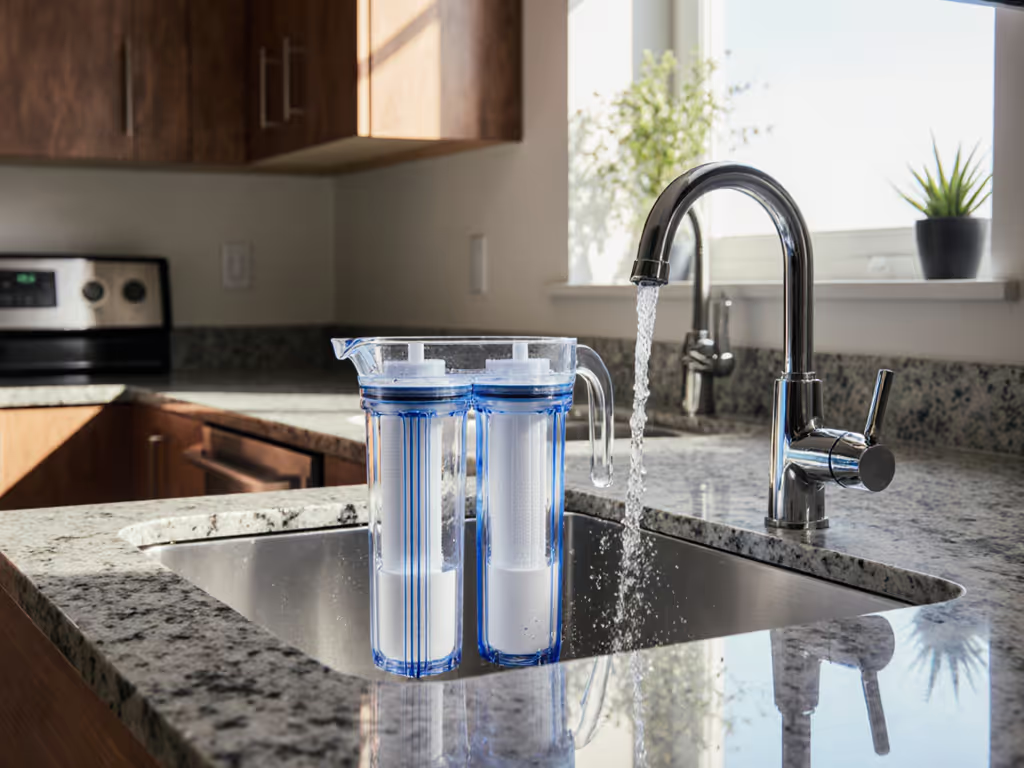
Gravity water filters operate without pumps or electricity, relying on gravitational pressure to move water through filtration media. British Berkefeld systems consist of two polished 304 stainless steel chambers: an upper reservoir where untreated water enters the filter elements, and a lower chamber that collects purified water. This passive design makes them valuable for emergency scenarios, off-grid living, and as redundant protection during infrastructure disruptions (a lesson reinforced during recent regional boil-water notices where power outages rendered electric filtration systems useless).
Key FAQ: British Berkefeld Performance Analysis
How does the ceramic filtration technology compare to other gravity systems?
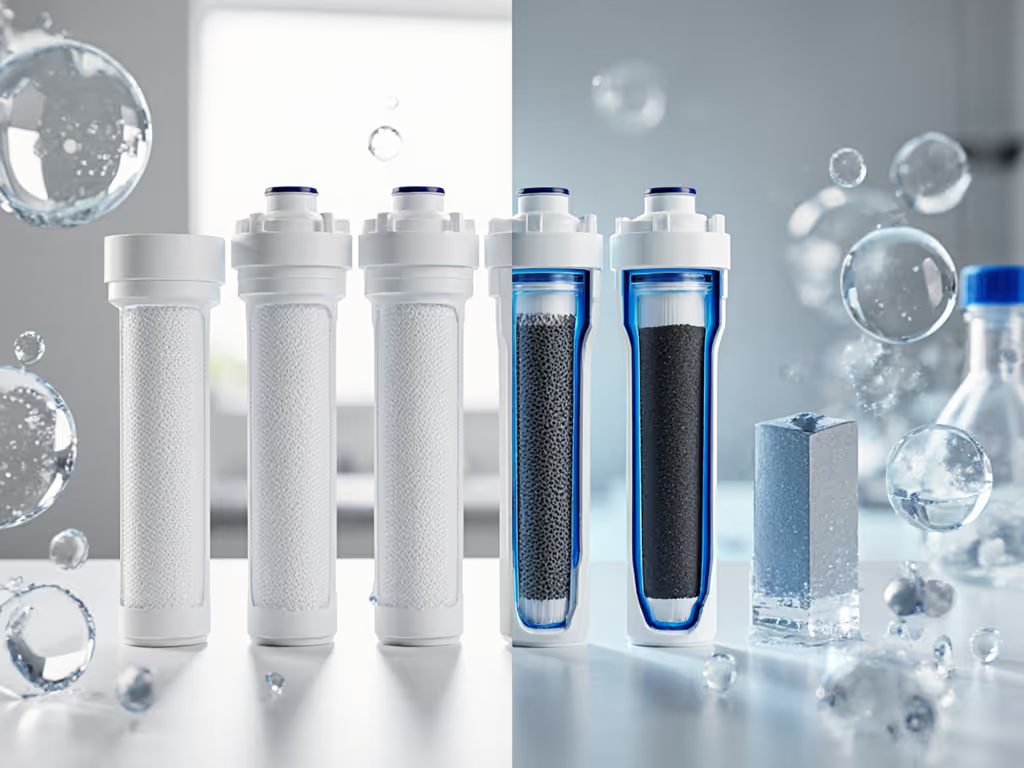
British Berkefeld filters utilize a precision-engineered ceramic shell combined with activated carbon and specialized media. The Ultra Fluoride and Ultra Sterasyl variants differ primarily in their additional treatment stages:
- Ceramic shell: Creates a physical barrier with 0.5-0.8 micron filtration rating (verified to >99.99% particulate efficiency)
- Activated carbon component: Reduces chlorine, volatile organic compounds, and disinfection byproducts
- Specialized media: Ultra Fluoride incorporates additional fluoride-reducing compounds
Independent testing confirms these filters meet NSF/ANSI Standard 42 (aesthetic effects) and 53 (health effects) for multiple contaminants. Notably, they retain essential minerals like calcium and magnesium that reverse osmosis systems remove, which is a critical distinction for households concerned about long-term mineral intake.
What does "verified contaminant reduction" actually mean for British Berkefeld performance?
Transparency in filtration claims is paramount. British Berkefeld publishes specific reduction percentages from accredited laboratory tests rather than vague "removes contaminants" statements:
- Bacteria: >99.99% reduction of E. coli, Shigella, Typhoid, and Klebsiella Terrigena
- Cysts: >99.99% removal of Cryptosporidium and Giardia (critical for well water filtration)
- Fluoride: 36% average reduction at 1,500L capacity (5ppm initial concentration), increasing to 46% at 1,000L
- Free chlorine: >99% reduction (average 97.2%)
- Microplastics: 99.9% reduction verified through third-party testing
These figures represent real-world performance under gravity flow conditions (1.2 L/hr per filter element), not idealized pressurized testing scenarios. The fluoride reduction data particularly demonstrates why multiple filter elements are recommended for households with high fluoride levels, since performance decreases as capacity is reached.

Authentic Black Berkey Elements BB9-2 Filters (Set of 2)
Filters 200+ contaminants, providing long-lasting, economical purified water.
$281.89
Filter Capacity6,000 gallons per pair
Filter Capacity6,000 gallons per pair
Pros
Targets 200+ typical tap water contaminants effectively.
Certified by independent, third-party lab testing for performance.
Cons
Initial cost can be high for some users.
Customers find the water filter to be better than other charcoal filters, with amazing taste and easy installation. The functionality and value for money receive mixed reviews - while some say it works well and is worth the cost, others report issues with filters not working and consider it too expensive. The filter speed and water flow also get mixed feedback, with some saying it filters faster while others find it slow, and several customers report issues with water gushing through instead of dripping properly.
Customers find the water filter to be better than other charcoal filters, with amazing taste and easy installation. The functionality and value for money receive mixed reviews - while some say it works well and is worth the cost, others report issues with filters not working and consider it too expensive. The filter speed and water flow also get mixed feedback, with some saying it filters faster while others find it slow, and several customers report issues with water gushing through instead of dripping properly.
How does the Ultra Fluoride variant differ from standard Ultra Sterasyl filters?
This distinction matters significantly for households with specific contaminant concerns. Both filter types share identical housing and base filtration capabilities for bacteria, cysts, and chlorine. The Ultra Fluoride variation incorporates additional media formulated specifically to reduce fluoride ions:
- Ultra Fluoride: Effective against fluoride at concentrations up to 1,950 ppm (though typical municipal levels are 0.7-1.2 ppm)
- Ultra Sterasyl: Optimized for chlorine and organic contaminant reduction without fluoride-specific media
Importantly, these filter types cannot be mixed within the same system. The choice must align with your water quality report, not marketing promises. For help reading your city's report, see our CCR interpretation guide. During a recent well contamination event, I advised neighbors to first test for specific contaminants before selecting between these variants. Those with elevated fluoride levels required the specialized filters, while others achieved sufficient protection with standard elements. Test first, then layer certified barriers with intent.
Practical Considerations for Real-World Implementation
System sizing and flow rate realities
British Berkefeld systems come in multiple capacities (6L, 8.5L, 12L), but theoretical capacity differs from practical daily output. Actual hourly flow depends on several factors:
- Number of filter elements: A 12L system with two filters processes approximately 2.5 gallons/hour
- Water temperature: Efficiency drops below 5°C (41°F)
- Water quality: Higher turbidity reduces flow rate
- Maintenance: Proper cleaning restores optimal performance
A practical approach is to calculate your household's emergency water needs (typically 1 gallon/person/day) and select a system that can process that volume within 24 hours. For a family of four needing 4 gallons daily, a system with two filter elements achieving 2.5 gallons/hour provides adequate capacity with reasonable wait times.
British Berkefeld performance in seasonal and emergency scenarios
During wildfire season in the Western US, I've observed increased organic compounds and ash particulates requiring more frequent filter maintenance. Similarly, post-flood scenarios introduce turbidity challenges that can prematurely clog filtration surfaces. The data-driven approach here involves:
- Testing water quality before and after events
- Monitoring flow rate as an indicator of filter saturation
- Having spare filter elements for emergency rotation
The systems' portability makes them valuable for evacuation scenarios where water sources become compromised (a feature proven during recent hurricane responses where communities relied on gravity filtration during extended outages). For full home readiness during outages, compare our no-electricity emergency water filters.
What's the true cost-per-gallon for British Berkefeld systems?
Evaluating gravity filter cost requires looking beyond initial purchase price to total ownership expenses. Consider this breakdown for a standard Ultra Fluoride system (two filter elements):
| Cost Component | Amount | Per Gallon Cost |
|---|---|---|
| Initial system investment | $250-$400 | $0.00 (one-time) |
| Filter replacement (every 6 months) | $80 | $0.20/gal |
| Annual maintenance | $15 | $0.04/gal |
| Total 5-year cost | $815 | $0.51/gal |
This compares favorably to pitcher filters ($0.30-$0.50 per gallon) and approaches cost parity with under-sink systems when considering installation expenses. However, it's less economical than municipal water alone ($0.005-$0.01/gal), which highlights why these systems should target specific contaminant concerns rather than being used universally.
Strategic Integration into Multi-Barrier Protection
Where British Berkefeld fits in comprehensive water safety
My professional recommendation consistently follows this sequence: test first, then treat. Gravity filters like British Berkefeld serve as excellent final barriers but shouldn't replace primary treatment when needed. For well water filtration especially, consider this layered approach:
- Source assessment: Comprehensive water testing identifying specific contaminants
- Pre-treatment: Sediment filters for high-turbidity sources, softeners for hard water
- Primary treatment: UV for microbiological concerns, specialized media for target contaminants If microbes are your main risk, learn the fundamentals in our UV water purifier science guide.
- Final barrier: Gravity filtration for residual particulates and contaminants
This strategy explains why I recommended gravity filters during the recent flood-related boil-water notice, not as standalone solutions but as complementary protection after initial advisories were verified. Neighbors first confirmed advisories through official channels, then tested turbidity levels before installing appropriately certified filters.
Critical certifications to verify
Not all certifications are equal. When evaluating British Berkefeld performance claims, verify:
- NSF/ANSI 42: Aesthetic effects (chlorine, taste, odor)
- NSF/ANSI 53: Health effects (lead, VOCs, cysts)
- NSF P231: Microbiological water purifiers
- NSF 401: Emerging contaminants (pharmaceuticals, microplastics)
Many manufacturers advertise "NSF certified" without specifying which standard, which is a red flag for consumers. British Berkefeld publishes specific test reports showing performance against each standard at rated capacity, not just initial efficiency.
Conclusion: Evidence-Based Filtration Decisions
British Berkefeld systems demonstrate reliable performance for specific contaminant reduction when matched to verified water quality issues. Their true value emerges not as universal solutions but as targeted components within a comprehensive water safety strategy. The data consistently shows that gravity filtration works best when:
- Paired with address-specific water testing
- Sized appropriately for household needs
- Integrated within a multi-barrier approach
- Maintained according to verified capacity limits
For further exploration, I recommend:
- Obtaining your local Consumer Confidence Report (municipal water) or conducting comprehensive well testing
- Reviewing NSF's database for certified products matching your specific contaminant concerns
- Calculating your household's true cost-per-gallon based on verified filter capacity
- Consulting with water quality professionals who prioritize data over brand allegiance
Remember that no single system addresses all water concerns equally well. By testing first and matching certified technologies to actual contaminant profiles, you transform water safety from marketing-driven uncertainty into evidence-based protection (precisely where gravity filtration systems like British Berkefeld can deliver their greatest value).
Related Articles